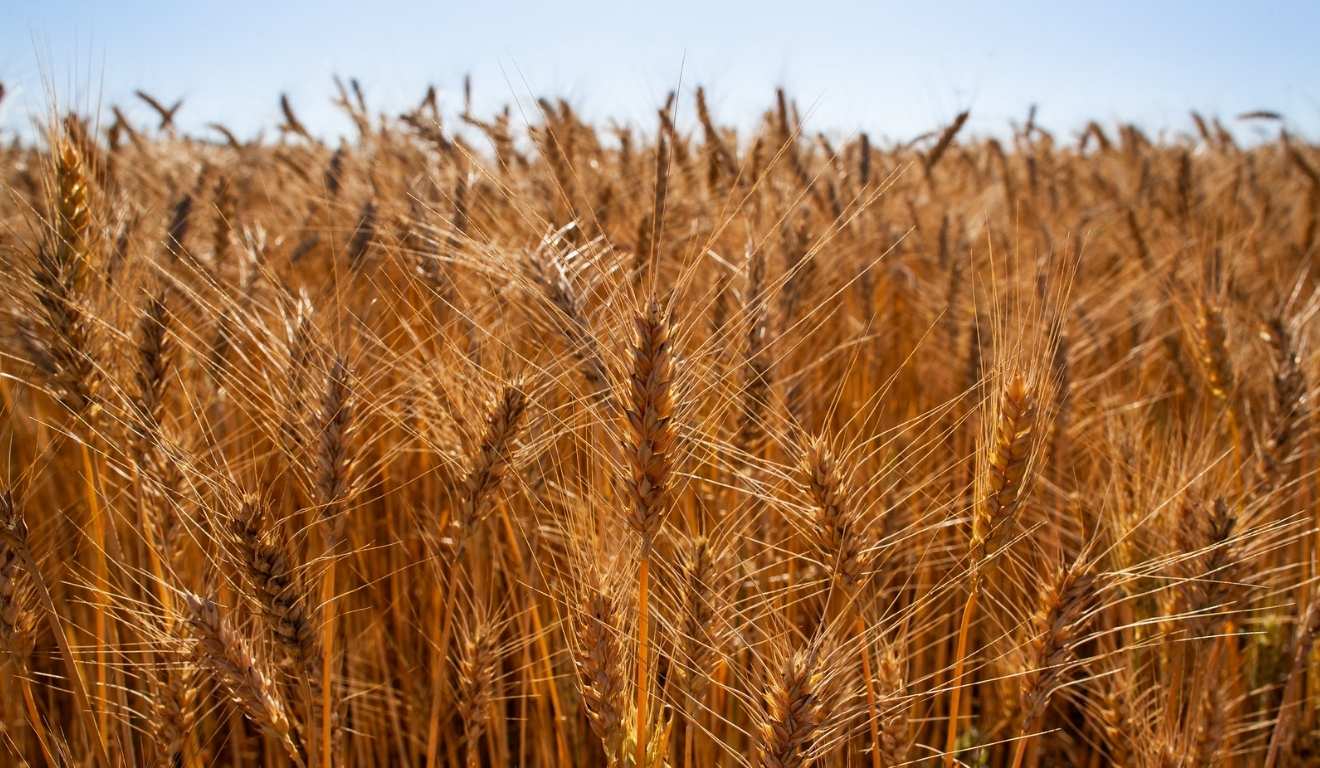
Despite abundant global supply and growing demand, Brazil's share of the international wheat market is expected to remain limited in the coming months. At the same time, the improvement in the quality of wheat from São Paulo and the potential for expansion of state production reinforce opportunities for the production chain. This scenario was discussed during the second meeting of the Wheat Sector Chamber of the State of São Paulo, held this Thursday (30), at the headquarters of Ouro Safra, in Pilar do Sul (SP), with online transmission via the Sindustrigo channel. For the president of the Wheat Sector Chamber of the State of São Paulo, Ruy Zanardi, the meeting reinforced the importance of bringing together all links in the chain to monitor the main factors influencing the market and discuss strategies for the development of wheat farming in São Paulo. “The expectation is that the next São Paulo harvest will present wheat of excellent quality, as planting has been developing well. Although we face challenges related to the climate and the international scenario, we believe that the state of São Paulo should escape the most severe impacts of El Niño,” said Zanardi. According to the president, factors such as fluctuations in international prices, increased fertilizer costs, and geopolitical uncertainties continue to pose challenges to the production chain. "These are variables over which we have no control and with which we need to live. Even so, the expectation is for a harvest of excellent quality. Even with a slightly lower production, the projection is approximately 320,000 tons in the 2026/2027 harvest," he emphasized. In addition, the president of Sindustrigo, Max Piermartiri, reaffirmed that São Paulo's wheat production has reached an exceptional quality standard. "We have no hesitation in stating that, in the 2025/2026 harvest, São Paulo's wheat will be among the best in South America, surpassing other national wheats by a wide margin, both in quality and in the volume available to the market." He also stated that if the expansion of wheat crops and production continues, the mills will have the capacity to absorb it. "There will be demand, and certainly, baked goods made with this wheat will continue to stand out for their quality," he warned.
This text was translated by machine from Brazilian Portuguese.