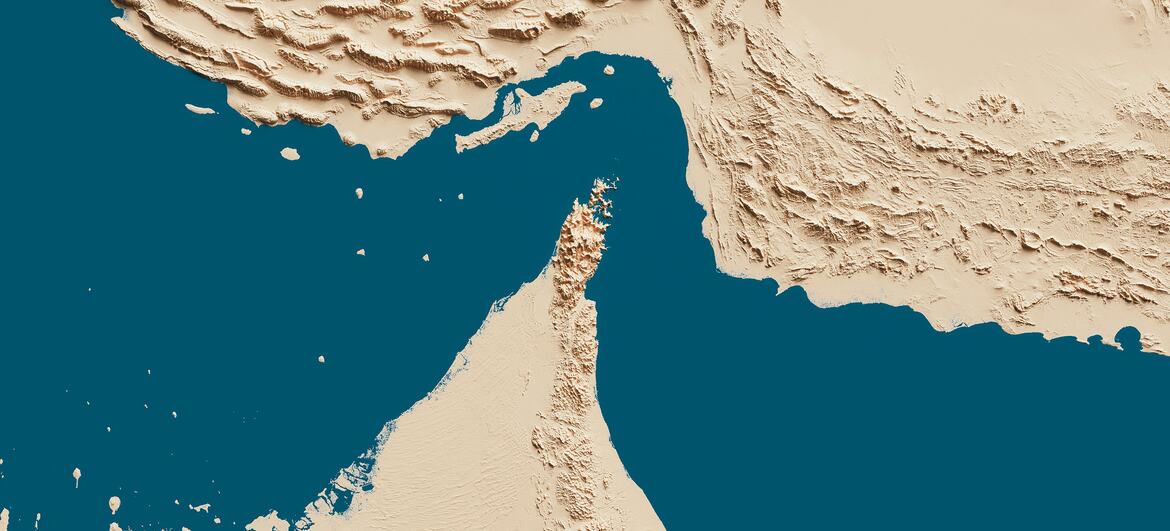
The International Maritime Organization (IMO) commented on the announcement of "Project Freedom," led by the United States, which aims to escort commercial vessels out of danger zones in the Middle East. In a statement, according to UN News, the maritime agency said it was aware of the reports but stressed the lack of concrete details. The agency emphasized that it continues to urge ships to exercise maximum caution in the area. :: Attention to Maritime Workers The IMO welcomed "the attention given to innocent maritime workers" who are stranded in the region due to the conflict. However, the agency warns that naval escorts "do not constitute a sustainable solution." For the agency, a genuine de-escalation of tensions and a long-term agreement are the only viable path to guarantee the safety of seafarers in a scenario where the region "presents alarming logistical and security challenges." The stranded vessels total approximately 800 ships, notably oil tankers, bulk carriers, and container ships that are blocked in the Strait of Hormuz. With an average of 25 people per vessel, it is estimated that 20,000 sailors are stranded in this specific area, although some ships are operating with a minimum safety contingent. :: 3,000 professionals affected in the region. The total number of vessels throughout the Persian Gulf reaches approximately 3,000, significantly increasing the number of professionals affected in the region. The IMO emphasizes that, during any evacuation process, ships must maintain adequate crews and strictly follow recommended safety practices. Although the International Transport Workers' Federation (ITF) has already supported the repatriation of approximately 450 professionals, the agency warns that the vast majority remain vulnerable to debris, missiles, and potential shortages of water and food. :: Humanitarian Impact in Lebanon. Amid the regional crisis, other UN agencies are intensifying their efforts in neighboring countries to contain the consequences of the conflict. In Lebanon, the focus of the United Nations Relief and Works Agency for Palestine Refugees (UNRWA) is supporting displaced persons in emergency shelters. Since the start of the military escalation in March, UNRWA has relied on the support of local partners in distributing basic food baskets, ready-to-eat meals, and approximately 14,000 hot meals. Simultaneously, the United Nations Refugee Agency, UNHCR, is dealing with the civil displacement driven by the ceasefire in effect in Lebanon, an action considered complex. After weeks of displacement, thousands of families have undertaken journeys south in the hope of recovering what they had abandoned. However, many have been forced to return north after encountering destroyed homes, a scenario of uncertainty, and a reality that still does not offer safe living conditions. :: Recovery Efforts in Gaza In the Gaza Strip, the focus is also on mitigating structural, cultural, and social damage. The United Nations Educational, Scientific and Cultural Organization, UNESCO, announced a support package for the region. On Monday (4), the agency confirmed that US$5.7 million had been allocated for the protection of damaged heritage and the restoration of learning opportunities. Recovery efforts include offering ongoing psychosocial support to the population and providing protective equipment to ensure journalists can work safely while covering the crisis.
This text was translated by machine from Brazilian Portuguese.