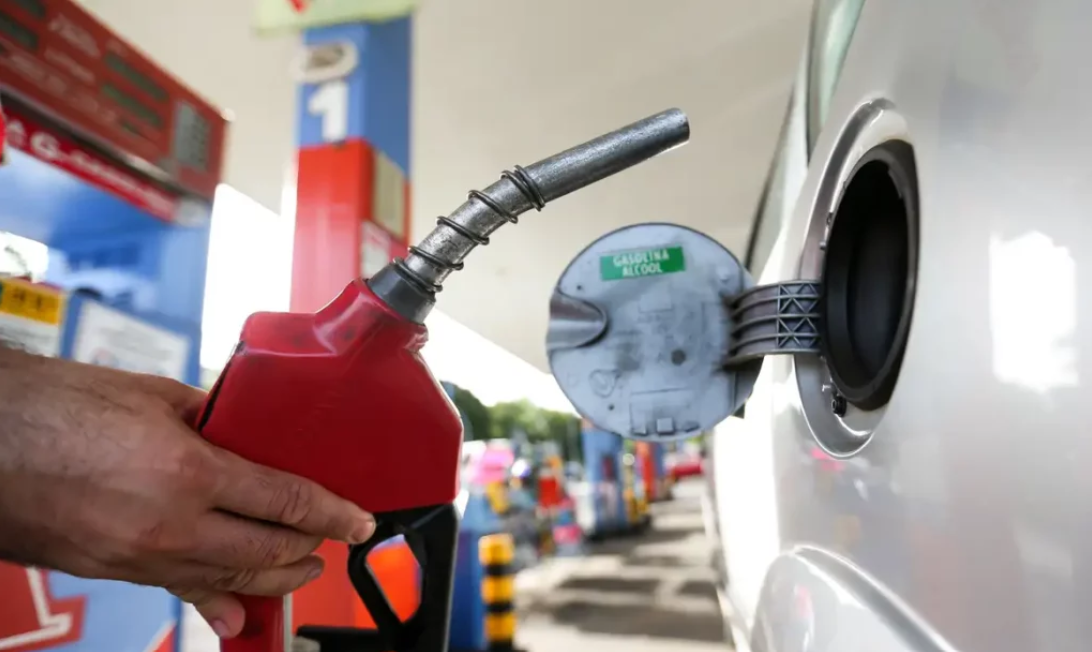
The worsening of the war in the Middle East has led the government to extend the subsidy of R$ 0.44 per liter of gasoline. In effect since May 25, the benefit was due to end on Saturday (25) and has been extended for 30 days starting Sunday (26). The Minister of Finance, Dario Durigan, signed the decree extending the subsidy on Thursday evening (23), created to reduce the impacts of the war conflict in the Middle East on fuel prices in Brazil, says a note from "Agência Brasil"The subsidy of R$ 1.12 per liter of diesel remains in effect. On the 16th, the National Congress extended, for 60 days, Provisional Measure 1,363, which established the subsidy.
What is a subsidy?
Officially called an economic subsidy, this incentive is paid by the government to fuel producers and importers to reduce the impact of rising international prices on consumers. In practice, the government covers part of the cost of gasoline, allowing the increase at refineries or in the international market to reach gas stations in a more moderate way. Payment is made directly to producers and importers through the National Agency of Petroleum, Natural Gas and Biofuels (ANP).
Why does the government want to extend it?
The main reason is the new surge in oil prices on the international market. After a period of decline in June, the price of Brent crude oil has once again exceeded US$100 this week, pressured by the resumption of conflicts in the Middle East. According to the Ministry of Finance, this scenario led the economic team to reassess the end of the benefit. In a statement sent to… "Agência Brasil"Earlier, the ministry had already informed that it was discussing "a possible action to enable its extension, without yet a firm decision on the timeframe and amount," adding that the measure would depend on further assessments.
War influences
The government had signaled it might end the gasoline subsidy this month following the announcement of a preliminary peace agreement between the United States and Iran in June, which temporarily lowered the price of oil. However, renewed tensions changed the scenario. In early July, US President Donald Trump declared that the Iran deal had failed and stated that he did not intend to resume negotiations. The escalation of the conflict put renewed pressure on the international oil market. Furthermore, attacks on oil tankers in the Red Sea and the risks to navigation in the region increased concerns about the global supply of the commodity.
Impact in Brazil
Oil is the main raw material used in the production of gasoline, diesel, and aviation kerosene. When the price of a barrel rises on the international market, the cost of fuels also tends to increase, putting pressure on inflation and raising expenses for passenger and cargo transportation. It was precisely to reduce this impact that the government created temporary fuel subsidies. A few days after the launch of the gasoline subsidy, for example, Petrobras raised the price of gasoline A sold to distributors by R$ 0.48 per liter. With government assistance, the effective adjustment was reduced to about R$ 0.04 per liter.
Diesel continues
The diesel subsidy remains guaranteed. The provisional measure that established the benefit of R$ 1.12 per liter has been extended for another 60 days. According to the rule, at the end of each two-month period, the Minister of Finance may maintain, alter, or terminate the subsidy, provided that beneficiaries are notified at least 15 days in advance. Another diesel subsidy of R$ 0.35 was revoked on July 1st, after two months in effect. At that time, the price of a barrel of oil was around US$ 70, which led the economic team to withdraw the benefit.
Other measures
In addition to subsidies, the government has also taken steps to mitigate the effects of rising oil prices on domestic prices. Last week, the National Energy Policy Council (CNPE) authorized an increase in the mandatory blend of anhydrous ethanol in gasoline to 32%, a measure initially valid for 180 days. The government expects that the increased use of biofuel will help reduce dependence on petroleum-derived gasoline and contribute to curbing further increases in consumer prices.
This text was translated by machine from Brazilian Portuguese.