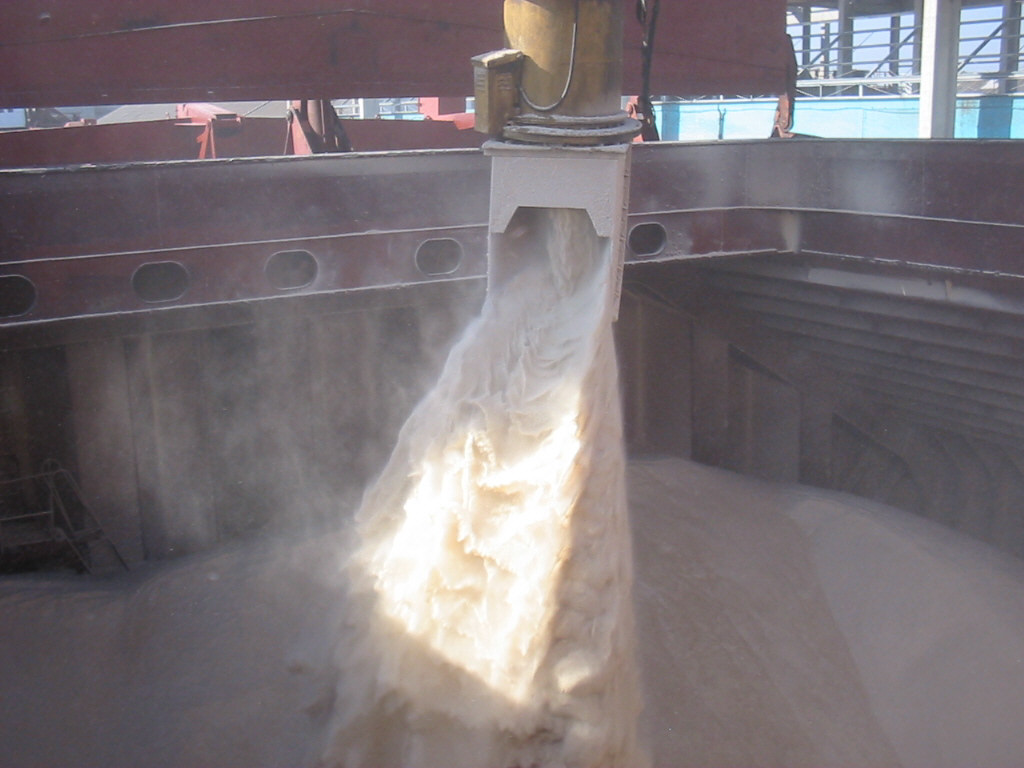
The ports of the Northern Arc are the main entry points for fertilizers and other agricultural inputs into the country, surpassing the volume of unloading seen in Paranaguá. The shift began in 2024 and was consolidated last year, when in 2025, 13.36 million tons were recorded as being imported from the Northern Arc compared to 10.89 million tons unloaded at the port of Paraná. The data was released this Tuesday (26) during the presentation of the Agrologistics Yearbook 2026 – Volume 3. “Clearly, we have noticed in the last 10 years a shift from the south to the north of Brazil. The Central-North part of the country has assumed a very significant relevance in the exit of Brazilian grain and has also taken advantage of this logistics for the import of fertilizers that come from outside Brazil, especially potassium, urea and also phosphate, which are used for Brazilian agricultural production. This shift is mainly due to public investments that have been made and this has contributed to this significant change. Before, all the grain from Mato Grosso left either through Paranaguá or, mainly, through Santos. Now, the distance to the port has been reduced through the region of the state of Pará, as well as Maranhão, through the port of Itaqui, and this has contributed quite significantly to the expansion of the production area,” assesses the president of Conab, Sílvio Porto. “One of the factors explaining this increase is the use of return freight, aimed at reducing logistics costs. In other words, the cargo moves towards the ports with grains and returns to the producing regions with fertilizers,” explains Arnoldo de Campos, Director of Operations and Supply at Conab. “This highlights the importance of the federal government continuing investments in the Northern Arc region and in transportation systems for these routes, not only for grain exports but also for input imports, completing the logistical support of the entire production chain and increasing national competitiveness,” he adds. According to the Yearbook, from 2021 to 2025, fertilizer imports grew by 62.7% through this port complex, compared to a decrease of -0.8% observed in Paranaguá. “Improvements in infrastructure conditions at the Northern Arc ports and their proximity to the country's main grain and fiber producing regions, along with return freight, contribute to the flow of fertilizer imports through this region,” analyzes the company's Superintendent of Operational Logistics, Thomé Guth. Among the Northern Arc ports, Itaqui, in Maranhão, unloaded 34% of the volume of fertilizers internalized by all the ports combined. The port of Santarém, in Pará, accounted for 22% of the regional total, especially capturing cargo from the states of Pará and Mato Grosso and western Tocantins. The port of Salvador accounted for 21% of imports, aiming to serve the Matopiba region, particularly western Bahia, a major producer of cotton, soybeans, and corn. The consolidation of the Northern Arc region as a hub for the outflow of agricultural products also brings new challenges for the public sector. “We need to understand that these logistical processes are also vectors of Brazilian agricultural expansion, and this raises great concern, especially regarding the expansion of agriculture in the Amazon, which generates tension, deforestation, and agrarian conflicts. This yearbook allows us to conduct a broader analysis not only of the flow of goods, but also of the impacts on the territories generated from this process of agricultural expansion,” considers the president of the state-owned company. Grain exports – The increased influx of fertilizers and pesticides through the Northern Arc is influenced by the region's ports establishing themselves as the main choice for the outflow of corn and soybeans to the international market. According to the Ministry of Development, Industry, Trade and Services (MDIC), grain exports through the ports of the Northern Arc increased from 36.56 million tons in 2021 to 58.06 million tons in 2025, an increase of 59%. The highlight is the port of Itaqui in Maranhão, which went from 11.55 million tons handled in 2021 to 20.14 million tons in 2025, an increase of 74% in the period. Next is the port of Barcarena/PA, through which 12.14 million tons were shipped in 2021, and in 2025, the exported volume was 16.03 million tons. Another highlight is the performance recorded in Itacoatiara/AM. In 2021, 3.83 million tons were shipped through the port in Amazonas, while in 2025 grain shipments reached 11.02 million tons, an increase of 188% in the period. "This evolution occurs due to investments made both in the ports and in access, using various modes of transport, whether road, waterway and rail," Guth points out. Corn and soybean shipments in 2025 – According to data from the MDIC (Ministry of Development, Industry and Foreign Trade), accumulated soybean exports alone reached 108.18 million tons last year, representing a 9.48% increase compared to 2024. Of this volume, 36.2% was shipped through the ports of the Northern Arc, followed by the port of Santos, which handled 32% of exports, and Paranaguá, responsible for 13.4% of shipments. The state of Mato Grosso remained the main exporter of the oilseed with 32.06 million tons, followed by Goiás, with 12.94 million, Paraná, with 11.29 million, Rio Grande do Sul, with 8.29 million, and Mato Grosso do Sul, with 6.12 million. Sales of corn to the foreign market in 2025 reached 40.98 million tons, a 3% increase compared to the same period of the previous year. The state of Mato Grosso accounted for 56% of total Brazilian exports, and Goiás came in second, contributing 11% of international sales. The flow of goods is mainly through the Northern Arc, with 48% of the exported volume leaving through the region's ports, followed by Santos, which handled 36.9% of exports, and the port of Paranaguá, which shipped 10.4% of the grain sold to the foreign market. The port of Itaqui is of great importance in the outflow of corn and soybeans produced in the Matopiba region. In the case of corn, almost the entire volume exported by the region is shipped through that port. However, the Yearbook indicates a decrease in corn exports produced by Matopiba farmers through Itaqui in recent years. After peaking in 2023 with exports of 5.57 million tons, cereal shipment volumes fell to 2.73 million tons in 2024, and 1.41 million tons last year. According to Conab's analysis, this drop in sales to the foreign market can be explained by the increase in domestic consumption driven by corn ethanol production with the implementation of plants in states in the Northeast. "This scenario reinforces the importance of Conab's work, especially with small animal breeders in the region, particularly egg, milk, and meat producers, aiming to ensure the regular supply of corn, an important input for animal feed, through the Over-the-Counter Sales Program, ProVB," emphasizes Arnoldo de Campos. Transportation modes – The publication also shows the evolution of the main modes of transport used for grain exports between 2010 and 2025. The share of waterway transport increased from 8% in 2010 to 15% last year. The rail transport mode, however, has lost ground in percentage of participation, falling from 53% in 2010 to 38% in 2025. “It is important to remember that Brazil has been breaking records in grain production and export, as indicated by the Company's data, which puts pressure on logistics as a whole. Even with investments in railways and waterways, the road transport mode is already established and, in times of stress, is more used by producers to transport their production,” points out the superintendent of Conab. Conab's analysis also shows that, with the consolidation of the Northern Arc as a hub for the flow of agricultural products, strategic plans are being developed that include ports and transshipment stations in the states of Amapá, Amazonas, Pará, Rondônia, and Maranhão – fundamental regions for the flow of grains produced mainly in Mato Grosso and Matopiba. “The full consolidation of the Arco Norte project will depend on the inclusion of various modes of transport, including rail, highways and waterways. The most difficult to make viable are those of navigation by rivers or sea, with the modernization of ports, including inland ones, along with the adaptation and development of vessels, systems that need to advance and that require large investments,” analyzes Guth.
This text was translated by machine from Brazilian Portuguese.