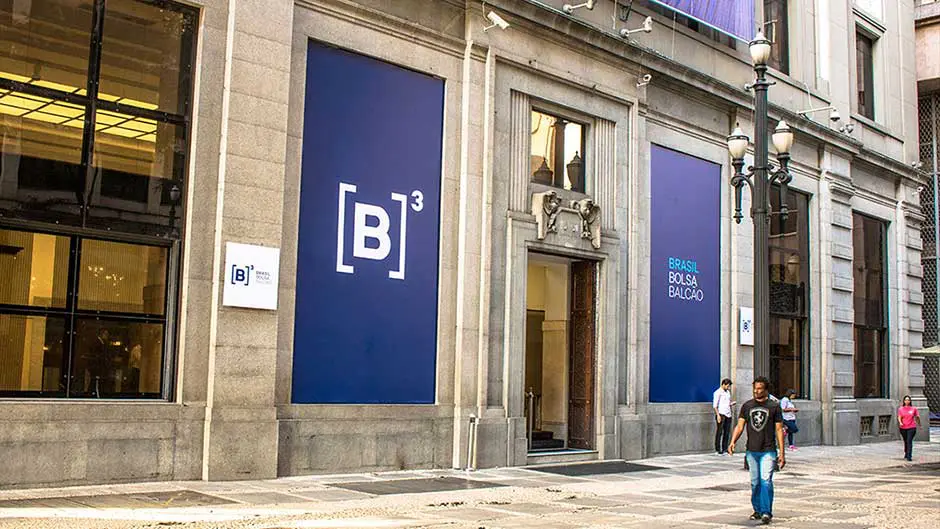
At 10:17 am (Brasilia time) this Thursday (16), the Ibovespa registered a slight decrease of 0.20%, to 175,652.07 points, with an accumulated loss of 1.26% in the partial week. On the previous day (15), the main indicator of Brazilian Stock Exchange (B3) It fell 0.36%, to 176,010.90 points. Among the companies with the greatest weight in the composition of the B3, the Vale (VALE3) registers a drop of 0.89%, while the shares of Petrobras (PETR3; PETR4) They are operating without a clear direction, with a decrease of 0.13% and an upward bias (+0.07%), respectively. This morning, the Brazilian market was reacting to the decision. from the Office of the White House Trade Representative (USTR) to apply 25% tariffs on products from Brazil, through Section 301 of the United States Commerce ActThe measure comes into effect on July 22In recent days, the agency had initiated a public hearing, which included the participation of Brazilian authorities and those from other countries investigated for unfair trade practices. In total, the USTR office opened approximately 80 commercial investigationswhich could affect Chinaa European Uniona Indiathe Japan, South Korea and the MexicoIn the case of Brazil, the Pix This was among the main issues raised by the USTR, which argued that the payment system restricted the operations of US companies in Brazilian territory. In a statement, the U.S. trade representative, Jamieson GreerHe stated that "the extensive negotiations with Brazil over the past year have not resolved these issues, but we remain open to continuing negotiations with Brazil to promote much-needed changes." President Luiz Inácio Lula da Silva He stated on his social media that the country "will immediately begin the procedures to activate the instruments foreseen in Law of Reciprocity, approved unanimously by National Congress"…and will revisit the topic within the framework of the World Trade Organization's dispute settlement mechanism." Brazilian associations and institutions are already speaking out against the new US surcharge and how it affects national shipments. The president of National Confederation of Industry (CNI)Ricardo Alban has already stated that "the scenario tends to worsen, further eroding the competitiveness of Brazilian industry." On the US economic agenda, investors are reacting to the release of data from… retail sales in the United States, which grew 0.2% in June compared to the previous month, to US$768.8 billion, compared to a 1.0% increase in April (revised from 0.9%), according to information provided by Department of Commerce (DOC) of the country. The result was in line with market expectations. Furthermore, market participants are monitoring the numbers for the new [unclear – possibly related to the country's data]. unemployment benefit claims in the week ending July 11. According to United States Department of Labor (DOL)The country registered 208,000 applications. This result came in below the 216,000 applications expected by the market, and represents a decrease of 2,000 applications compared to the previous week (revised figure from 215,000 to 216,000). In the domestic market, the Brazilian Institute of Geography and Statistics (IBGE) It was reported today that the volume of retail sales registered a monthly increase of 0.1% in May, in the seasonally adjusted series, compared to a decrease of 1.6% in April (revised figure from 1.5%). The market expectation was for a larger increase of 0.5%.
This text was translated by machine from Brazilian Portuguese.