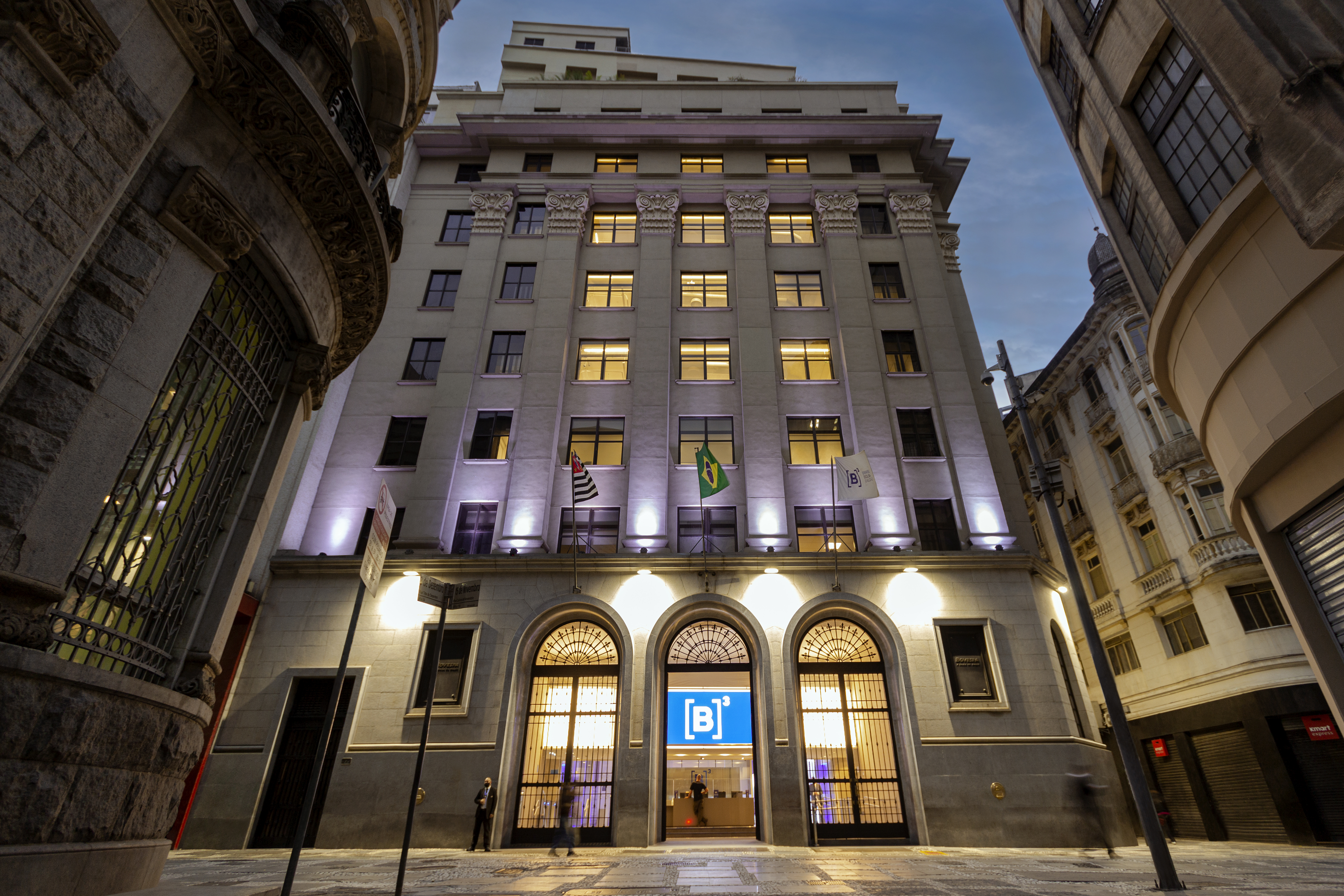
THE Ibovespa closed this Thursday (18) with a slight decrease of 0.10%, at 168,277.55 points, with an accumulated loss of 1.67% in the partial week. During the trading session, the main indicator of Brazilian Stock Exchange (B3) It reached a high of 169,542.37 points; at its lowest point, the index fell to 167,910.63 points. Among the companies with the greatest weight in the composition of… B3, the actions of Vale (VALE3) and from Petrobras (PETR3; PETR4) They closed with gains of 0.20%, 0.14%, and 0.73%, respectively. The major banks ended the session mixed. On the one hand, the Bradesco (BBDC4) fell 0.46%; the Santander (SANB11) It fell 1.33%; and the Itaú (ITUB4) it depreciated by 0.76%; on the other hand, the BTG Pactual (BPAC11) It rose 0.91%, and the Banco do Brasil (BBAS3) recorded gains of 0.62%. In Wall StreetThe main stock market indicators closed in positive territory. Dow Jones Industrial Average (DJIA) It registered a slight increase of 0.14%, to 51,565.75 points; S&P 500 It rose 1.09%, to 7,500.67 points; and the Nasdaq The index advanced 1.91%, to 26,517.93 points. In this trading session, the market reacted to the monetary policy decisions announced the previous day by… Federal Reserve (Fed) and by Monetary Policy Committee (Copom) of Central BankIn the US, the Fed kept the benchmark interest rate in the range between 3.50% and 3.75% per year. Despite maintaining the rate, projections released after the meeting showed a more conservative inclination from the monetary authority. According to the so-called "dot plot," nine officials of the institution see room for further interest rate hikes throughout 2026. Meanwhile, in Brazil… Copom The Brazilian Central Bank reduced the Selic rate by 0.25 percentage points, to 14.25% per year. However, the monetary authority's communication was interpreted by the market as more cautious, reinforcing the perception that the scope for further interest rate cuts in the short term is limited. This scenario contributed to strengthening the dollar globally and reducing investors' appetite for higher-risk assets. While the Fed's more rigid stance boosted the US currency abroad, the noise surrounding the Brazilian Central Bank's communication added pressure on the real. In the geopolitical field, investors also followed the developments of the agreement signed between the US and Iran. The treaty, signed on Wednesday (17) by Presidents Donald Trump and Masoud Pezeshkian, came into force and provides for commitments related to the Iranian nuclear program, suspension of US sanctions and mechanisms for financial compensation to the Tehran government. The Swiss government announced that representatives from the United States, Iran, Pakistan, and Qatar will meet this Friday (19) in Bürgenstock to begin negotiations on the implementation of the agreement. Despite the diplomatic progress, the understanding is still considered preliminary. A definitive agreement will depend on further rounds of negotiations on the Iranian nuclear program and must subsequently be ratified through a binding resolution of the UN Security Council. For tomorrow, lower liquidity and volatility are expected in global markets due to the Juneteenth holiday in the US, which keeps US stock exchanges and financial markets closed.
This text was translated by machine from Brazilian Portuguese.