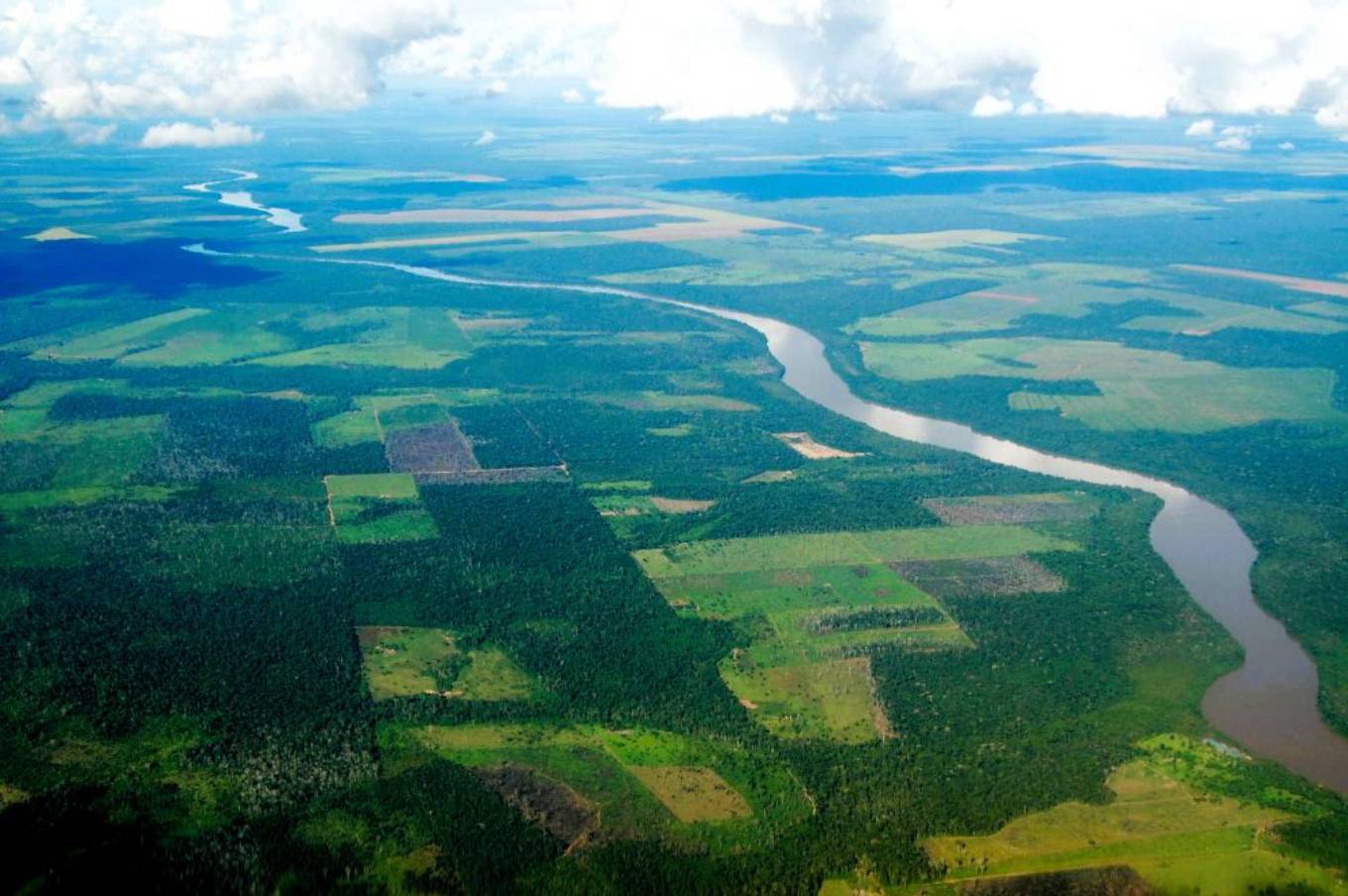
The United States' justifications for taxing Brazil 25% on exported products include the accusation that Brazil allows deforestation. According to Marcio Astrini, executive secretary of the Climate Observatory, the analyses of Donald Trump's government are completely unfounded, as reported by "Agência Brasil". "The Trump administration is using the environmental issue to impose trade barriers that serve only as an excuse. The Trump administration has turned its back on environmental issues worldwide. It withdrew from the Paris Agreement," said Astrini. According to the researcher, the United States is gaining commercial advantages by not implementing any environmental protection measures such as reducing carbon emissions. There are dozens of other countries that deforest, and this argument is not being used against any other country to impose taxes on its products. "It's a purely political measure; it has nothing to do with the environmental issue. It's just an excuse to impose a tariff barrier on the country," stated Astrini. He highlights the actions taken by the Brazilian Institute of Environment and Renewable Natural Resources (Ibama) as fundamental to reducing deforestation in the country. Ibama received financial contributions from the Amazon Fund, which was important for intensifying monitoring. According to a study by MapBiomas, deforestation in Brazil was below 1 million hectares in 2025. “Brazil reached a milestone in deforestation monitoring in 2025: for the first time since 2019, the total area of native vegetation deforested was below 1 million hectares in a single year. According to RAD2025 (Annual Report on Deforestation in Brazil), 984,794 hectares were deforested in the country, a reduction of 20.6% compared to 2024,” say the researchers. MapBiomas is a multi-institutional initiative involving universities, NGOs, and technology companies, focused on monitoring changes in land cover and land use in Brazil to promote the conservation and sustainable management of natural resources as a way to combat climate change. The Amazon and Cerrado biomes together accounted for more than 84% of all deforested area in the country in 2025. The Cerrado remains the biome with the largest deforested area, with 540,614 hectares, concentrating 54.9% of the country's deforestation, despite a 16.9% decrease compared to 2024. In the Amazon, 289,478 hectares were deforested, a 23.5% reduction compared to the previous year. The Pantanal registered the largest proportional reduction among all biomes: a 48.4% decrease in deforested area compared to 2024, totaling 12,260 hectares lost in the year. According to MapBiomas, deforestation associated with the expansion of agriculture accounts for more than 97% of all native vegetation loss in Brazil in the last seven years. This pressure factor accounts for 99% of native vegetation lost in Brazil in 2025. Last year, 99% of the deforested area associated with mining was concentrated in the Amazon, with the highest incidence in Pará. Deforestation related to renewable energy projects was almost entirely concentrated in the Caatinga, which accounted for 97% of the deforested area associated with this factor. Deforestation associated with urban expansion increased by 7% compared to 2024 and was mainly concentrated in the Cerrado and the Amazon, which together accounted for more than 60% of the native vegetation area lost linked to urbanized areas.
This text was translated by machine from Brazilian Portuguese.