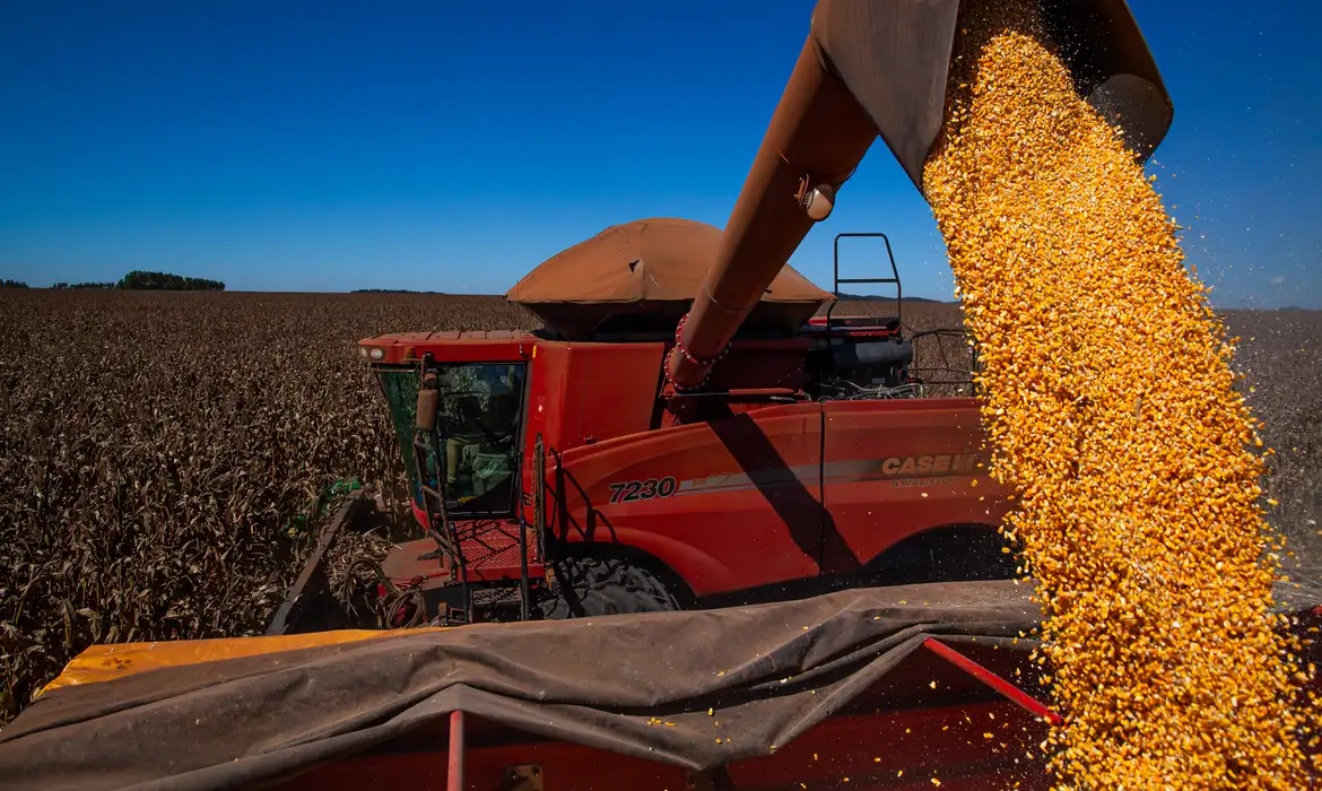
With 60% of the world's arable land still unexploited, the African continent is seeking to adapt technologies developed in the Cerrado to combat hunger, generate jobs, and strengthen food security, expanding the global food supply. The transformation of the Cerrado into one of the world's leading agricultural regions could serve as a model for the sustainable development of African savannas, according to Abdukrazak Ibrahim, coordinator of the Forum for Agricultural Research in Africa (Fara). "We have two similar biomes. Science has transformed one—the Brazilian Cerrado—and can transform the other—the African savanna," stated Ibrahim. According to the researcher, Africa holds approximately 60% of the planet's uncultivated arable land and could play a leading role in the next major global agricultural revolution. The discussion took place during the Environment and Climate Change panel, held at the 10th National Cerrado Symposium and the 3rd International Tropical Savannas Symposium, promoted by Embrapa Cerrados. The researcher emphasized, however, that the objective is not to reproduce the Brazilian experience identically. “The goal is not to copy Brazil. We need to adapt technologies and knowledge to the different African realities, building solutions suited to the diversity of our continent,” he explained. Ibrahim recalled that the transformation of Brazilian agriculture was the result of five decades of investment in science and innovation. For Africa, the challenge is urgent. According to projections by the United Nations (UN), the continent is expected to house approximately 2.5 billion inhabitants by 2050. Currently, African countries import approximately US$100 billion in food per year. At the same time, he sees a promising scenario. Africa has approximately 600 million hectares of arable land, a predominantly young population, and ample potential to increase agricultural productivity. “Millions of new jobs can emerge from this process,” he emphasized. In this context, Ibrahim highlighted the importance of South-South cooperation and the exchange of knowledge with Brazil. For him, Embrapa's experience, especially in the development of technologies for tropical environments, can contribute to accelerating the modernization of African agriculture. One of the initiatives identified as strategic is the training of human resources. More than 3,000 students and professionals from 20 African countries have already participated in training programs in Brazil. Ibrahim himself was a scholarship recipient at Embrapa Genetic Resources and Biotechnology in Brasília during his doctoral studies. “It is possible to lift our countries out of hunger. Brazil has shown that transformation is viable and offers an experience capable of inspiring changes that can benefit millions of people,” he stated. According to the coordinator of FARA, strengthening agricultural research, long-term public investment, genetic improvement of plant and animal species, agricultural mechanization, and technological innovation are central elements for expanding food production on the continent. As examples, he cited recent advances in different African countries: wheat self-sufficiency in Ethiopia, increased cassava production in Nigeria, maize productivity gains in Ghana, digital agriculture platforms in Kenya, and integrated land management systems in Rwanda. Despite the progress, there is still significant room for growth. The average corn yield in Africa is 2.2 tons per hectare, while more technologically advanced producers achieve between 10 and 12 tons per hectare. For Ibrahim, the partnership between Brazil and Africa can be decisive in facing the challenges of global food security. “There is much that Africa can learn from Brazil, just as there is much that Brazil can learn from Africa. Together, we can transform this potential of the savannas into reality,” he concluded. How climate change affects the fields and the food on the table for Brazilians While Brazil and Africa discuss ways to expand food production in tropical savannas, scientists warn that the success of this mission will depend on the ability to address climate change and conserve biodiversity. Rising temperatures, reduced rainfall, and ecosystem degradation are already affecting agriculture, increasing production costs, and could compromise the food security of millions of people in the coming decades. The debate promoted by Embrapa Cerrados on the 23rd brought a warning: producing more food in the future will depend on the conservation of natural resources and the adaptation of agriculture to an increasingly unstable climate. Lectures by Professor Mercedes Bustamante from the University of Brasília (UnB) and researcher Eduardo Assad from the Getulio Vargas Foundation (FGV) showed that the climate and biodiversity crises are deeply connected and are already impacting water availability, agricultural productivity, and the lives of rural and urban populations. According to Bustamante, climate change and biodiversity loss form "twin crises" that cannot be treated separately. Today, land-use change is the main factor in biodiversity loss. But the scientist warns that global warming is likely to become the main cause of this problem in the coming decades. "The fate of the Cerrado has a very large impact due to its connectivity with all other Brazilian biomes," she stated. Occupying approximately 23% of the national territory, the biome acts as a link between the Amazon, Caatinga, Pantanal, and Atlantic Forest, playing a fundamental role in the country's climate and water regulation. Studies presented by the researcher show that the conversion of native vegetation to other uses has already made the Cerrado hotter and drier. Between 2006 and 2019, there was a reduction of about 10% in evapotranspiration—the process responsible for returning moisture to the atmosphere—and an increase in surface temperature in areas of intense agricultural expansion, especially in the Matopiba region (Maranhão, Tocantins, Piauí, and Bahia). "The protection of biodiversity is now considered an essential strategy for mitigating climate change," highlighted Bustamante. According to the professor, healthy ecosystems help regulate the climate, store carbon, conserve water, and sustain food production. Eduardo Assad presented data showing that the effects of climate change on Brazilian agriculture have ceased to be projections and have become a reality. Information from Embrapa indicates that extreme weather events caused accumulated losses of approximately R$ 300 billion in Brazilian agriculture between 2000 and 2024. “The world is getting hotter and drier, and we are not paying attention to it. This greatly compromises agriculture,” he stated. Climate maps presented by the researcher show reduced rainfall, increased frequency of droughts, and rising temperatures in important producing regions of the Cerrado. In some places, the rainy season has already shortened by about 22 days, reducing the availability of water for crops. Assad warned that the combination of higher temperatures and water scarcity could compromise crops that are strategic for food supply. Studies indicate, for example, productivity losses in soybeans and corn in scenarios of warming and water scarcity. Despite the challenges, the researchers stressed that solutions exist. The recovery of degraded pastures, the widespread adoption of integrated production systems such as Crop-Livestock Integration (CLI) and Crop-Livestock-Forest Integration (CLFI), sustainable soil management, restoration of degraded areas, and conservation of native vegetation are among the strategies capable of increasing food production sustainably. "Without deforestation and burning, Brazil can be the largest carbon sink on the planet," Assad asserted. According to the researcher, the country possesses sufficient scientific knowledge, technology, and natural resources to reconcile agricultural production, environmental conservation, and climate adaptation.
When preservation also generates profit.
If the challenge is to produce more food without increasing deforestation, ongoing experiences show that this is possible. During the panel on Environment and Climate Change, Jonas Oliveira, Senior Sustainability Project Manager at Syngenta, presented results from the Reverte program, an initiative that supports the recovery of degraded areas through credit, technical assistance, and the adoption of good agricultural practices, demonstrating that the recovery of degraded areas, sustainability, and profitability can go hand in hand in the field. According to Oliveira, sustainability is no longer seen solely as an environmental issue but has become a business strategy. "Today, when we look at sustainability, we are talking about the long-term viability of rural businesses, and rural producers already understand this," he stated. Created in 2019, the program brings together public and private partners and has already recovered more than 280,000 hectares across approximately 400 rural properties. More than R$ 2 billion has been disbursed in financing for the conversion of degraded areas into more sustainable production systems. One example presented was that of a farm in Itaúba (MT), which joined the program in 2021, the first producer to join the Reverte program. The 4,000-hectare area, previously degraded, began to adopt cover crops, conservation soil management, and crop rotation. In a few years, it began producing soybeans, corn, and cotton at competitive levels. The results also appeared in profitability. According to Oliveira, in another property served by the program, in Açailândia (MA), the property's revenue jumped from about R$ 1,000 in 2023 to R$ 10,000 per hectare per year. In addition, the farm maintains more than 50% of its area with preserved native vegetation, carries out environmental restoration, and generates direct jobs in the region. "The program grows because it creates business opportunities for everyone involved. The producer gains productivity, reduces risks, and increases the value of their land," he highlighted. Experience reinforces that science and innovation already offer ways to increase agricultural production, restore degraded areas, and conserve natural resources, making sustainability and profitability achievable goals.
This text was translated by machine from Brazilian Portuguese.