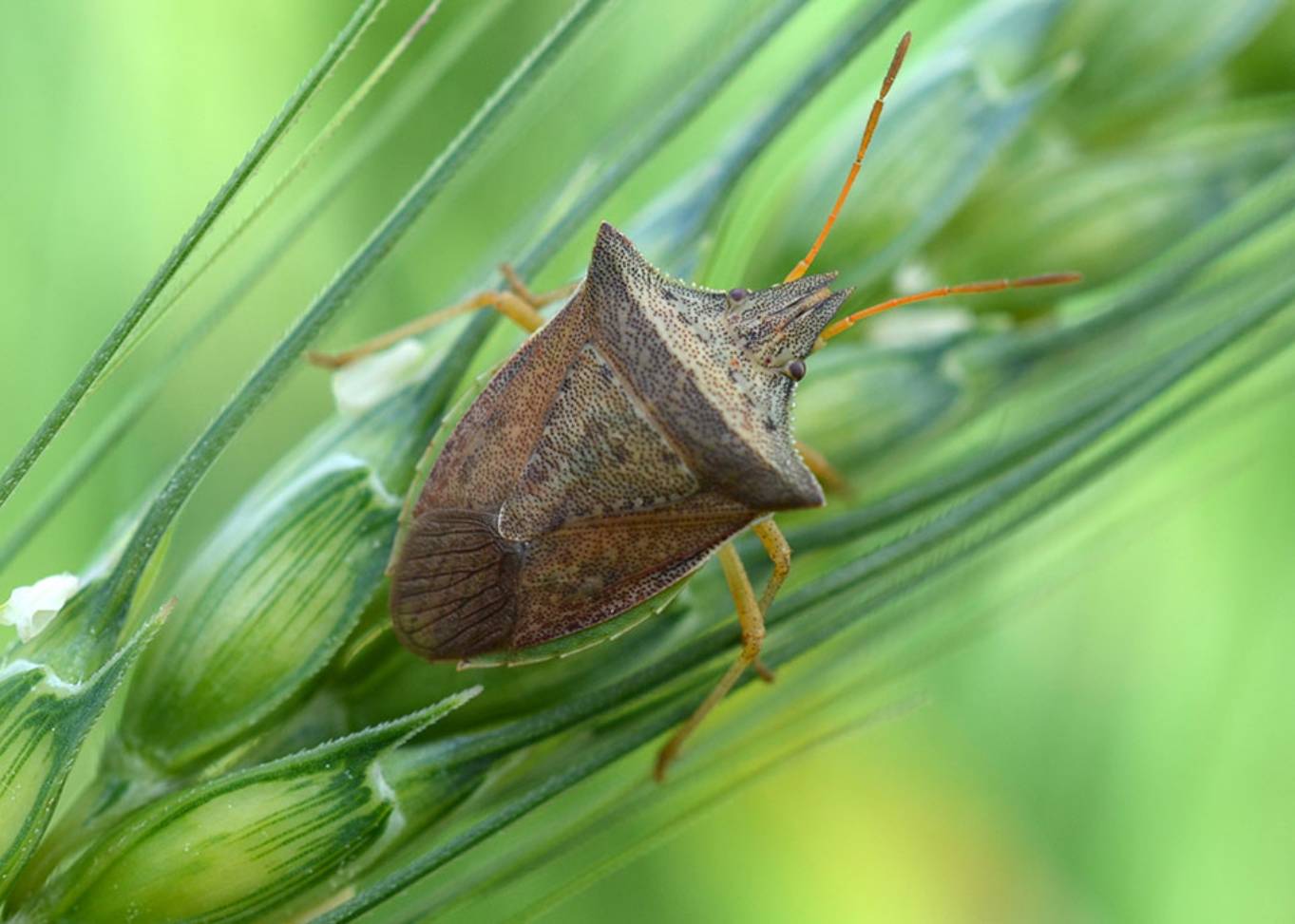
Researchers at Embrapa Genetic Resources and Biotechnology (DF) have discovered that applying a beneficial fungus to corn leaves modifies the aromatic substances released by the plant. This new "perfume" attracts a parasitoid wasp that eliminates the eggs of the green stink bug, one of the main pests of corn and other crops of socioeconomic importance in Brazil. The biological mechanism favors the natural control of the insect in the field and reduces dependence on chemical pesticides. The greatest losses caused by the green stink bug occur in areas of No-Till Farming Systems with rotation between soybeans and corn. The insect migrates from the harvested soybeans and begins to feed on young corn plants in the first and second weeks after the start of germination. This early attack compromises plant development and can cause losses of up to 30% in crop productivity. According to researcher Maria Carolina Blassioli Moraes, to solve this chronic problem without relying exclusively on traditional chemical pesticides, the team coordinated by [name missing] developed a detailed study over five years. The central strategy consisted of integrating two distinct ecological technologies: the use of the fungus Beauveria bassiana and the action of the wasp Telenomus podisi, which parasitizes the eggs of the stink bug that causes the damage. The results are published in the article "Association of Beauveria bassiana with maize alters volatile organic compounds and enhances attraction of the egg parasitoid Telenomus podisi" in the international scientific journal Journal of Pest Science. The research dynamics were based on the selection of a specific strain of the fungus, called CG 1105, originating from the microorganism bank maintained by the mycology laboratory of Embrapa. Initially, the corn plants were sprayed with the fungus to generate a direct impact on stink bug mortality. However, the experiment revealed a much more surprising indirect reaction from the point of view of chemical ecology, an area of science focused on understanding the chemical messages and signals exchanged between living beings for communication. Blassioli recounts that, five days after the foliar spraying, the team observed that the fungus colonized the plant in a beneficial way and substantially altered its composition of volatile compounds, which are the characteristic odors emitted by the vegetation. The microorganism caused a significant increase in the production of a substance called methyl salicylate, an element already recognized in the scientific literature for its ability to attract natural enemies of pests. Simultaneously, the process reduced the emission of another compound, alpha-farnesene (known for its sweet and woody aroma, it is widely used in the aroma and fragrance industries). The researcher comments that this molecular modification in the aroma bouquet of corn serves as an attractive biological signal for the wasp *Telenomus podisi*. Upon detecting the change in plant odor, the insect can precisely locate the affected area and parasitize the eggs laid by the green stink bug. The wasp inserts its own eggs inside the stink bug's eggs, preventing the birth of new individuals of the pest. Thus, it sustainably controls the population growth of the stink bug.
Research may lead to an integrated pest management protocol.
To date, all bioassays and analyses have been conducted in a controlled laboratory environment. However, Blassioli says the intention is to expand the evaluations to practical field tests in the coming months. If the responses in the crops confirm the laboratory results, farmers in the country will have access to a groundbreaking Integrated Pest Management (IPM) protocol. This methodology combines multiple biological control approaches that work in harmony, optimizing protection and drastically reducing costs and environmental impacts. The study involved a multidisciplinary team of scientists. In addition to Blassioli, researchers from Embrapa Genetic Resources and Biotechnology also participated: Rogério Biaggioni, head of the mycology laboratory, Raul Laumann and Miguel Borges, both from the semiochemicals laboratory. The study also had the collaboration of Clenilson Rodrigues, a researcher at Embrapa Agroenergia (DF), postdoctoral researcher Mírian Michereff, who carried out a large part of the laboratory bioassays, and student Isadora Quevedo.
This text was translated by machine from Brazilian Portuguese.