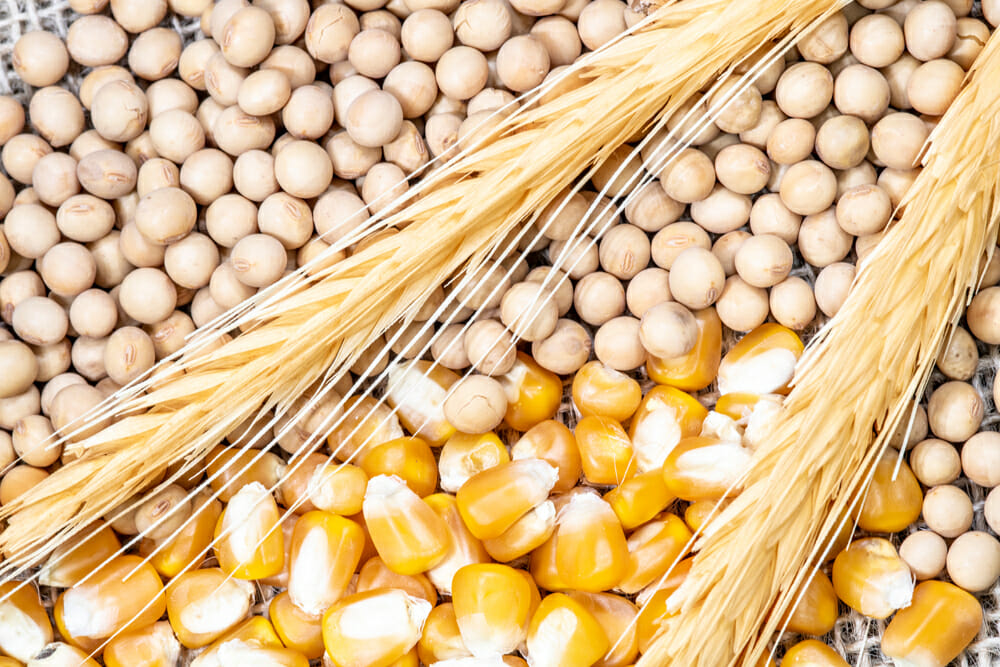
At 9:15 am (Brasilia time) this Tuesday (1st), the November soybean contract traded on Chicago Stock Exchange (CBOT) It was operating with a moderate increase of 8.25 points and 0.64%, quoted at US$ cents 1,296.25/bushel. The January 2027 contract advanced with the same intensity, at US$ cents 1,311.50/bushel. Regarding derivatives, the oil It appreciated by 1.81%, while the bran It was down 0.24%.
Corn
The December corn contract traded on CBOT It fell 3.00 points and 0.56%, trading at US$ cents 534.75/bushel; the March 2027 contract was losing at the same level, at US$ cents 549.25/bushel.
Wheat
The December wheat contract traded in Chicago It was up 2.25 points and 0.29%, quoted at US$ cents 776.25/bushel. Meanwhile, Kansas City Bank Exchange (KCBT)Meanwhile, the contract for the same month fell 1.00 point and 0.12%, to US$ cents 837.00/bushel.
Market fundamentals
This morning, soybean futures found support in worsening crop conditions in the United States. According to the weekly report. from the United States Department of Agriculture (USDA)58% of soybean areas were classified as being in good or excellent condition by Sunday (30), down from 60% recorded the previous week. For corn, the assessment remained unchanged, with 57% of crops in good or excellent condition. The spring wheat harvest advanced to 77% of the area. Corn prices were also pressured by the decision. from the U.S. Environmental Protection Agency (EPA) The EPA has announced exemptions from biofuel blending requirements for small refineries, covering 1.76 billion renewable fuel credits for 2025. This measure is expected to reduce blending obligations in the short term and raises concerns about demand for ethanol, a major destination for US corn. However, the EPA has stated that it intends to propose reallocating the waived obligations to 2026 and 2027. In the wheat market, some contracts were supported by concerns about attacks on port infrastructure and vessels used to transport grains from Russia and Ukraine. On the other hand, profit-taking after recent gains limited the price increase of the cereal.
This text was translated by machine from Brazilian Portuguese.