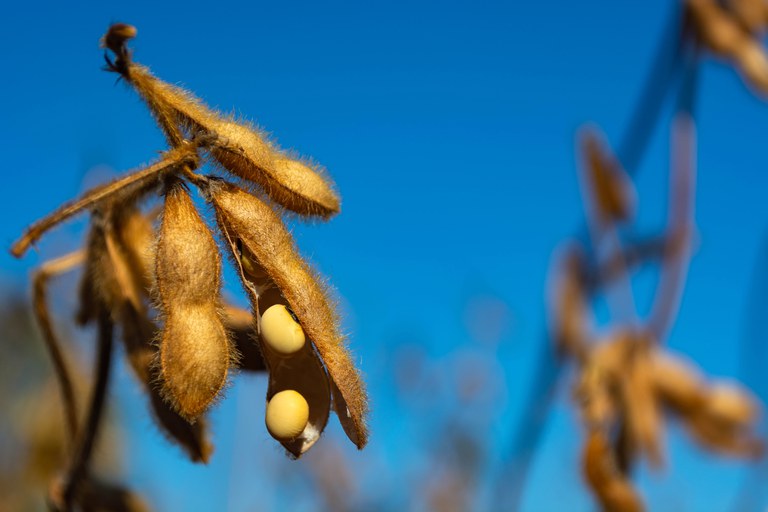
The Mato Grosso Institute of Agricultural Economics (Imea) released the results of the soybean stage of the Imea in the Field project, which revised upwards the estimates for the 2025/26 harvest in Mato Grosso and now projects a record production of 51.56 million tons. The new projection, presented at a press conference held on Monday (6), also raised the average state productivity to 66.03 sacks per hectare, a level very close to the record of the previous season. The survey was carried out over 71 days, with 34,880 kilometers traveled, 998 field assessments and passage through 103 municipalities, covering 97.92% of the total area cultivated with soybeans in the state. The objective of the project, carried out in partnership with the Mato Grosso Soybean and Corn Producers Association (Aprosoja MT) and the Mato Grosso Agribusiness Institute (Iagro MT), is to increase the accuracy of information generated from on-site observations, reinforcing the representativeness of the data and the regional understanding of the crops. Based on the results obtained in the field, Imea revised soybean productivity by 9.23% compared to the previous estimate of 60.45 sacks per hectare. The planted area was also adjusted to 13.013 million hectares, an increase of 1.71% over the previous harvest. As a result, state production was estimated at 51.56 million tons, a volume 1.31% higher than that recorded in the 2024/25 cycle. During the presentation, the technical team highlighted that the 2025/26 harvest was marked by a challenging climatic scenario, with irregular rainfall at the beginning of planting and, subsequently, excessive precipitation in some regions during harvest. Even so, the crops maintained satisfactory performance, despite the uncertainties observed throughout the season. Among the factors of concern raised by the project, damaged grains had a significant impact. Compared to the previous harvest, there was a 3.40% increase in assessments with this type of occurrence, which, according to the analysis presented, limited even greater progress in state productivity. Regionally, the North region presented the highest percentage of crops classified as excellent, while the Southeast concentrated the largest share of areas assessed as poor. The West region was primarily responsible for the increase in production, while the Center-South region registered the largest positive variation in productivity compared to the previous estimate. The superintendent of Imea, Cleiton Gauer, emphasized that the project's objective is to consolidate a complete and representative technical survey of crop conditions, offering greater security for the market and sector agents. “The project's distinguishing feature is the on-site data collection, without intermediaries, directly in the field. It's about going into the field and measuring this information without intermediaries, without anyone interfering. This provides greater guarantee and accuracy to this information so that we can truly quantify and measure the size of our Mato Grosso production,” stated the superintendent. The president of Aprosoja Mato Grosso, Lucas Costa Beber, highlighted that information closer to reality helps guide negotiations, reduces room for speculation, and values the work of rural producers. “This presentation showcases the work of this partnership. Imea has been very assertive in recent years in the numbers it has provided to us, producers, and to the market, bringing more seriousness and coherence to this data supply, which also directly impacts the producer's daily life, especially in price projections and planning for future harvests,” explained the president of Aprosoja MT. :: Second corn crop remains dependent on weather patterns In addition to the soybean figures, the event also presented an initial overview of the second corn crop. Imea reported that 1.17 million hectares were sown outside the ideal planting window in the state. Despite this, the current estimate for the cereal remains at 51.72 million tons, with an area of 7.39 million hectares and projected productivity of 116.61 sacks per hectare. According to the institute, rainfall patterns in the coming weeks will be decisive for consolidating this potential.
This text was translated by machine from Brazilian Portuguese.