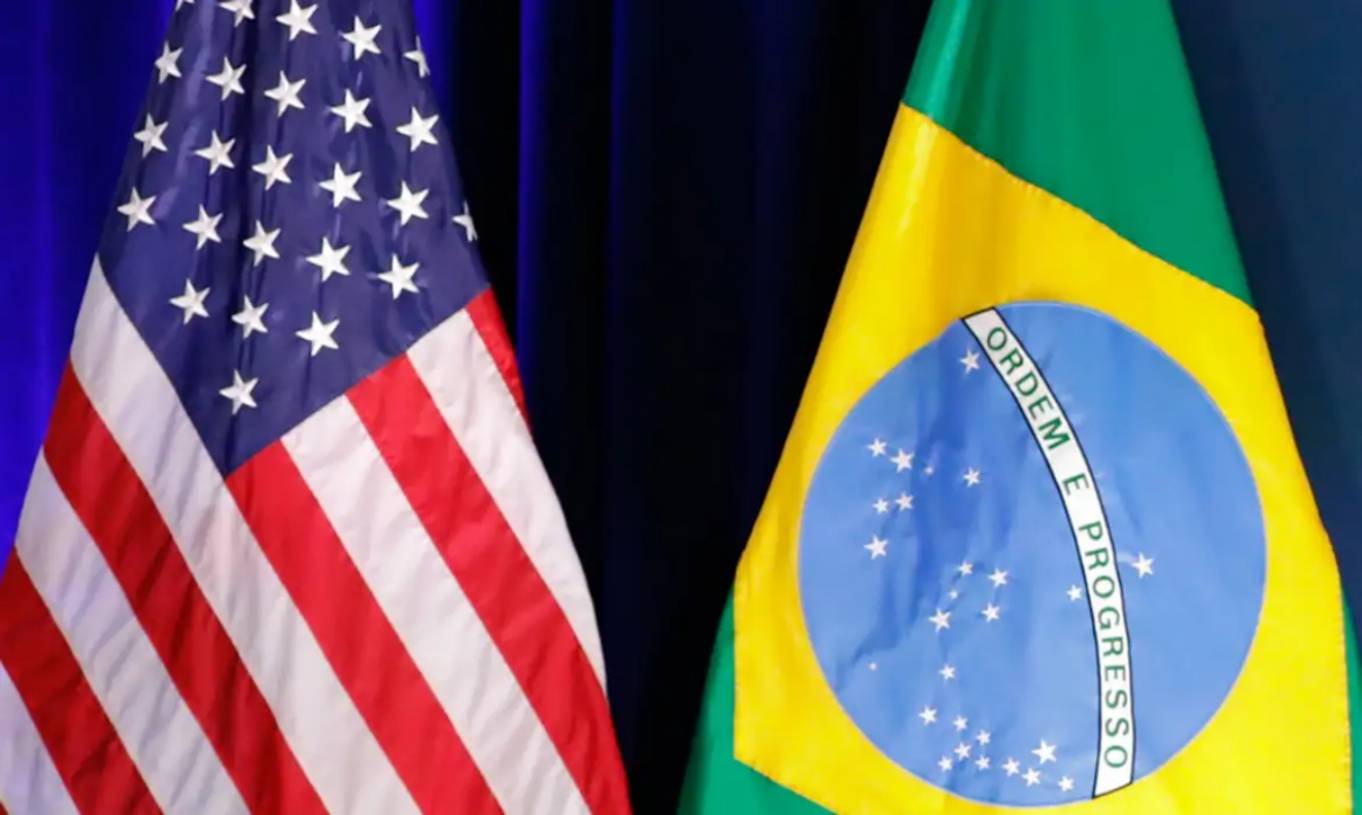
The Brazilian federal government announced this Thursday (16) that it will resume the support program for business sectors affected by the tariff increase imposed by the United States (USA). On Wednesday, the Office of the US Trade Representative (USTR) confirmed an additional 25% tariff on some Brazilian products, alleging supposed "unfair" trade practices by Brazil. The Brazilian government rejects the justifications used for the taxation. The new tariffs will take effect from July 22, according to a note from "Agência Brasil". "From now on, the government's priority is to assist and support these sectors due to this unfair, undue and illegal tariff that has been imposed on us," said Minister Márcio Elias Rosa, head of the Ministry of Development, Industry, Trade and Services (MDIC), during a press conference in Brasília, alongside Vice President Geraldo Alckmin and other ministers, including Dario Durigan, of Finance. According to Rosa, the exporters most affected this time are the sectors of wood, machinery and electrical equipment, furniture, ceramic products, footwear, and sugar. They should have access to credit lines for working capital, investments, and support for distributing products to other clients and countries. Estimates from the Secretariat of Foreign Trade (Secex), linked to the MDIC (Ministry of Development, Industry and Foreign Trade), indicate a total of 2,400 national companies directly affected by the tariff increase, which together account for approximately 18% of Brazilian exports to the USA, corresponding to estimated transactions of US$ 7.4 billion, compared to 2024 figures.
Prejudice
Last year, these same sectors had already reduced the total volume of exports to the United States to US$5.5 billion. More than half of Brazil's export portfolio to the US, such as meat, coffee, oils, and aviation items, was spared from taxation by a US decision this time. The US share of Brazilian exports, which was 12.1% until last year, fell to 9.4% in 2026, and the government will continue to promote a policy of market diversification for these products, stated Márcio Elias Rosa. Vice-President Geraldo Alckmin, former Minister of the MDIC (Ministry of Development, Industry and Foreign Trade) and one of the Brazilian negotiators with the US, stated that, from now on, the government will study ways to apply the Reciprocity Law. Approved last year by the National Congress, the law establishes criteria for the suspension of trade concessions in response to unilateral actions, policies, or practices of another country that negatively impact Brazil's economic competitiveness. "We have a law, the reciprocity law, unanimously approved by the National Congress, and the government, at the appropriate time, will know how to implement it," said Alckmin, who called the new tariff hike "unfair" and "unjustified."
External interference
The Finance Minister classified the US decision as undue foreign interference. "It is unacceptable, from the government's point of view, to have this foreign interference, whether political, economic, or any other form, to frighten and constrain Brazil, Brazilian families, Brazilian businesspeople, and Brazilian workers," said Dario Durigan. According to the minister, all US allegations are false and not supported by concrete data. Durigan stated that the tariff hike will not affect the country's macroeconomic stability and that the relief measures to be taken by the government should consist of credit lines in amounts lower than last year, since the list of exceptions to the tariff hike is longer this time.
Pix
Among the points questioned by the Americans in the various rounds of negotiations since last year is Pix, the Brazilian system for electronic transfers and payments, created by the Central Bank (BC). During the press conference, the president of the BC, Gabriel Galípolo, was emphatic in saying that Pix is not a valid reason for the tariff increase, and that American credit card companies, which are among the main players in the market, were not directly affected. "It would be more or less like trying to say that, by creating basic sanitation, it harmed the revenue of those who own water trucks. However absurd this argument may seem, even it has not proven true. Analyzing what actually happened, since the implementation of Pix, the credit card market has grown by 150%. What is losing ground are checks and physical money, which is absolutely desirable for everyone." An investigation initiated a year ago by the USTR concluded that certain Brazilian practices are inappropriate and burden or restrict trade for U.S. farmers, workers, innovators, and exporters. Among the measures cited by the U.S. government are "digital commerce practices and electronic payment services; unfair preferential tariffs; anti-corruption interference; intellectual property protection; access to the ethanol market; and illegal deforestation." Other allegations by the U.S. government against Brazil include increased deforestation and illegal timber trade. Both of these claims were classified as false and without technical basis by the Minister of the Environment and Climate Change, João Paulo Capobianco. He pointed out, for example, that deforestation in the Amazon has decreased by 50% in the last three years.
This text was translated by machine from Brazilian Portuguese.