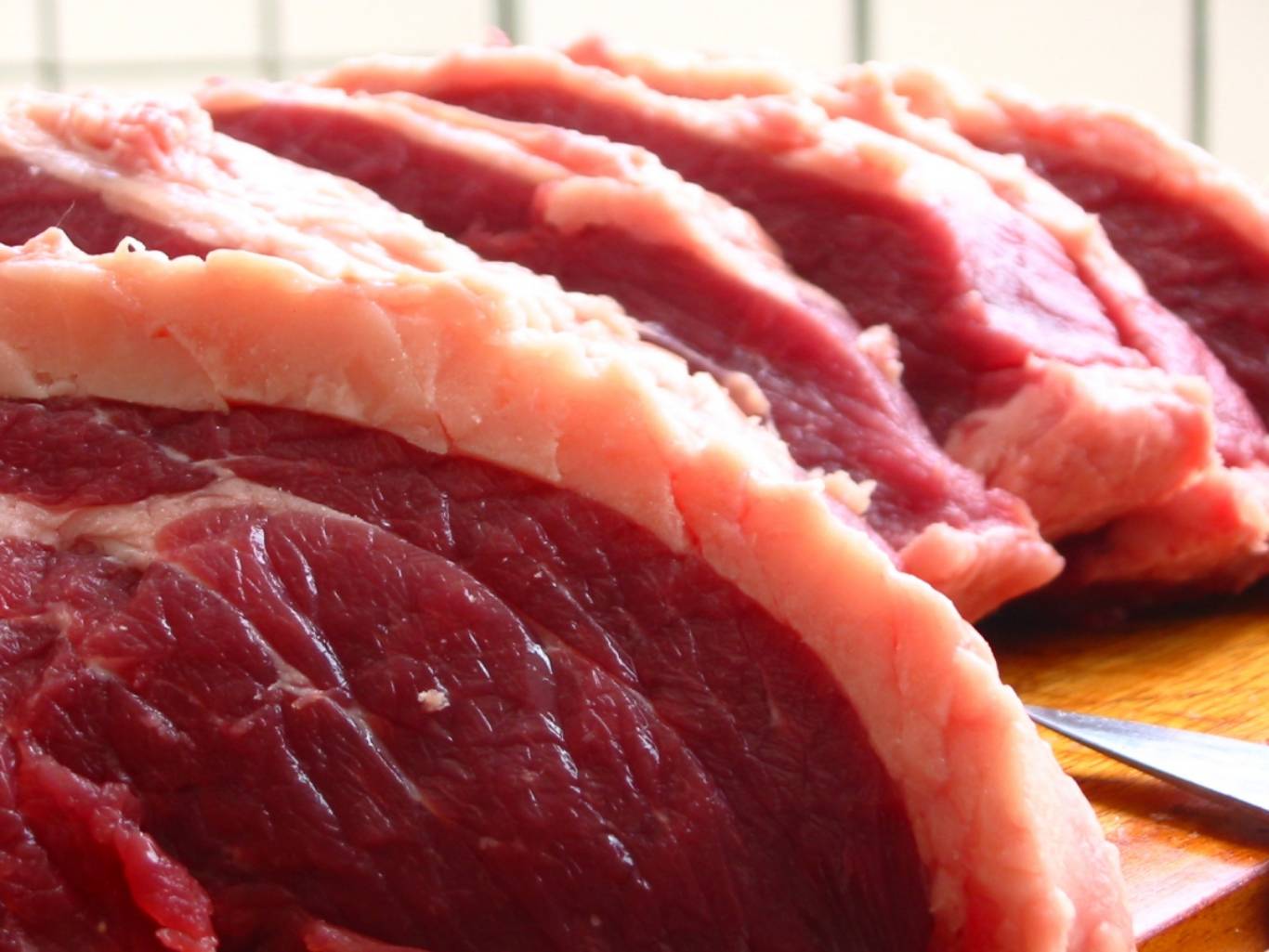
Researchers from Embrapa Gado de Corte (MS), the Federal University of Mato Grosso do Sul (UFMS), and the São Paulo State University (Unesp) have developed a methodology to identify meat from different species using MALDI-TOF mass spectrometry (see box in this article). The methodology also allows for the distinction of samples from Nelore and Angus cattle breeds, which can aid in the certification of products with higher market value. Although it is a technology widely used in various areas of science, including the diagnosis of diseases caused by microorganisms in livestock, this is the first time that Brazilian researchers have used mass spectrometry to differentiate tissues from cattle, pigs, chickens, and tilapia, even after freezing or frying. The differentiation of meats is carried out by generating mass profiles of meat proteins, which function as a unique molecular "fingerprint" for each animal species or breed. “Thus, it was possible to build a database with mass profiles of proteins from different meats to, for example, evaluate product quality or for inspection purposes,” explains Embrapa researcher Newton Verbisck, who led the study. Verbisck emphasizes that mass spectrometry stands out as a faster and more economical alternative for identifying fraud than traditional genetic analyses. The developed methodology has a simplified protocol, which makes the process more agile while maintaining precision. “The entire process takes, on average, 20 minutes, unlike other methods available abroad, which are somewhat more time-consuming and have a relatively higher cost.” With the results of this research, mass spectrometry presents itself as a robust tool for biological traceability and consumer protection against undue substitutions. The technology, which in Mato Grosso do Sul is only operational at Embrapa Gado de Corte, could be applied in various sectors, with purposes that include production quality control, traceability, sanitary inspection, and combating fraud and adulteration in meat products.
MALDI-TOF
Mass spectrometry allows for the determination of mass with very high precision, and thus, the chemical characterization and identification of molecules and substances. There are several advanced mass spectrometry techniques, among them MALDI-TOF, an acronym for Matrix-Assisted Laser Desorption/Ionization – Time-Of-Flight. It is one of the most widely used techniques for analyzing biological molecules with high precision and speed. MALDI, from the English Matrix-Assisted Laser Desorption/Ionization, is, as the name indicates, the ionization method. The sample is mixed with a chemical "matrix," which absorbs the laser energy and protects the molecules, causing them to gain electrical charges without breaking them apart or altering the original mass of each one. In this chemical process, the target molecules are ionized, that is, they are transformed into ions with positive or negative charges, and thus can be analyzed when subjected to an electric field. Time-of-flight is the analytical method in which ions are accelerated with high voltage inside a vacuum tube towards a detector. The "time of flight" means the time it takes for the molecule to travel from the beginning of the tube to the detector, and allows the precise determination of the ions' mass value. Smaller ions reach the detector before larger ones. As they arrive, the times of flight are recorded and the mass values are mathematically computed immediately.
Steps in the meat identification process
Sample collection: Small fragments of fresh or thawed meat, approximately the size of a grain of rice, are taken from the inside of the piece to avoid surface contamination or degradation. Protein extraction: The sample is then immersed in a small volume of solvent, composed of acetonitrile, ultrapure water, and trifluoroacetic acid, in a plastic tube. The sample is macerated with a plastic pestle and then centrifuged for 2 minutes to depose the tissue and collect the protein extract. Preparation and ionization: A volume of 1 microliter (equivalent to a very small drop) of the protein extract is mixed with an equal amount of the chemical matrix on a metal plate. The matrix does not react with the sample, but it allows for its crystallization and facilitates its transformation into ions by the action of a laser, in the ionization process within the mass spectrometer. Data acquisition and analysis: In the mass spectrometer, the flight times of ions are measured, and the masses of proteins are thus determined in a process that takes only a few seconds to complete for each sample. Identification and classification: With the aid of computational tools, the protein mass profiles of each meat sample are recorded in a database, so that the system can subsequently classify and identify the meat species in question.
This text was translated by machine from Brazilian Portuguese.