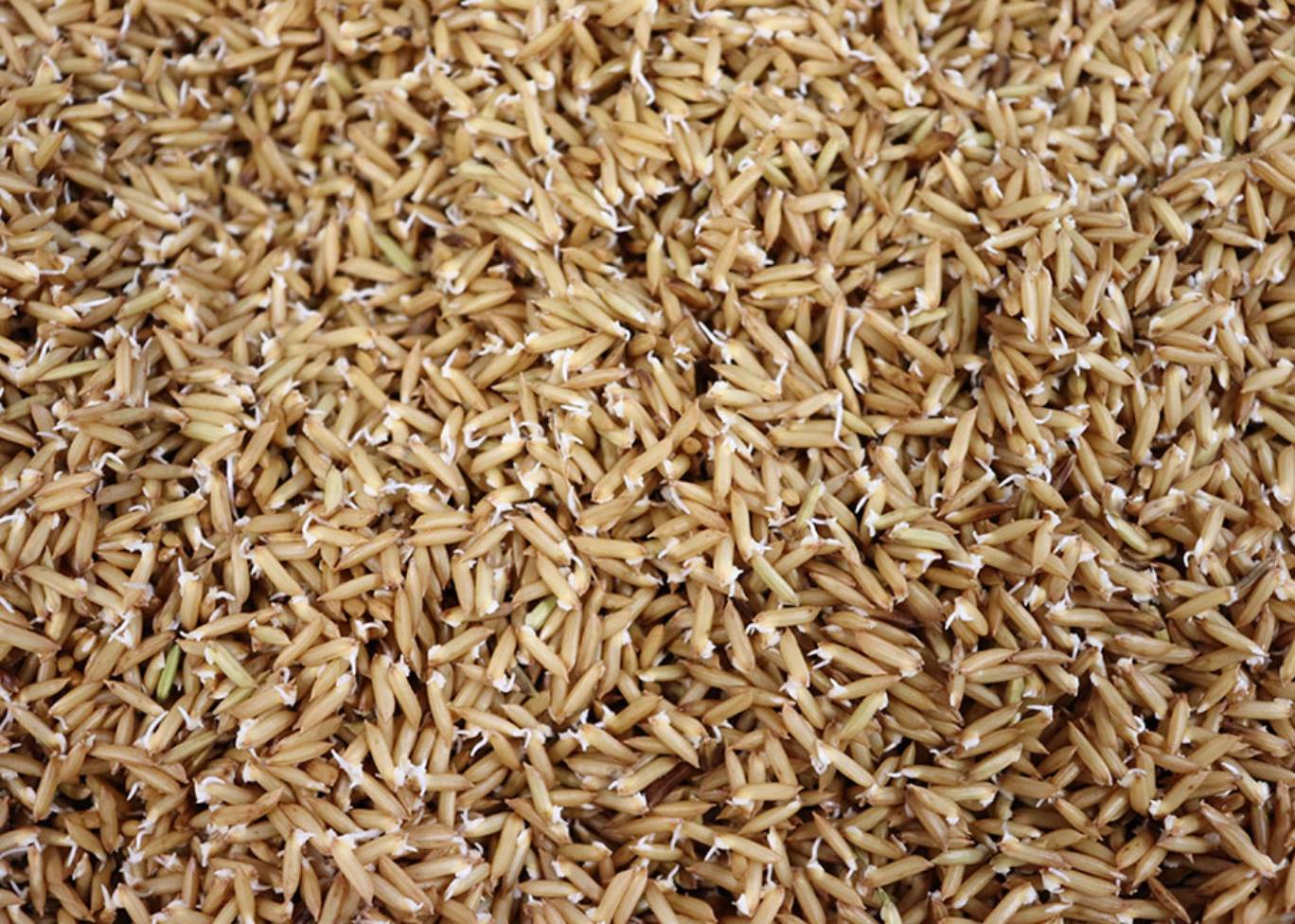
Rice, a staple food in Brazilian households, can become even richer in certain nutrients when subjected to the germination process. Research conducted by scientists from Embrapa, the Federal University of the State of Rio de Janeiro (Unirio), and the State University of Campinas (Unicamp) has shown that this process increases the content of bioactive compounds beneficial to health, reduces cooking time, and opens up possibilities for the development of new, higher-value-added food products. Researcher Cristina Yoshie Takeiti, from Embrapa Agroindústria de Alimentos (RJ), reveals that germination increases the content of gamma-aminobutyric acid (GABA) by approximately 91%. This result is obtained in a short germination time (16 hours). GABA is a neurotransmitter associated with various physiological benefits, such as antihypertensive and antidiabetic effects, and assistance in controlling depression and anxiety, according to in vitro and in vivo studies. “Germination activates natural mechanisms present in the grain that increase important bioactive compounds such as flavonoids and phenolic acids. These compounds have antioxidant properties that can reduce the risk of chronic non-communicable diseases,” explains Takeiti. In addition to making the cereal more nutritious, germination also reduces preparation time, an important attribute for the modern consumer. The study compared different types of rice (germinated, parboiled, and polished), evaluating nutritional, technological, and microbiological characteristics after different preparation and storage methods such as cooling and freezing.
Opportunities for innovation
Scientists highlight that germination can contribute to the development of new functional rice-based foods, expanding the portfolio of more nutritious products aligned with consumer demands for health, convenience, and sustainability. “Stimulating new industrial applications can strengthen the competitiveness of the rice production chain in Brazil, adding value to the cereal,” reinforces Takeiti. In addition to increasing bioactive compounds, another significant result is that germination promotes changes in the composition and structure of rice starch—the process increases the resistant starch content after freezing the cooked product. This type of starch is associated with prebiotic effects and improved intestinal function. “Germinated rice, when cooked in an electric rice cooker and frozen for 30 days, shows a 100% increase in resistant starch content, which gives the grain this prebiotic character,” explains Maria Eugênia Oliveira, a researcher at the Faculty of Food Engineering (FEA/Unicamp). The increase in resistant starch content is associated with the phenomenon of starch retrogradation. During cooking, the original crystalline structure of starch is converted into a disorganized structure through gelatinization. When cooked rice is subjected to low temperatures for an extended period, this structure reorganizes and becomes ordered again. This molecular rearrangement transforms the starch into resistant starch. Because it is less susceptible to digestion by enzymes in the human body, it acts as a prebiotic fiber in the body and contributes to intestinal health. The study also found that different cooking methods—conventional pot, microwave, and electric cooker—differently influence characteristics such as texture, water absorption, and carbohydrate composition, indicating opportunities to optimize industrial and domestic food preparation processes.
Food safety requires attention to storage.
Despite the benefits, the Unicamp researcher warns of the importance of good practices for preserving cooked rice. “Experiments showed that sprouted rice kept at room temperature exhibited growth of the bacterium Bacillus cereus, associated with foodborne illnesses,” said the scientist and food technologist. On the other hand, cooling or freezing the food immediately after preparation prevented the multiplication of the microorganism, demonstrating that proper refrigeration is an effective measure to ensure the safety of consuming the sprouted product. The results reinforce recommendations already adopted by health authorities: do not leave cooked rice at room temperature for long periods and store it refrigerated or frozen whenever it is not consumed immediately.
Brown rice and sprouted rice
Sprouted rice is whole grain rice in its husk that has undergone a soaking and germination process (the emergence of a small sprout), which increases its nutrients, improves its texture, and facilitates digestion.
Main differences
Brown rice is simply husked. Sprouted rice is soaked in warm water for 4 hours, drained, sprouted for 20 hours, and finally dried in air-circulating dryers. Afterwards, it is processed and may be polished (white rice). This germination process activates enzymes that increase levels of bioactive compounds, such as gamma-aminobutyric acid (GABA), which is about 15 times higher than in regular brown rice. Both are rich in fiber and minerals, but sprouted rice offers a superior nutritional profile and better palatability. Regarding taste and texture, sprouted rice has a sweet aroma and is less hard than regular brown rice and easier to digest. Furthermore, sprouted rice cooks faster than brown rice because the grain has already been pre-gelatinized.
Health benefits
Gamma-aminobutyric acid (GABA) is a natural compound found in various foods and known to act as an important neurotransmitter in the human body. In the brain, it helps regulate neuronal activity, contributing to the balance of the nervous system. In vitro and in vivo scientific studies associate the consumption of foods rich in GABA with several health benefits, such as: ● assistance in controlling blood pressure; ● improved sleep quality; ● reduction of stress and anxiety; ● possible contribution to memory and learning. Resistant starch – Not all the starch present in food is completely digested by the body. A portion of it reaches the large intestine practically intact and begins to be fermented by the intestinal microbiota. This type is called resistant starch precisely because it resists digestion in the small intestine. In the body, resistant starch acts similarly to dietary fiber and can bring several benefits: ● improved intestinal function; ● stimulation of the growth of beneficial bacteria in the microbiota; ● assistance in controlling blood glucose levels; ● Greater feeling of fullness.
This text was translated by machine from Brazilian Portuguese.