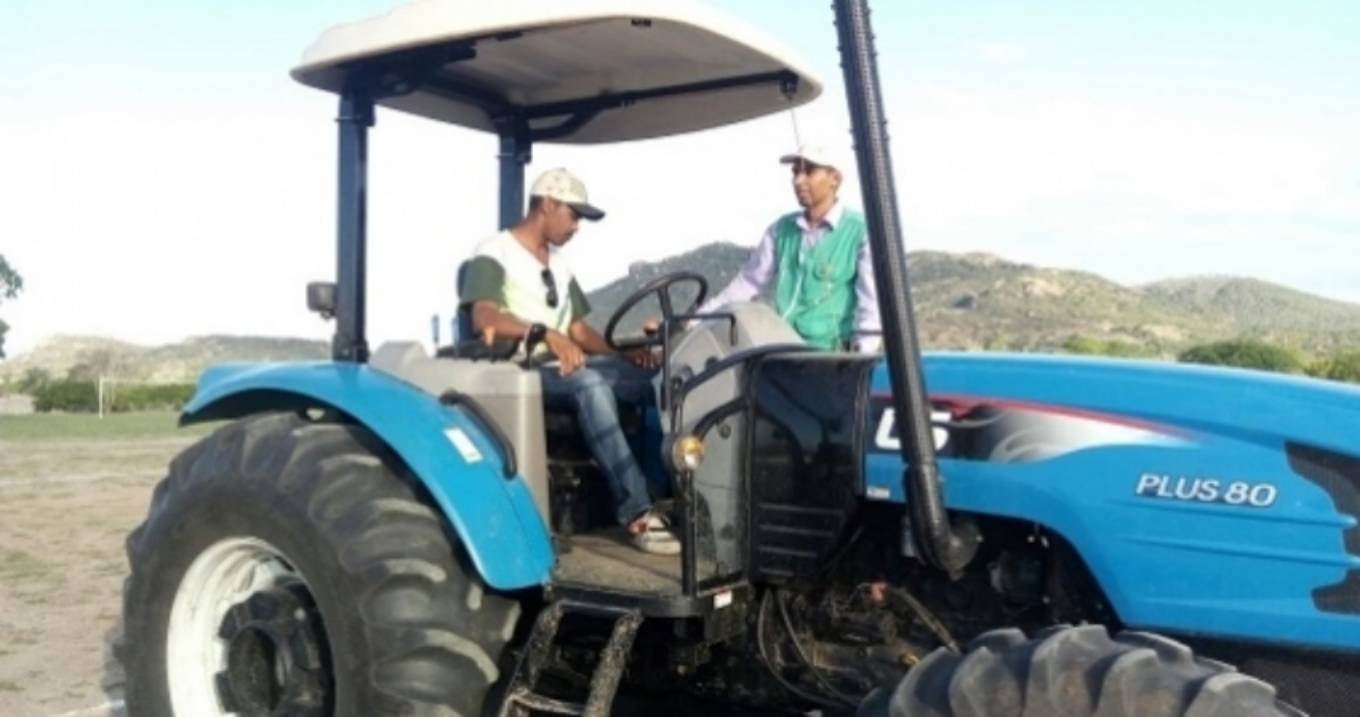
The difficulty faced by rural producers in finding qualified workers also reveals opportunities for those seeking to enter the job market. Research conducted by the Mato Grosso Institute of Agricultural Economics (Imea), in partnership with the National Rural Learning Service of Mato Grosso (Senar MT), shows that 62.62% of producers in Mato Grosso report high difficulty in hiring new employees. The result of this study was released on Tuesday (14) at the Productive Sectors Forum, which is part of the program of the 58th Expoagro, in Cuiabá (MT). The lack of technical qualification was pointed out by 69.16% as the main problem related to labor. Among the most demanded functions, the operation of agricultural machinery occupies the first position, cited by 63.77% of respondents. According to Imea, the results reflect the transformation of Mato Grosso agriculture. With increasingly mechanized and technological properties, the need for professionals prepared to operate equipment and work in more complex production processes is growing. According to Cleiton Gauer, superintendent of Imea, the challenge can also be seen as a professional opportunity. “When more than 60% of producers report high difficulty in hiring, the data raises an alert, but it also shows that there is room for those who are prepared. Agriculture and rural professions have changed. The machine operator is an example: today, they work with increasingly technological equipment. For those seeking a profession or a new career, qualification can be the gateway to a constantly modernizing sector,” he states. The survey interviewed 415 rural producers from 87 municipalities in Mato Grosso. The research has a 95% confidence level and a 5% margin of error for the state results. The survey counted 6,814 permanent workers on the participating properties, with an average of six agricultural employees per establishment. The CLT (Brazilian labor law) appears as the predominant form of hiring permanent workers in 96.12% of the responses. In addition to remuneration, the properties offer benefits. Farm-provided food was cited by 85.19% of producers, while 84.95% provide housing or lodging. Other benefits mentioned include transportation, training, food vouchers or meal vouchers, health insurance, and internet access. According to Ronaldo Vinha, Director of Institutional Relations at the Mato Grosso Federation of Agriculture and Livestock (Famato), it is necessary to broaden awareness of the professional opportunities available in the field. “Agribusiness has become more technological, professional, and specialized. The research shows the presence of formal employment and benefits such as food and housing. When we show this reality, we also show that there are career possibilities for different profiles. The invitation is for people to learn about agribusiness, seek qualifications, and see the opportunities that exist in the sector,” he states.
Machine operators lead the demand.
Agricultural machinery operators are the most sought-after professionals, mentioned by 63.77% of producers. Next are general service workers (38.65%), agricultural technicians or agronomists (14.25%), pest monitors (10.87%), and professionals for management or supervisory positions (10.39%). The demand for operators follows the advancement of mechanization. While more modern equipment transforms certain activities, the demand for workers capable of operating more complex machinery and keeping up with the technological evolution of farms is growing.
Free qualification as a form of entry
It is in bridging the gap between the sector's demands and the preparedness of workers that Senar MT operates. The institution offers free training in areas such as agriculture, livestock, agro-industry, management, health, and occupational safety. Currently, Senar MT has 278 types of courses in its portfolio. Between January and June 2026 alone, 7,129 actions were carried out, including courses, lectures, and technical classes, reaching approximately 67,500 participants. In the area of agricultural mechanization, directly related to the main demand identified by the research, 2,034 courses were held in the first half of 2026, with 11,126 people trained in 55,224 hours of training. For the Formal Education Manager of Senar MT, Pedro Souza, qualification can connect those seeking an opportunity with the needs of the sector. “Research shows a concrete demand for trained professionals. For those wishing to enter the job market or seek a new profession, qualification can be the first step. The role of Senar MT is to build this bridge, offering free training connected to the real needs of the field,” he states. Training is part of the routine of 81.20% of the properties surveyed. Among the institutions sought by producers to train their workers, Senar MT is the most cited, with 71.13%. All courses offered by Senar MT are free. Those interested can contact the nearest Rural Union to check the schedule and register. Through a partnership with 96 Rural Unions linked to the Famato System, the institution operates in all 142 municipalities of Mato Grosso.
This text was translated by machine from Brazilian Portuguese.