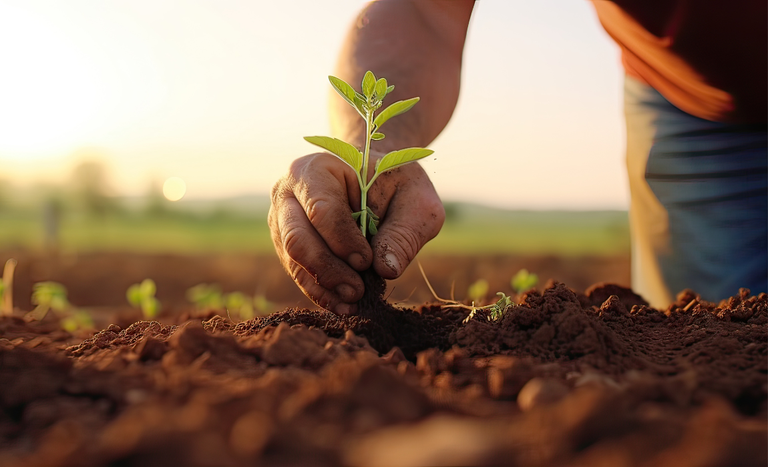
Although there is no precise data mapping to date, the regenerative agriculture model is gaining ground in Brazilian agriculture through a series of initiatives, pilot projects, and experiences across the country. Conceptually, this approach is anchored in the adoption of good agricultural practices, including no-till farming, integrated systems, crop rotation, and the use of bio-inputs, among others, which contribute to adapting crops to climate change, increasing crop resilience, reducing the use of inputs and natural resources, and promoting socio-environmental and productive gains in the field. However, according to experts on the subject, scaling up regenerative agriculture now requires the development of mechanisms capable of recognizing, pricing, and rewarding these results, thus creating a market around this model. "The advancement of this agenda depends on the ability to connect socio-environmental performance, risk reduction, and the generation of economic value for producers, companies, and financial institutions," says Aline Locks, co-founder and CEO of Produzindo Certo, which leads the Reg.IA initiative, the first regenerative agriculture consortium in Latin America, supported by brands such as Bayer, BrasilSeg, GAPES, InPlanet, Milhão Ingredients, Mina Mercantil, and Proforest. At a recent event organized by Reg.IA in São Paulo, sustainable finance and agribusiness specialist Daniela Mariuzzo pointed out that the challenge is to monetize the deliverables of regenerative agriculture, which "today has value, but no price." "Talking about regenerative agriculture without metrics is romanticism; with metrics, a market is created." Aline emphasizes that, on one hand, there is a growing demand from investors, consumers, and global supply chains for more sustainable production models. "On the other hand, rural producers and companies continue to advance in the adoption of regenerative practices, but still face challenges in economically capturing the benefits generated." In its second year of operation, Reg.IA already brings together more than 40 participating farms, surpasses 50,000 hectares of regenerative land, and accounts for more than 200,000 tons of regenerative soybeans and 450,000 tons of verified corn. The consortium also expanded the monitored area from just over 37,000 hectares to 54,137 hectares of regenerative land, registering a growth of 44%. Together, the areas participating in Reg.IA also conserve more than 60,000 hectares of native vegetation. By joining Reg.IA, the rural producer, for example, has access to a set of benefits that support the regenerative transition, such as discounts on rural insurance, differentiated credit conditions and access to inputs, and also the potential payment of premiums for soybeans and corn when there is effective commercialization between the partner company and the farmer.
This text was translated by machine from Brazilian Portuguese.