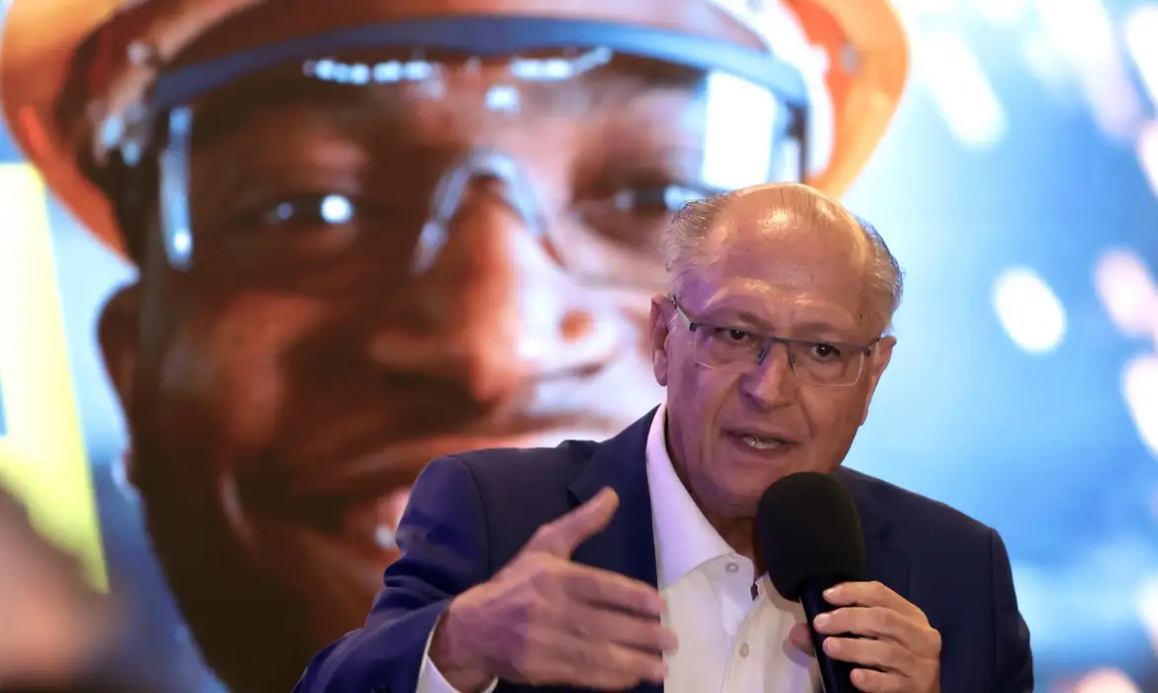
The Reciprocity Law should not be interpreted as a retaliatory measure against the United States, but as an instrument to correct a situation considered unfair by the Brazilian government, said Vice President Geraldo Alckmin on Tuesday (21), according to a statement from "Agência Brasil""The idea is not retaliation. It's said that an eye for an eye can lead to both being blind. Reciprocity means: we are being wronged and we want to correct this," stated Alckmin. He and the Minister of Development, Industry, Trade and Services, Márcio Elias Rosa, gave an interview after a meeting with business leaders from sectors affected by the new tariff hikes imposed by the Donald Trump administration. In recent days, several business associations have expressed concern about possible retaliations imposed by Brazil. The vice-president emphasized that the Reciprocity Law was unanimously approved by Congress last year. According to Alckmin, the legislation offers instruments for an institutional response, if necessary, respecting legal procedures such as consultations and public hearings. The Executive branch is finalizing a support package for the affected sectors and accelerating the search for new markets for national exports. The two detailed the main axes of the aid package for exporters.
Three fronts
The government structured its response to the American surcharge around three pillars: financial support for companies, market diversification, and ongoing dialogue with productive sectors to assess the impacts. The United States measure foresees a 25% tariff on Brazilian products, with the possibility of an additional 12.5%, affecting approximately 18% of exports destined for the American market, equivalent to about US$7.4 billion.
Internal support
Among the measures under study is the offer of credit through the Brazil Sovereign program for working capital and investments of affected companies. The government is also evaluating temporarily relaxing the rules of the drawback regime, exemption, suspension or restitution of taxes on inputs used in the production of goods for export. The idea is to allow exporters who lose market share in the United States more time to meet export commitments without losing tax benefits. Another topic discussed is the possibility of adjusting requirements related to job retention for sectors that receive emergency support. "The fact that it is unfair, unreasonable and inappropriate does not mean that the Brazilian government will not adopt all measures to first help those in need. The Brazilian government has to look at its sectors and take measures capable of, at a minimum, mitigating the damage and the cost," said Márcio Elias Rosa.
New markets
Meanwhile, ApexBrasil, the state agency focused on promoting Brazilian exports, will intensify its search for new destinations for the country's products. Priority markets include India, Mexico, Singapore, Japan, and Southeast Asian countries, in addition to advancing negotiations on trade agreements between Mercosur and the European Union, Mercosur and the European Free Trade Association (EFTA), and Mercosur and Singapore. The government believes that diversifying export destinations could reduce dependence on the US market, especially for higher value-added industrial segments.
Affected sectors
Among the sectors most exposed to tariffs are: Electronics; Machinery and equipment; Auto parts; Footwear; Other industrial products exported to the United States. According to the government, the US market is the main destination for Brazilian exports of electronics. The country accounts for about a quarter of the external sales of the machinery and equipment sector.
Timeline
The government is working with a timetable considered crucial for defining response measures. Next Friday, a decision is expected from the United States regarding the potential cumulative application of an additional 12.5% tariff on Brazilian products stemming from accusations of forced labor. On July 29th, a 25% surcharge will come into effect for goods already in transit to the American market. Until then, the Ministry of Development intends to conclude meetings with representatives from the plastics, machinery, vehicles, auto parts, rubber, and footwear sectors to consolidate a diagnosis of the impacts and define the support package. An official mission to India is also planned to expand commercial opportunities, especially for Brazilian manufacturers of machinery and equipment.
This text was translated by machine from Brazilian Portuguese.