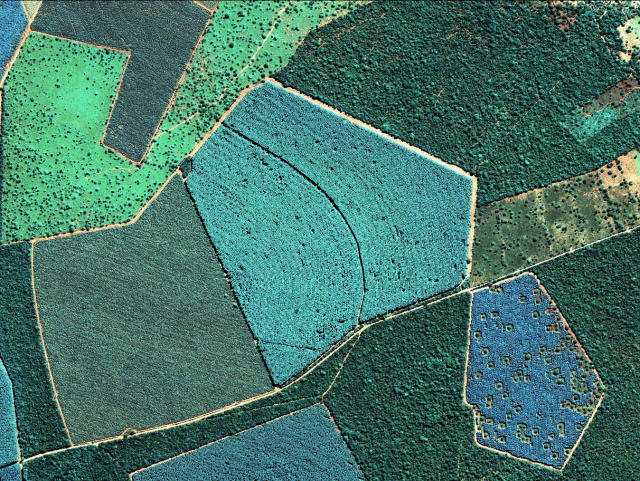
Since April 1st, Brazil has tightened the requirements for obtaining rural financing. Financial institutions operating credit under the Plano Safra program have begun consulting data from the Brazilian Amazon Deforestation Monitoring Project by Satellite (Prodes) before releasing loans. This measure aims to make production more environmentally responsible, but in practice, the application has not distinguished between regular and irregular producers. Consulting Prodes verifies if a property has a positive finding, meaning the identification of possible deforestation in the area. However, everyday activities such as pasture clearing, crop rotation, or even the harvesting of eucalyptus trees can also be interpreted as irregularities. These notifications are called false positives because they do not necessarily correspond to the reality of the property, as they may be related to rural management and not to the illegal suppression of native or recovering vegetation. Despite the possibility of false positives, the measure in force automatically blocks rural credit for areas with such a finding. This has caused problems for producers in different parts of the country, since the Prodes system alone does not differentiate between a real finding and a false positive. This effect can make planting unfeasible for these producers, who are already facing tight margins, high interest rates, and indebtedness. According to data from Datagro, more than 5.4 million positive findings on rural properties in the Prodes system were registered up to October 2025. Furthermore, according to the consultancy, some of these notifications are false positives, highlighting the need for more precise verification mechanisms before imposing credit restrictions.
Most urgent measure
The determination of whether to consult Prodes is regulated by two resolutions of the National Monetary Council (CMN): Resolution No. 5,193/2024 and Resolution No. 5,268/2025. To avoid undue impediments, members of the Parliamentary Agricultural Front (FPA) filed two Draft Legislative Decrees (PDL), one in the Chamber of Deputies (178/2026) and the other in the Federal Senate (176/2026). Basically, both proposals suspend these resolutions so that the rule ceases to be mandatory. The understanding is that this is a measure with immediate effect, therefore, more urgent to restore the ability of producers to obtain credit. “It is considered appropriate to suspend the aforementioned provisions until more precise and reliable environmental verification mechanisms are made available, or until simplified procedures are established that allow producers themselves to prove the environmental compliance of their land, without additional costs and without prejudice to the proper functioning of rural credit,” pointed out the president of the FPA, Deputy Pedro Lupion (Republicanos-GO), author of one of the proposals.
Rule improvements
Two other proposals address the improvement of regulations related to rural credit and environmental requirements. The intention is to make these mechanisms more efficient so that producers who operate within the law are not penalized. Bill 2,564/2025 allows inspection agents to adopt administrative measures when environmental damage is proven. Furthermore, it prohibits the imposition of embargoes based solely on satellite imagery. The initiative, currently under consideration in the Chamber of Deputies, is from the coordinator of the Rural Indebtedness Commission of the FPA (Parliamentary Front for Agriculture), Deputy Lúcio Mosquini (MDB-RO), and Deputy José Adriano (PP-AC), who is also a member of the caucus. “With the current model, when the environmental agency identifies a possible irregularity solely through satellite imagery or another remote monitoring method, it can issue an embargo immediately, without personally verifying the situation. This means that producers who are within the law are penalized along with those who actually committed an infraction,” commented Mosquini. In the Senate, Bill 205/2025 establishes parameters for limiting rural credit due to environmental issues. For example, properties that do not have the Rural Environmental Registry (CAR) are prevented from accessing financing from the Harvest Plan. In practice, the proposal ensures that sub-legal norms do not carry more weight than what is foreseen in the Forest Code, as pointed out by the 2nd vice-president of the FPA in the Senate and author of the bill, Senator Jaime Bagattoli (PL-RO). “The main objective of this parliamentary initiative is to harmonize the divergences in the elaboration and application of sub-legal norms, providing greater legal certainty to financial institutions in the execution of their rural credit granting policies vis-à-vis the purposes of our Forest Code, which must unquestionably prevail,” he said in the justification of the bill.
Government awareness
In addition to initiatives in the National Congress, the FPA also sent official letters to members of the CMN (National Monetary Council), requesting the postponement of the body's resolutions and a meeting to discuss the issue. The document was addressed to the president of the Central Bank, Gabriel Galípolo, and to the Minister of Planning and Budget at the time, Simone Tebet. One of the letters was sent in March, before the resolutions came into effect, and requests at least a six-month extension for the validity of the requirements related to Prodes (Environmental Regularization Program). The parliamentarians point out that this would be an adequate minimum time to improve the resolutions and ensure that regular producers are not harmed by the initiative. Despite the requests, there was no response. "The isolated use of Prodes as an impediment criterion can impose on rural producers the burden of proving, through often costly and complex means, the environmental regularity of their area," the FPA argued in the document.
This text was translated by machine from Brazilian Portuguese.