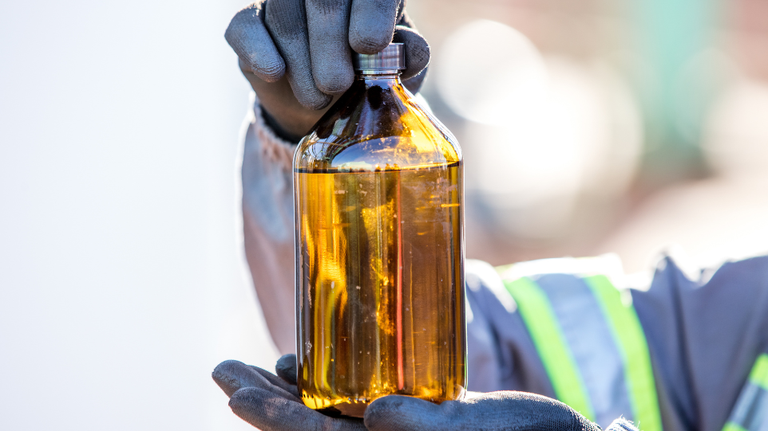
President Luiz Inácio Lula da Silva's visit to the Mauá Institute of Technology (IMT) on Monday (13), in São Caetano do Sul (SP), marked the beginning of a new stage for the Brazilian biofuel program. While observing tests that will evaluate higher biodiesel blends with diesel, Lula reinforced the Federal Government's commitment to implementing the Future Fuel Law and highlighted that Brazil is capable of leading the global energy transition. During the visit, the president stated that Brazil can show the world that it is possible to build a future with less dependence on fossil fuels and highlighted that the start of the 300-hour tests represents a milestone for the evolution of biodiesel in the country. The new stage will evaluate the performance of engines with higher percentages of biodiesel and will provide the technical basis for future decisions on expanding the mandatory blend from the current 15% to 16% to 25%. The meeting brought together representatives from the federal government, the productive sector, and the scientific community at the laboratory responsible for studies conducted within the scope of the Subcommittee for Evaluating the Technical Feasibility of High-Content Biofuel Blends in Fossil Fuels, created by the Ministry of Mines and Energy.
In the words of President Lula
“I came here to see the tests with higher percentages of biodiesel. We will prove that what we produce here is of high quality, safe, and can make Brazil much less dependent on external conditions, and lead the world towards a new energy scenario,” said Lula. “Our country has all the necessary conditions to be a protagonist in the energy transition, and the studies we are conducting here will prove it,” he added. For the president of APROBIO, Jerônimo Goergen, the presidential visit consolidates biodiesel as one of the priorities of the Brazilian energy agenda: “Our commitment to the entire production chain and to consumers has always been to ensure that each advance is backed by technical criteria. This stage has been fulfilled. We have concluded an important cycle and are now beginning a new phase of consolidation, with long-term tests that will provide even greater security for the advancement of the blend. President Lula's presence also demonstrates that the government recognizes biodiesel as one of its priorities to strengthen energy security, boost national development, and accelerate the transition to a low-carbon economy.”
Tests reinforce technical maturity for biodiesel advancement, says Binatural CEO.
“Brazil is not discussing a future solution, but the natural evolution of a public policy built over more than two decades. The national industry demonstrates the capacity to meet the increased demand with scale and quality. The tests reinforce the necessary technical support for regulatory decisions and show that the country is prepared to move forward, safely, with the national biodiesel policy,” emphasizes André Lavor, CEO of Binatural. According to the executive, the expansion of the mandatory blend represents a strategic opportunity for the country, with benefits that go beyond the environmental agenda. “Each percentage point increase in the blend reduces the need for fossil diesel imports by approximately 800 million liters per year. In an international scenario of geopolitical instability, expanding biodiesel means strengthening Brazilian energy security by utilizing an industrial capacity that the country already possesses.” The expansion of biodiesel also strengthens national production chains, increases the added value to agribusiness, and boosts family farming through the Social Biofuel Seal, one of the main instruments for productive inclusion in the sector. Currently, Brazil already operates with B15, with a projected consumption of 10.5 billion liters of biodiesel by the end of 2026, and has installed industrial capacity exceeding current demand to support a B20 blend, allowing for an increase in the blend without the need for large additional investments.
This text was translated by machine from Brazilian Portuguese.