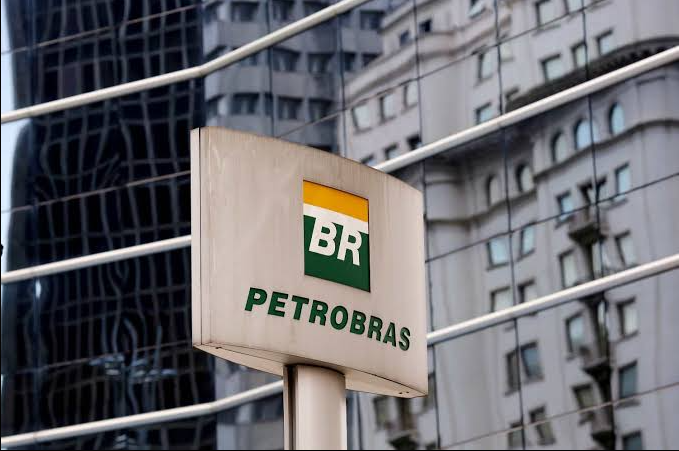
Petrobras President Magda Chambriard said on Wednesday (18) that the suspension of the diesel and gasoline auction that was to take place this week is directly linked to the need to reassess stocks. The international oil and derivatives market is experiencing a scenario of uncertainty due to the conflict in the Middle East, says a note from "Agência Brasil". According to Chambriard, the decision was made after the company brought forward fuel deliveries and identified a risk of supply imbalance. "We suspended the auction, firstly, because there is a need to constantly reassess the available stock so that we don't deliver everything one day and run out the next," said Magda. "We brought forward between 10% and 15% of our fuel deliveries. But the conditions no longer allowed us to do so, at the risk of penalizing society again, which we seek to protect from the anxieties and volatility of the international market," she added. Last week, Petrobras announced a R$ 0.38 increase per liter of diesel A, sold by its refineries to distributors, who carry out the mandatory blending with biodiesel and send the fuel to retail outlets. The president of the state-owned company participated this Wednesday in a ceremony in Rio de Janeiro where an agreement was signed to secure the location for the future Museum of Petroleum and New Energies, which will be in the former Automobile Club of Brazil building in the city center. At the event, Magda Chambriard also confirmed that there had been problems with vessels that were supposed to have docked in the country carrying petroleum derivatives. According to her, Petrobras monitored six third-party ships that were en route to Brazil, approached Brazilian ports, and had their destinations diverted. "We cannot guarantee that they were diverted due to better sales opportunities somewhere in the world. That is not our responsibility. What is our responsibility is that all our commitments are being fulfilled regularly," said Magda. :: Impact of the War The decision comes amid escalating tensions in the Middle East, especially in the Strait of Hormuz region, through which a significant portion of the world's oil passes. According to the president, the conflict—initially seen as brief—has become uncertain in duration, with direct impacts on supply, logistics, and prices. Magda Chambriard stated that the disruption of flows and the increase in transportation and insurance costs have increased volatility in the global fuel market. This scenario makes planning more difficult. “It is very difficult to predict the future. What we need to do is prepare ourselves in the best way to face this challenge. We are constantly reassessing the scenario to know what needs to be done, how to avoid this volatility that impacts society. And, at the same time, honor the investment of shareholders, whether state-owned or private.” Chambriard emphasized that Brazil still depends on imports for about 30% of the diesel consumed, which increases vulnerability during times of global crisis. Part of this volume is brought in by private agents, whose actions may vary according to market conditions. "Why does this happen? Because the Brazilian state, at a certain point, decided that Petrobras would not be alone in this market. It decided, for example, that we had to sell BR Distribuidora. It decided that imports should be stronger. A series of decisions that work in times of stability, but, in times of crisis, exacerbate its weaknesses," said the president. :: Understand the conflict in the Middle East For the second time since June 2025, Israel and the United States launched attacks against Iran amid negotiations over the Persian country's nuclear and ballistic missile program. The most recent offensive began on February 28, when the US and Israel bombed the capital, Tehran. The country's supreme leader, Ayatollah Ali Khamenei, died in this attack, along with other officials. The Ayatollah's son, Mojtaba Khamenei, was chosen as the country's new leader. Iran, in turn, fired missiles at Gulf Arab countries with a US military presence, such as Kuwait, Qatar, the United Arab Emirates, and Jordan. The countries involved in the conflict are among the world's largest oil producers and exporters, and a significant portion of this production passes through the Strait of Hormuz, which has been blockaded by Iran. Uncertainty about supply has caused fuel prices to skyrocket on the international market, with oil already exceeding US$100 per barrel. :: Tax Reduction To curb the rise in fuel prices, the federal government announced the suspension of PIS and COFINS taxes on the import and sale of diesel. According to calculations by the Ministry of Finance, the suspension of federal taxes represents a relief of R$0.32 per liter in the price of diesel. In addition, the government signed a provisional measure (MP) subsidizing diesel for producers and importers. The federal government also proposed on Wednesday that states and the Federal District temporarily eliminate the Tax on the Circulation of Goods and Services (ICMS) on diesel imports. In return, the Union commits to compensating 50% of the revenue loss. The measure was presented by the executive secretary of the Ministry of Finance, Dario Durigan, during a meeting of the National Council of Tax Policy (Confaz).
This text was translated by machine from Brazilian Portuguese.