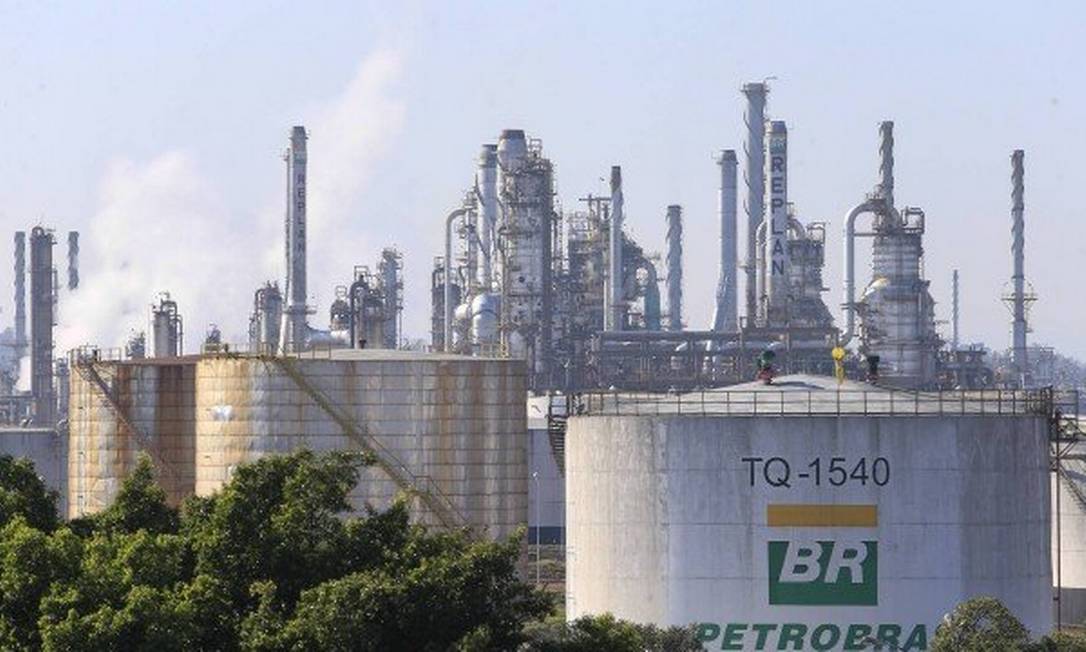
Petrobras President Magda Chambriard stated this Wednesday (1st) that the company is studying the possibility of making the country self-sufficient in diesel oil production within five years, according to a note from "Agência Brasil". The fuel has faced a recent global price surge due to the war in Iran. Currently, Brazil needs to import about 30% of the diesel oil consumed in the country, a petroleum derivative used by trucks, buses, and tractors. Chambriard explained that the company's business plan aimed for the "ideal" of reaching 80% of demand, with an expansion of about 300,000 barrels of diesel per day in five years. "We are reviewing this plan and asking ourselves if we can reach 100% in five years," she said during an energy event promoted by the CNN Brasil TV network in São Paulo. "Most likely, because Petrobras loves challenges, who knows, we might come up with the possibility of having a new business plan capable of delivering Brazil's self-sufficiency in diesel," she added. The company's business plan will begin to be discussed in May, according to the president of the state-owned company. The announcement usually takes place in November. :: Refineries According to Magda Chambriard, the expansion of diesel production by Petrobras can be achieved through a series of actions already underway. One of them is the expansion of the Abreu e Lima Refinery (Rnest), in Ipojuca, in the metropolitan region of Recife. Magda explained that the refinery was designed to deliver 230,000 barrels of diesel per day, but with expansions and renovations it will reach 300,000 barrels per day. Another point of action is the increase in production at the Duque de Caxias Refinery (Reduc), in Rio de Janeiro, which, associated with the Boaventura Energy Complex (formerly Comperj), will have its current capacity of 240,000 barrels per day increased to approximately 350,000. The president of Petrobras informed that the search for more production is being carried out in all of the company's refineries. She mentioned that, in the four plants located in São Paulo, adaptations are being made to reduce the production of fuel oil (used in furnaces, boilers, and turbine engines of thermal power plants) and prioritize the delivery of diesel. “Diesel is the driving fuel of national development. By increasing diesel production, gasoline will follow suit, the two main Petrobras products,” she stated. :: Diesel Price From the beginning of the war in Iran, on February 28th, until the week ending March 22nd (most recent data), the price of S10 diesel (less polluting) rose by about 23% in the country, according to the monitoring panel of the National Agency of Petroleum, Natural Gas and Biofuels (ANP), the sector's regulatory body. On the 14th, Petrobras implemented a readjustment of R$ 0.38. The government has taken measures to curb the price increase, such as eliminating the rates of the two federal taxes levied on fuel (PIS and Cofins), in addition to subsidies (a type of reimbursement) for oil producers and importers. There are also negotiations underway for the government, along with the states, to apply a subsidy of R$ 1.20 per liter of fuel. This Wednesday, another fuel sold by Petrobras, aviation kerosene (QAV), underwent a 55% price increase. QAV accounts for approximately 30% of airline costs. :: War and oil The conflict in the Middle East is taking place in a region that concentrates oil-producing countries and strategic routes, such as the Strait of Hormuz – through which 20% of world production passes – leading to distortions in the oil supply chain and price escalations in the global market. On Wednesday, the price of a barrel of Brent crude (the international benchmark) was trading just above US$101 (approximately R$520). Before the war, oil was priced near US$70.
This text was translated by machine from Brazilian Portuguese.