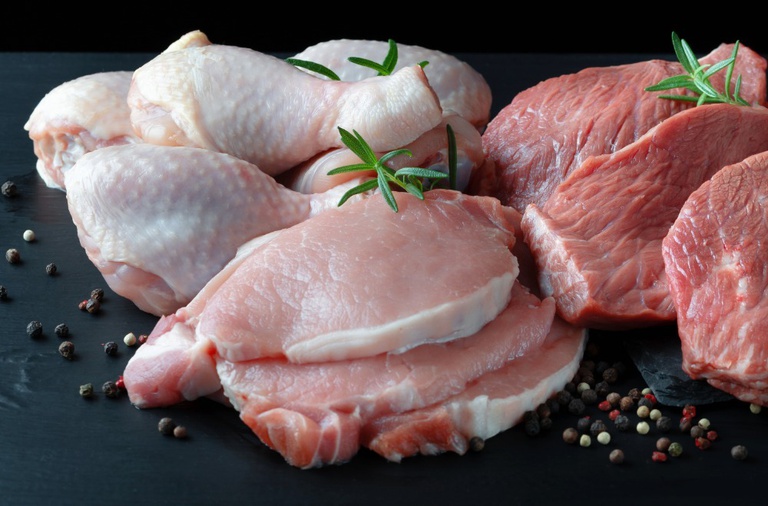
Pork and chicken production is expected to reach its highest level in the historical series of the National Supply Company (Conab) this year, exceeding 22 million tons when combined. Including beef, the total estimated value for the production of the three proteins is 33.38 million tons, a volume close to that estimated for 2025, when Brazil recorded record production. This trend is accompanied by an increase in the domestic availability of poultry and pork, as indicated in the Supply Chart released by Conab this Tuesday (14). In percentage terms, pork production shows the largest expected increase compared to 2025, approaching 4%. With the herd reaching the best amount in the historical series, equivalent to 44.8 million head, it is estimated that the total produced of the protein will reach 5.88 million tons, exceeding previous years. “The scenario indicates an increase in demand and exports, driven by the opening of new markets,” analyzes Gabriel Rabello, manager of Fibers and Basic Foods at Conab. The country is expected to export around 1.58 million tons, representing a 6.1% gain compared to 2025 and confirming the progressive growth of the market, accentuated since 2020, the year in which Brazilian pork exports reached the milestone of one million tons. Even with the increase in international sales, a 3.4% increase in the quantity of the product in the domestic market is also expected, with approximately 4.33 million tons available. Broiler production also follows the trend of surpassing the historical series. Production should reach more than 16 million tons, consolidating Brazil's position as the main global supplier. The data systematized by the Company demonstrate a 3.6% growth in exports, with an estimate of 5.34 million tons. “Exports should continue to rise in 2026, thanks to the low impact of avian flu in Brazil compared to other countries, reflecting the good sanitary conditions that ensure the quality and safety of Brazilian production,” assesses Rabello. In the domestic market, the projected availability is 10.85 million tons. The 1.8% increase compared to the previous year maintains favorable expectations for the commercialization of the product. Conab forecasts a slight decrease in beef production, which could reach 5.3% compared to 2025. Even so, this year the country should register the second highest production in the series, estimated at 11.3 million tons produced. The year 2025 was symbolic for Brazilian cattle farming. In addition to the record production in the national historical series, the country reached the position of the world's largest beef producer for the first time in the historical series compiled since 1960 by the United States Department of Agriculture (USDA). With investments in genetics, nutrition, and management that have ensured greater productivity in the herd, the drop in production may be less than predicted, according to Conab. The company also estimates that 4.35 million tons should be exported, a figure that, when considered within the historical series of beef cattle farming, exceeds the annual rates recorded between 2018 and 2024. The reduction in sales volume this year reflects the beginning of the reversal of the livestock cycle and the Chinese safeguard quota, in effect since January 1st. Through this measure, China, the largest importer of Brazilian beef in the last two years, limited national exports to a quota of 1.1 million tons per year, with a surcharge of 55% on the excess amounts. The Asian country also established quotas for other exporters of the protein, including Argentina, Australia, and Uruguay. In this context, beef exports should reach a high volume in the first half of the year. Eggs – Expectations for the poultry industry remain high for egg production, with a forecast of 51.2 billion units, a 4.6% increase compared to the projected result for 2025, corresponding to 49 billion units. The increased availability for the domestic market is another relevant point in the data series, completing the favorable picture for the national poultry industry.
This text was translated by machine from Brazilian Portuguese.