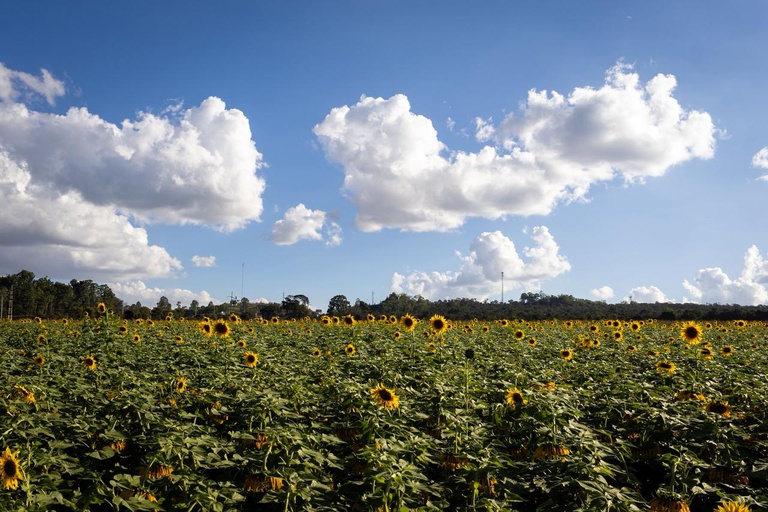
The Ministry of Agriculture and Livestock (Mapa) published, this Thursday (7), the Ordinances with the improved version of the Agricultural Zoning of Climatic Risk (Zarc) for sunflower cultivation in Brazil, which now considers six classes of available water in the soil. “Zarc is a tool for analyzing the risk derived from climatic variability and considers the characteristics of the crop and the soil. To improve Zarc, we employed new methodologies and parameters, in addition to an updated climate database, with new risk factors considered, associating water, thermal and phytosanitary issues,” explains researcher José Renato Bouças Farias, from Embrapa Soja. Farias explains that, for sunflower, the areas and sowing periods for cultivating the plant were defined with probabilities of yield losses of less than 20%, 30% and 40%, due to the occurrence of adverse meteorological events. “However, it is important to emphasize that Zarc does not establish the sowing periods and locations with the highest probability of obtaining the highest yields,” emphasizes the researcher. According to Farias, the new methodology for addressing the risks associated with available water in the soil will adopt six classes of available water, instead of just three soil types. The researcher states that available water will be estimated for the soil of each production area, based on silt, sand, and clay content, using an equation (pedotransfer function) adjusted for the different Brazilian soils. “Furthermore, the Zarc Girassol 6ADs will already be ready to incorporate, in the future, the effect of different levels of soil management and production systems to be associated with climate risk in future zoning work,” Farias adds. According to the researcher, improving the Zarc Girassol methodology ensures greater representativeness of the current reality, since the results obtained were validated in meetings held with the main actors in the sunflower production chain in November 2025. “Our proposal is to minimize risks and enable greater stability in production and income for the producer, which is strategic for maintaining and guaranteeing Brazilian productive capacity,” explains the researcher. SUNFLOWER CHARACTERISTICS Sunflower is little influenced by variations in latitude and altitude, shows tolerance to low temperatures, and is relatively resistant to drought. Regarding the crop's water needs, Farias states that the ideal would be around 500 to 700 mm of available water, well distributed throughout the cycle. “The phases most sensitive to water deficit occur during sowing and plant emergence and, mainly, from the beginning of capitulum formation to the beginning of flowering, followed by grain formation and filling,” Farias emphasizes. Another factor considered as a parameter in Zarc was the association of climatic conditions with phytosanitary risk, since the climate can favor – or not – the development of important diseases that are difficult to control. White rot, caused by the fungus *Sclerotinia sclerotiorum*, for example, is associated with cold and humid conditions. On the other hand, Alternaria leaf spot, caused by the fungus *Alternaria helianthi*, results from high temperatures and excessive rainfall. “Our study also sought to delimit the areas and identify the periods of lowest climatic risk for the occurrence of phytosanitary problems and, thus, favor the exploitation of sunflower cultivation in Brazil,” he emphasizes. The National Supply Company (Conab) estimates that the cultivated area in Brazil in the 2025/2026 crop year will be slightly over 63,000 hectares, mainly concentrated in the states of Goiás, Minas Gerais, Rio Grande do Sul, and Mato Grosso. “Despite the diverse uses of sunflowers and the crop's potential as a component of diversified and profitable production systems, variability in water availability and thermal conditions are the main limitations to expressing the yield potential of sunflowers in Brazil,” explains the researcher. DATABASE The meteorological database used in updating the Zarc (Agricultural Zoning for Climate Risk) is composed of historical series of approximately 30 years, extensively revised, consolidated, and updated for more recent periods, obtained from networks of conventional and automatic meteorological and pluviometric stations from various institutions. “The compiled rainfall series, with data from 1993 onwards, underwent homogeneity tests and consistency analysis and cover approximately 4,200 points distributed throughout the national territory,” explains Farias. ZARC AND PUBLIC POLICIES Since 1996, Zarc has been adopted by the Agricultural Activity Guarantee Program (Proagro). Zarc's recommendations are used by Proagro and the Rural Insurance Premium Subsidy Program (PSR) in more than 40 crops. According to Farias, Brazil loses approximately R$ 11 billion per year due to extreme risks, mostly resulting from adverse weather conditions such as water scarcity (drought and dry spells), very low temperatures (frost), rain during harvest, diseases favored by climatic conditions, very high temperatures, excessive rain, hail, and strong winds. The new version of Zarc for sunflowers aims to better reflect field realities and contribute to reducing losses, as well as rationalizing agricultural credit and insurance.
This text was translated by machine from Brazilian Portuguese.