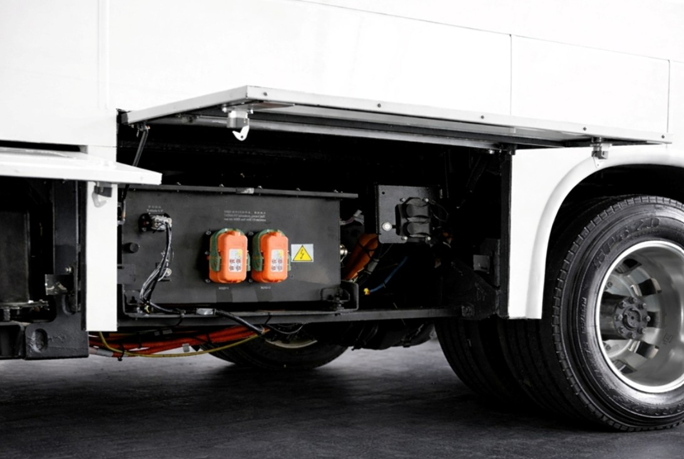
Marcopolo, together with Sertran Transportes and bp bioenergy, announces the start of a demonstration operation of the Volare Attack 10 Hybrid – Electric/Ethanol minibus. “This project represents a concrete advance in the adoption of new technologies and the expansion of the use of renewable energy in mobility. It reinforces Marcopolo's commitment to leading the energy transition of Brazilian transport, contributing to the reduction of emissions and a more sustainable future,” highlights Ricardo Portolan, Director of Domestic Market Commercial Operations and Marketing at Marcopolo. According to Mauro Picinato, CEO of Sertran, the initiative originated approximately three years ago, when Marcopolo presented an embryonic project for a hybrid vehicle powered by ethanol as a technological alternative for the decarbonization of transport. “We immediately recognized the alignment with our sector, strategy, and mission. We joined the project because of the strong operational and environmental synergy, especially the use of a fuel produced by the client itself, and to be pioneers in adopting this solution, reinforcing our role as active agents in the technological transformation of the sector,” says the executive. :: Strategic operational partnership The implementation of the project brings together complementary skills from the three companies. Marcopolo contributes the technology development and technical support of the operation; Sertran will be responsible for driving the vehicle to transport employees; and bp bioenergy participates as a strategic partner in the pilot, providing one of its units as a real-world application environment, in addition to supplying the ethanol used in the hybrid system. For bp bioenergy, the search for renewable fuels for the fleet and operation is part of an ongoing agenda focused on safety, operational efficiency, and emission reduction. In this context, the company evaluates the maturity of different technologies to identify the solutions best suited to its operations. Ethanol plays a strategic role in this agenda because it is a renewable fuel produced by the company itself, in line with the logic of circularity. André Monteiro, Director of Supply Chain and Administrative Operations at bp bioenergy, reinforces the initiative's potential. “This project is valuable because it brings together different competencies around a common goal: testing viable paths for the evolution of transportation with lower carbon intensity. At the same time, it highlights the potential of Brazilian bioenergy and the role of biofuels in the energy transition, contributing not only to the operation but also to the maturation of this type of solution in the sector,” he comments. The pilot project will be conducted at one of bp bioenergy's plants, with an operational route defined jointly with Sertran. Marcopolo Engineering will continuously monitor the operation, evaluating performance and making necessary technical adjustments. :: National technology to accelerate the decarbonization of transportation The Volare Attack 10 Hybrid – Electric/Ethanol is the first hybrid minibus produced in the world, developed by Marcopolo as an accessible and scalable solution for the decarbonization of transportation. The model incorporates technological integrations from HORSE Powertrain Limited and WEG. The vehicle utilizes a Range Extender (REX) architecture, which combines 100% electric traction with ethanol-powered energy generation. A high-voltage battery, with up to 120 kWh, powers the WEG electric motor responsible for traction. Energy replenishment is provided by a HORSE 1.0 Turbo engine, which acts exclusively as a generator, without mechanical connection to the wheels, and always operates within the ideal efficiency range, reducing emissions and fuel consumption. This architecture allows the model to achieve a range of 500 to 650 km without the need for charging infrastructure, increasing its viability in rural areas and continuous operations.
This text was translated by machine from Brazilian Portuguese.