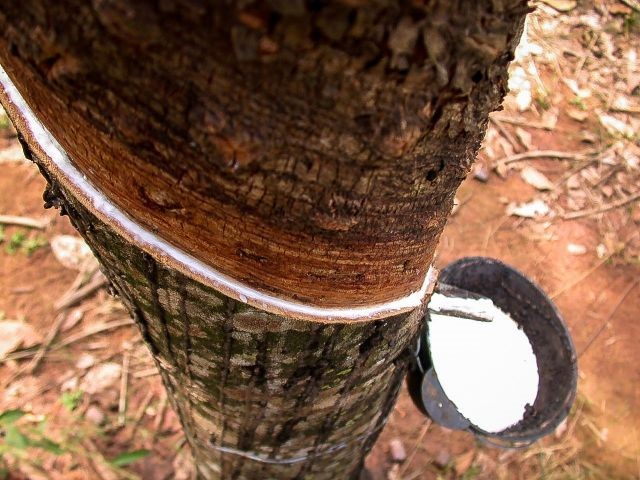
In late June, Liberian President Joseph Boakai decreed an indefinite ban on exports of unprocessed natural rubber as part of the government's strategy to strengthen the country's industrialization and increase the value added to Liberia's main agricultural commodity.
The measure, established by Executive Order No. 166 and in effect since July 1, 2026, prohibits shipments of natural latex, coagulated latex, lumps, residues, and other forms of raw rubber, authorizing only exports of processed products, such as concentrated latex, technically specified rubber (TSR), smoked sheets (RSS), and crepe rubber.
According to Boakai, the decision is part of the Agenda for Inclusive Development and seeks to stimulate the establishment of local industries, generate jobs, increase tax revenue, and expand foreign currency earnings. The Executive argues that the continuous export of raw rubber has, over the years, hindered the development of the domestic industrial chain.
The order also tightens oversight, providing for the seizure of irregular cargo, fines of up to US$100,000 for companies and US$50,000 for small producers, as well as the permanent revocation of export licenses for repeat offenders and the possibility of criminal prosecution. In parallel, the government promises tax incentives, subsidized credit, and infrastructure investments to expand national processing capacity.
The initiative provoked mixed reactions among representatives of the sector: while the Liberian Rubber Producers Association (RPAL) expressed support for the measure, classifying it as an important step towards expanding domestic processing, the National Union of Rubber Brokers and Farmers of Liberia (NARBFUL) asked the government to review the executive order.
The organization argues that many small producers depend on the sale of unprocessed rubber and that the restriction could compromise their income while the country still lacks sufficient industrial capacity to absorb all of the production.
Currently, Liberia's rubber processing industry is dominated by India's Jeety and Japan's Firestone, while companies from China – the world's largest consumer of the commodity – still have a limited presence.
With China's new zero-tariff policy, which exempted imports from 53 African nations starting May 1st of this year, there is, however, an expectation of new investments by Chinese companies, such as the Meilan/Guansheng project to install a factory with an annual capacity to process 100,000 tons of rubber.
This text was translated by machine from Brazilian Portuguese.