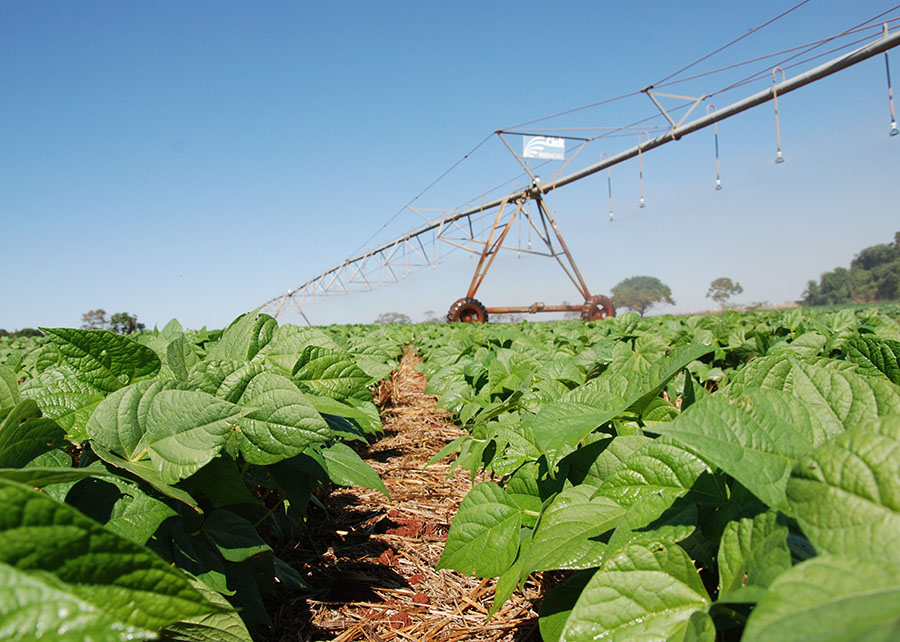
Research by Embrapa evaluated the performance of the BiomaPhos inoculant in bean crops in the Cerrado region. The use of the product, combined with a 50% reduction in the dose of phosphate fertilizer, generated an average increase of approximately 17% in crop productivity. Production reached 4,100 kilograms per hectare, compared to 3,400 kilograms per hectare obtained with conventional treatment using only chemical fertilizer. The result is attributed to the inoculant's ability to increase the availability of phosphorus in the soil, facilitating its absorption by plant roots. Phosphorus is a nutrient present in fertilizers and has a direct impact on crop productivity. However, in soils rich in iron oxides, such as those in the Cerrado, phosphate tends to remain trapped in soil particles and is therefore unavailable to plants. The bacteria that make up BiomaPhos are able to solubilize this compound, facilitating its absorption by the roots. In Embrapa's research, field experiments were conducted with four different doses of BiomaPhos (between one and four milliliters of inoculant per kilogram of seeds) combined with the application of half the dose of phosphate fertilizer. For comparison, beans were grown in plots with the full dose of fertilizer, but without the use of inoculant; and also in plots without any type of fertilizer or inoculant. This evaluation was conducted over two consecutive years in different fields: one in Mafra (SC) during the summer crop; two in Santo Antônio de Goiás (GO) during the summer and winter crops; and one in Luziânia (GO) during the winter crop. Bean varieties developed by Embrapa were used. According to Enderson Ferreira, a researcher at Embrapa Rice and Beans (GO), the results of the study demonstrate the potential of BiomaPhos to alter the management of phosphate fertilization in bean cultivation. “When compared to treatment with the full dose of phosphorus, the phosphate-solubilizing inoculant was effective in both promoting the development of common beans and increasing their productivity, even with phosphate fertilization reduced by 50%. Therefore, we consider its use a viable alternative to increase productivity, reduce application, and improve the use of phosphate fertilizers,” he highlights. The most promising result obtained with BiomaPhos was at a dosage of four milliliters per kilogram (4 mL/kg) of seed, combined with the application of half the dose of phosphate fertilizer. This allowed for a 17% increase in grain yield compared to the productivity achieved with the full dose of fertilizer; and 31% more than without inoculant and without fertilizer. Furthermore, Enderson Ferreira observes that the agronomic performance with the use of the phosphate-solubilizing inoculant was significantly different. “There was an increase in root and shoot dry mass, number of pods, number of grains, and phosphorus accumulation by the plant compared to full-dose phosphate fertilization,” he emphasizes. The researcher points out that the use of BiomaPhos alone does not guarantee the most efficient supply of phosphorus for the common bean. In the Cerrado, in particular, several factors can inhibit the supply of phosphorus to plants. He cites acidity, low calcium and aluminum content, low moisture, and soil compaction. Despite this, management practices that improve the physical and biological quality of the soil contribute to better absorption. For example, in the case of the Embrapa Rice and Beans experiment, Ferreira says that limestone was applied to the land about 50 days before planting, in a quantity calculated to increase base saturation to 70% and pH to approximately 6.5, thus correcting soil acidity. :: Learn more about BiomaPhos The BiomaPhos inoculant is the result of more than 19 years of research. The product was developed in a partnership between Embrapa and the company Bioma and is already widely applied in crops such as corn and soybeans. It is produced from strains of two bacteria that are able to solubilize phosphate and improve the root system of plants. The bacteria identified by Embrapa, Bacillus subtilis and Bacillus megaterium, are able to increase the absorption of phosphorus by the roots, receiving in return compounds that are fundamental for bacterial growth. Phosphorus is an essential mineral nutrient for plant growth and production, as it interferes with the processes of photosynthesis, respiration, storage, and energy transfer. In the research in question, the reduction in the dosage of phosphate fertilizers represents a significant decrease in crop production costs, since phosphate fertilization is the second largest contributor to total production costs, after nitrogen fertilization. Therefore, the use of inoculant can contribute to reducing dependence on phosphate imports and making national bean production more sustainable. :: More Productive Crops The first Brazilian commercial inoculant for phosphate solubilization was produced from tropical microorganisms selected by Embrapa Maize and Sorghum (MG). According to researcher Christiane Paiva, the bacilli present in the inoculant multiply more easily and colonize the root region of the plant, called the rhizosphere, more efficiently. They then begin producing different substances that act in the processing of phosphorus, called solubilizers, making this nutrient more available for absorption and assimilation by plants. The inoculant combines sustainability with productivity, as it is biological and capable of increasing phosphorus absorption by plants. "With this, the results demonstrate that it is possible to employ a clean and low-cost technology in agricultural crops, contributing to sustainability in agriculture, without losses to the environment," reinforces the researcher. According to Paiva, in evaluations conducted in corn production areas, the application of the product resulted in an average productivity gain of 8.9% and a 19% increase in the supply of phosphorus to the grains. For soybeans, the average productivity jumped from 67.2 sacks per hectare to 71.6 sacks, in addition to a 14% increase in phosphorus content in the grains. In the case of sugarcane, the gains in tons per hectare were above 14%, in addition to a 12% increase in tons of sugar. “The results of Biomaphos were already consolidated for corn and soybean crops. In addition to beans, the inoculant was validated for sugarcane, with records of similar productivity gains in tons of sugar and quality. It is a product that goes beyond the borders of Brazil. Now, it is commercialized and has obtained registration in several countries in South America, Canada, the United States, and Europe, with considerable success and gains for corn and soybean production,” concludes the researcher.
This text was translated by machine from Brazilian Portuguese.