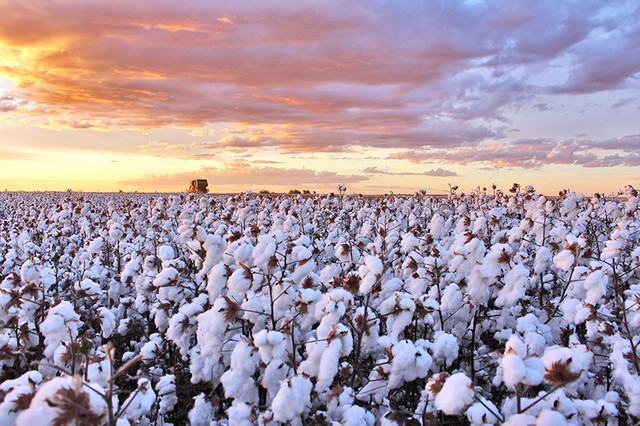
Indonesia's cotton imports are expected to fall to 1.9 million bales in 2026/27, continuing a downward trend after the adjustment seen in the previous season, according to a report by the attaché. United States Department of Agriculture (USDA) in Jakarta. The country is the 7th largest global importer of cotton. The contraction reflects the weakness of the local textile industry, which faces loss of competitiveness, high costs and limited external demand. By 2025/26, external purchases are already expected to fall to 1.92 million balesreduction of 2.9% Compared to the previous cycle, the movement is attributed to a combination of lower domestic consumption, high inventories, and devaluation of the local currency, which makes imports more expensive. Indonesia remains highly dependent on the external market to supply its industry. Local cotton production is practically non-existent, estimated at only 2,000 bales in 2026/27, a volume equivalent to less than 1% of domestic demand. According to… USDACotton cultivation remains unattractive to producers due to low profitability, lack of government incentives, and technological limitations. Cotton consumption in Indonesia is expected to fall by 5% in 2025/26, to 1.85 million bales, reflecting the slowdown in the textile industry and lower external demand for the country's products. For 2026/27, a slight recovery is expected, with consumption projected at 1.9 million bales. Regarding sales to the country, Brazil is expected to remain the main supplier. Between August 2025 and February 2026, Brazil accounted for 42.3% of imports, with 470,000 bales, surpassing Australia, which had a 35.6% share (394,000 bales). The United States is in third place, with 12.6% of the market. According to… USDABrazil's leadership was favored by a robust harvest and more competitive prices compared to its competitors.
This text was translated by machine from Brazilian Portuguese.