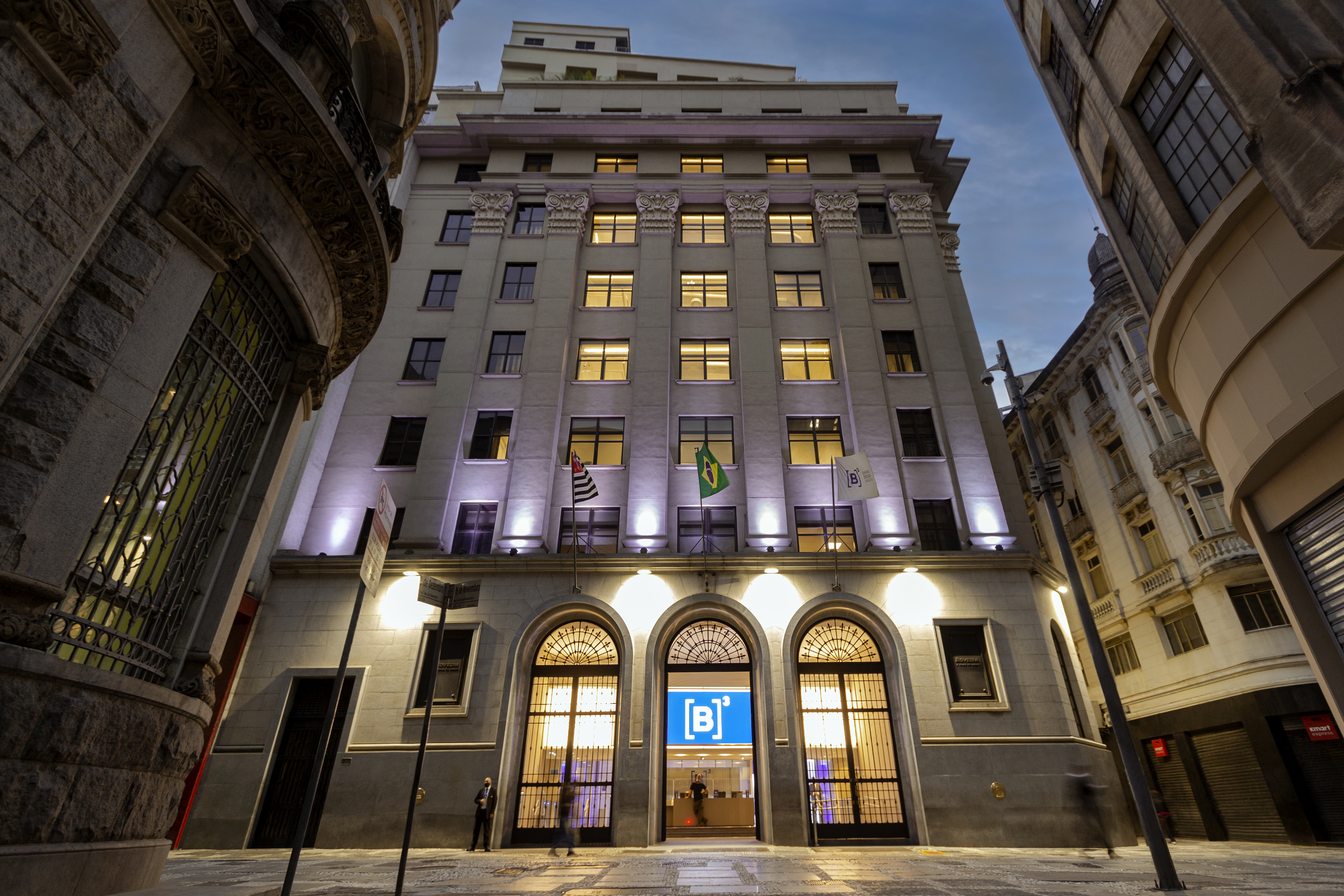
THE Ibovespa closed this Wednesday (2) with a significant increase of 3.05%, to 174,586.26 points, with an accumulated gain of 5.43% in the partial week. During the trading session, the main indicator of Brazilian Stock Exchange (B3) It reached a high of 186,028.06 points and fell to a low of 179,733.57 points. Among the companies with the greatest weight in the composition of B3a Vale (VALE3) and the actions of Petrobras (PETR3; PETR4) They closed the day with broad gains, rising 3.19%, 2.23%, and 2.84%, respectively. The major banks ended the day in positive territory: the Bradesco (BBDC4) It closed with a 2.11% increase; the Santander (SANB11) advanced 1.98%, and the Itaú (ITUB4) It rose 3.84%; the Banco do Brasil (BBAS3) It ended with gains of 5.90%; and the BTG Pactual (BPAC11) It jumped 3.06%. In Wall StreetThe main stock market indicators closed with gains. Dow Jones Industrial Average (DJIA) It advanced 0.56%, to 53,061.51 points; while the S&P 500 and the Nasdaq The Brazilian stock market closed slightly higher, at 0.46% and 0.45% respectively – with scores of 7,666.68 points and 26,217.83 points. In this trading session, in the political arena, a new Quaest poll showed a tighter race for the second round of the October elections. In the survey, President Luiz Inácio Lula da Silva (PT) appears with 42% of voting intentions, compared to 41% for Senator Flávio Bolsonaro (PL). The reduction in the difference between the candidates was interpreted by some market participants as increasing the possibility of a change in power, a movement that contributed to the appreciation of the real in this session. Investors also followed new developments related to Banco Master, after the release of messages involving former banker Daniel Vorcaro and Supreme Federal Court (STF) Justice Alexandre de Moraes. This episode added volatility to the domestic political landscape. On the economic agenda, the… Brazilian Institute of Geography and Statistics (IBGE) reported that industrial production Brazilian production advanced 0.2% in July compared to June, interrupting two consecutive months of negative results. In the accumulated figures for 2026, the sector grew 1.1%, while over 12 months it registered a 0.6% increase. Abroad, the market continued to monitor the strong appreciation of oil, amidst the intensification of confrontations between the United States and Iran. The latest attacks have raised concerns about the global supply of the commodity and its possible impacts on inflation. On Wall Street, investors also reacted to the creation of 38,000 jobs in the US private sector in August, according to [source missing]. ADP National Employment ReportThe result fell short of the 44,000 jobs created in July and represented the weakest pace of job creation since January. The new edition of [the relevant document/program] also came into focus. Beige Book of the Federal Reserve (Fed)The report indicated modest economic growth since the beginning of July. Of the 12 districts monitored by the central bank, ten reported mild to moderate expansion, while two indicated stability. Inflationary pressures, however, remained present. Prices increased moderately in eight districts, with companies reporting high costs for energy, transportation, and raw materials, in addition to the effects of tariffs. At the same time, greater consumer resistance to price adjustments limited the full pass-through of these costs.
This text was translated by machine from Brazilian Portuguese.