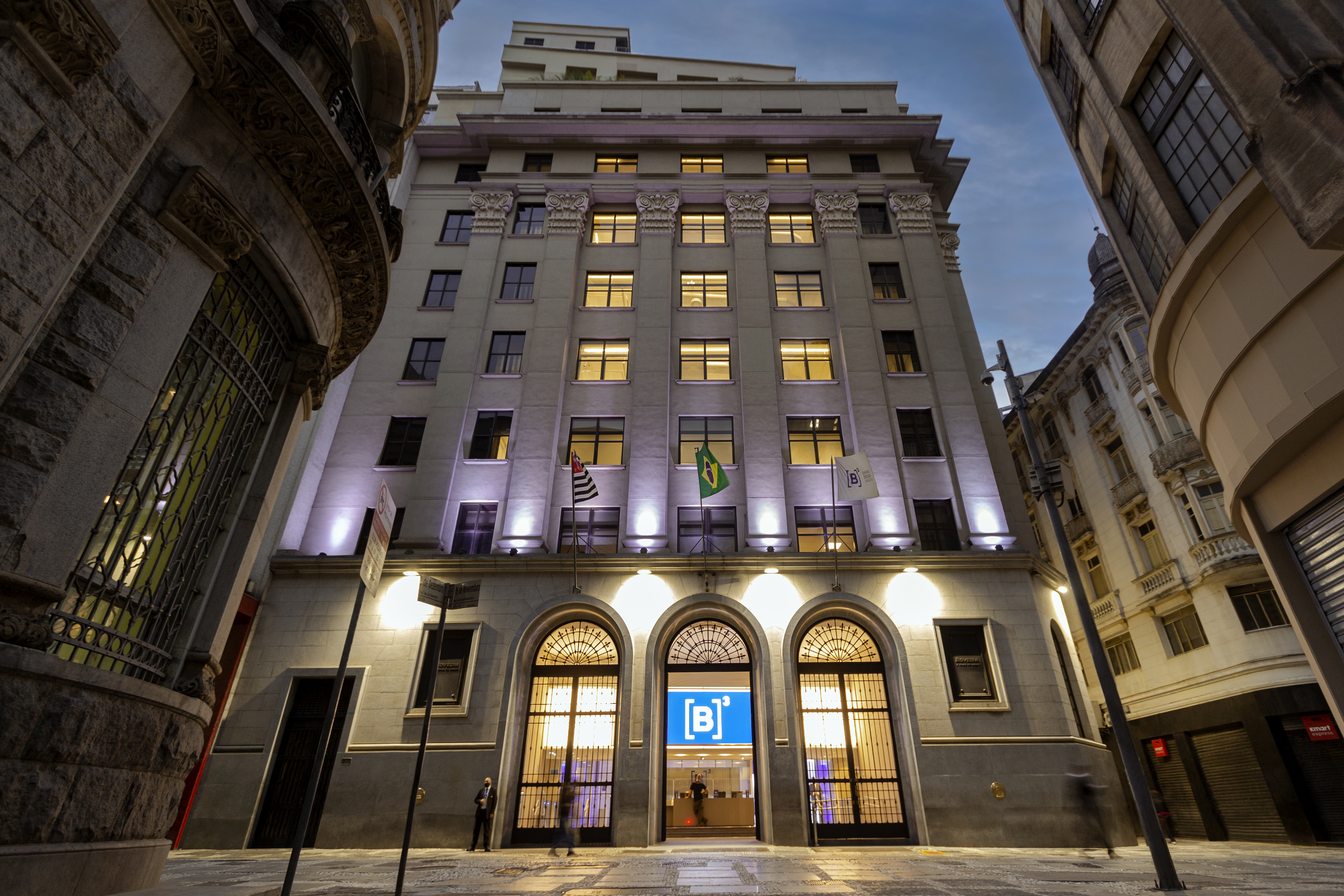
THE Ibovespa closed this Wednesday (10) with a moderate drop of 0.70%, to 168,619.26 points, with an accumulated decline of 0.23% in the partial week. During the trading session, the main indicator of Brazilian Stock Exchange (B3) It reached a high of 169,812.46 points; at its lowest point, the index fell to 168,070.99 points. Among the companies with the greatest weight in the composition of B3a Vale (VALE3) fell 1.02%, while shares of Petrobras (PETR3; PETR4) They recorded gains of 1.50% and 1.17%, respectively. Some of the major banks ended the day in negative territory: the Banco do Brasil (BBAS3) It closed down 0.58%; the Bradesco (BBDC4) It depreciated by 0.98%; the BTG Pactual (BPAC11) fell 3.24%; and the Santander (SANB11) It ended with a decrease of 0.63%. Only the Itaú (ITUB4) It advanced 0.36%. In Wall StreetThe main stock market indicators closed sharply lower. Dow Jones Industrial Average (DJIA) It registered a sharp drop of 1.87%, to 49,921.58 points; the S&P 500 It fell 1.62%, to 7,267.08 points; and the Nasdaq The Brazilian stock market also closed with losses of 1.98%, at 25,169.50 points. In this trading session, investors' attention was focused on the international scenario, marked by the release of US inflation data and increased tensions between Washington and Tehran. In the Middle East, US President Donald Trump escalated his rhetoric against Iran after accusing the country of shooting down an American helicopter near the Strait of Hormuz. According to Trump, the US will need to respond to the incident. This stance contrasts with statements made earlier in the week, when the US president claimed that a peace agreement between the parties was in its final stages and could be reached in a few days. On Wednesday, however, Trump described Iran as the "bully of the Middle East" and stated that the country will have to "pay the price" for not accepting a peace proposal. In an interview with Fox News, the Republican also indicated that he is close to authorizing new attacks against strategic Iranian targets, including power plants and bridges. In response, Iranian President Masoud Pezeshkian stated that the country will remain firm in the face of American threats. In a social media post, the Iranian leader criticized Trump's statements and said that threats to the country's infrastructure represent a sign of desperation. In the economic field, the U.S. Department of Labor reported that… Consumer Price Index (CPI) The Brazilian inflation index rose 4.2% year-on-year in May, driven mainly by a 7% increase in gasoline prices. On the other hand, the core index—which excludes more volatile items such as food and energy—rose only 0.2% in the month, bringing the 12-month accumulated rate to 2.9%. Investors believe the figures reinforce the perception that inflationary pressures remain under control, reducing the need for a more aggressive stance from the government. Federal Reserve (Fed) In the next monetary policy meeting. Domestically, with no relevant economic indicators on the agenda, market participants followed the release of new electoral polls. A Genial/Quaest survey published today showed President Luiz Inácio Lula da Silva with 39% of voting intentions in a possible first round of the 2026 presidential election, followed by Senator Flávio Bolsonaro with 29%. In a second-round simulation between the two candidates, Lula appears with 44% of voting intentions, while Flávio Bolsonaro registers 38%. In the previous poll, released in May, the percentages were 42% and 41%, respectively.
This text was translated by machine from Brazilian Portuguese.