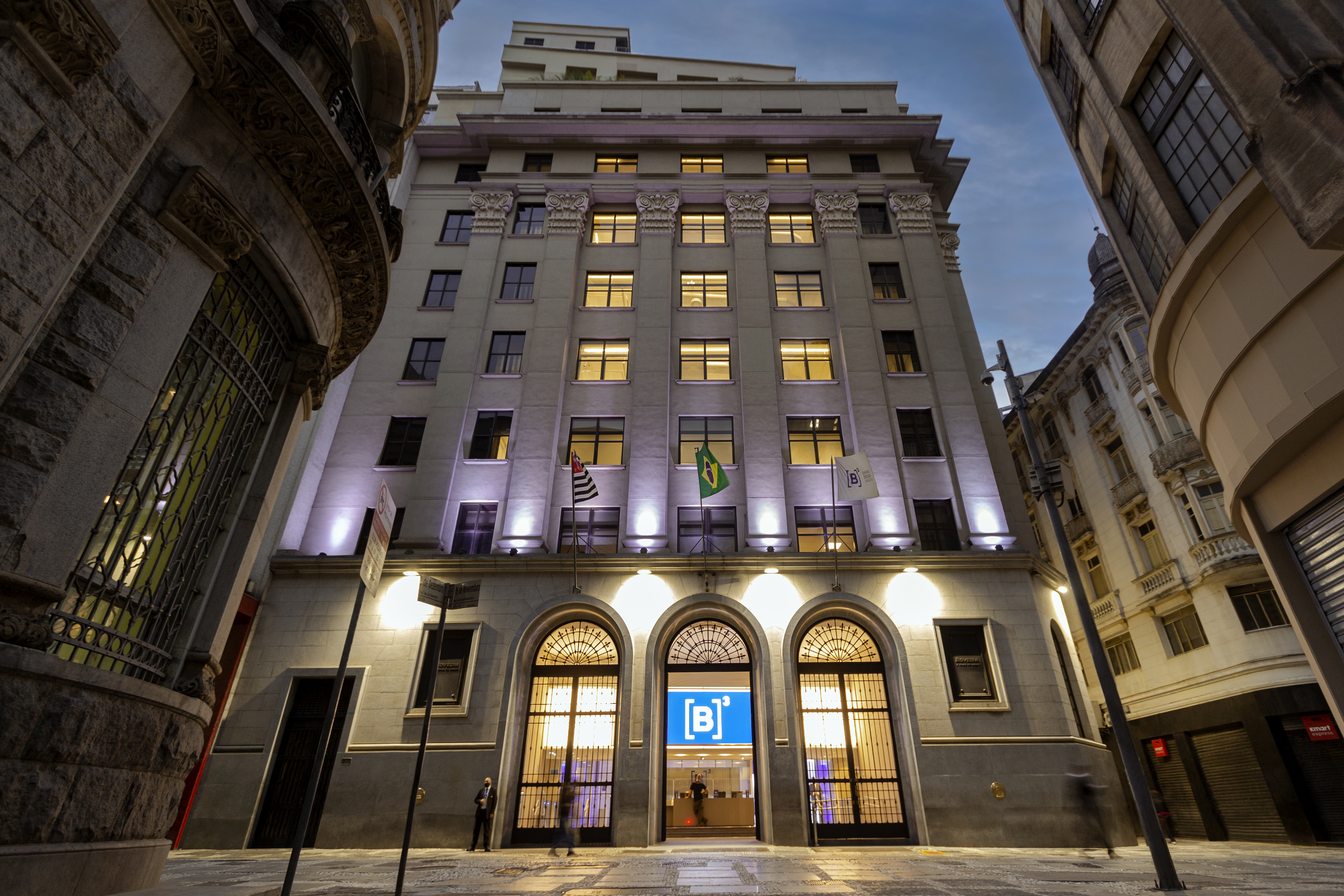
THE Ibovespa closed this Wednesday (21) in stability with a downward bias (-0.03%, at 173,325.65 points. At the day's high, the main indicator of Brazilian Stock Exchange (B3) It reached 173,719.50 points; at its lowest point, it fell to 172,218.88 points. Of greater weight in the composition of B3a OK (VALE3) and the actions of Petrobras (PETR3; PETR4) They closed in positive territory, with gains of 0.43%, 1.43%, and 1.24%, respectively. Most of the major banks ended the day with gains: the Banco do Brasil (BBAS3) jumped 3.52%; the Itaú (ITUB4) It closed with a moderate increase of 0.54%; the Bradesco (BBDC4) It closed with an increase of 0.76%; and the Santander (SANB11) advanced 0.74%. Only the BTG Pactual (BPAC11) It fell by 0.84%. In Wall StreetThe main stock market indicators closed in positive territory. Dow Jones Industrial Average (DJIA) It ended with a 0.74% increase, at 52,224.64 points; while the S&P 500 It advanced 0.89%, to 7,509.20 points; and the Nasdaq The Brazilian real appreciated by 1.29%, reaching 25,837.21 points. In this trading session, the reduction in risk premiums was favored by the advance in international oil prices, a movement that tends to benefit countries exporting the commodity, such as Brazil, strengthening the real. In the international scenario, investors remained attentive to the escalation of tensions in the Middle East. The President of the United States, Donald Trump, stated this Tuesday that US forces should attack "very soon" the Pickaxe mountain, located near the Natanz nuclear facility in central Iran, one of the country's main uranium enrichment complexes. The statement comes despite the efforts of international mediators to establish a ceasefire between the United States and Iran and open space for new diplomatic negotiations. In Brazil, the market also followed the expectation of the entry into force, this Wednesday (22), of the additional tariffs imposed by the United States on Brazilian products, under Section 301 of the US Trade Act. Investors continue to monitor the Brazilian government's response, which is evaluating measures such as the application of the Economic Reciprocity Law and the adoption of support mechanisms for the sectors most affected by the new tariffs. Furthermore, the release of a new Real Time Big Data poll also had repercussions, maintaining President Luiz Inácio Lula da Silva's lead in voting intentions for the first round of the presidential elections, while also pointing to scenarios of a technical tie in potential second-round contests against Senator Flávio Bolsonaro and former Governor Ronaldo Caiado. In the coming days, market attention should remain focused on the political landscape, with the approach of party conventions and the definition of presidential tickets for the 2026 elections.
This text was translated by machine from Brazilian Portuguese.