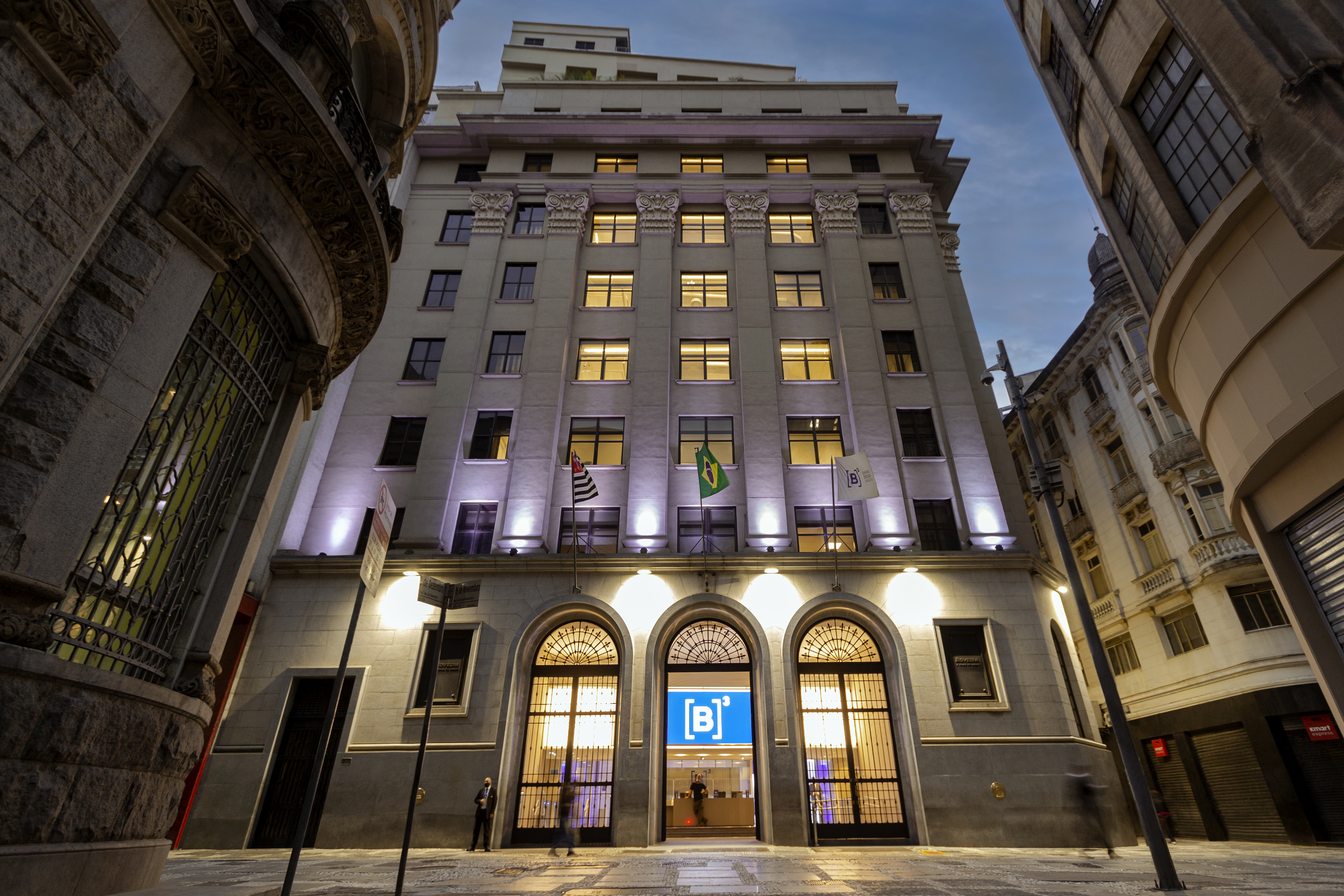
THE Ibovespa closed this Wednesday (8) with a moderate drop of 0.79%, to 170,653.45 points, with an accumulated loss of 1.96% in the partial week. During the trading session, the main indicator of Brazilian Stock Exchange (B3) It reached a high of 172,017.57 points; at its lowest point, the index fell to 169,972.40 points. Among the companies with the greatest weight in the composition of… B3a Vale (VALE3) It plummeted 4.59%, while the shares of Petrobras (PETR3; PETR4) They closed with significant gains of 2.79% and 3.15%, respectively. The major banks ended the day in negative territory: the Banco do Brasil (BBAS3) It closed down 1.01%; the Santander (SANB11) fell 1.58%; the BTG Pactual (BPAC11) It fell 1.10%; the Itaú (ITUB4) It ended with a decrease of 1.27%; and the Bradesco (BBDC4) It depreciated by 0.73%. In Wall StreetThe main stock market indicators closed without a clear direction. Dow Jones Industrial Average (DJIA) It closed sharply lower by 1.09%, at 52,348.39 points; the S&P 500 It fell 0.28%, to 7,482.71 points; and only the Nasdaq The index advanced 0.20%, to 25,870.65 points. In this trading session, investors followed the increase in tensions in the Middle East, after the President of the United States, Donald Trump, stated, before the summit of North Atlantic Treaty Organization (NATO)The report stated that the provisional ceasefire agreement with Iran had "ended" and that new bombings against Tehran could occur soon. The escalation of the conflict boosted international oil prices and increased risk aversion in the markets. The release of the minutes from the June 16-17 meeting also had repercussions. of the Federal Open Market Committee (FOMC)of Federal Reserve (Fed)The document showed that policymakers remain concerned about persistent inflation, despite acknowledging that the U.S. economy and labor market remain resilient. Although the Fed maintained its benchmark interest rate in the range of 3.50% to 3.75% per year, the minutes revealed that some policymakers advocated for an increase as early as the June meeting. Most members assessed that, if inflation remains high and the labor market continues to be strong, further interest rate hikes may be necessary in the coming months. On the other hand, some participants believe that if inflationary pressures weaken, there will be room to maintain or even reduce rates. In the domestic market, without the release of major economic indicators, investors reacted to the new Meio Idea electoral poll. The survey showed President Luiz Inácio Lula da Silva with 45% of the vote intention in a possible second round against Senator Flávio Bolsonaro, who appears with 40%. Blank and null votes total 10.5%, while 4.5% of respondents said they did not know or did not answer. The market also followed the third day of public hearings promoted by… Office of the United States Trade Representative (USTR), which is analyzing the proposal to apply an additional 25% tariff on Brazilian products as part of an investigation conducted under Section 301 of the U.S. Trade Act.
This text was translated by machine from Brazilian Portuguese.