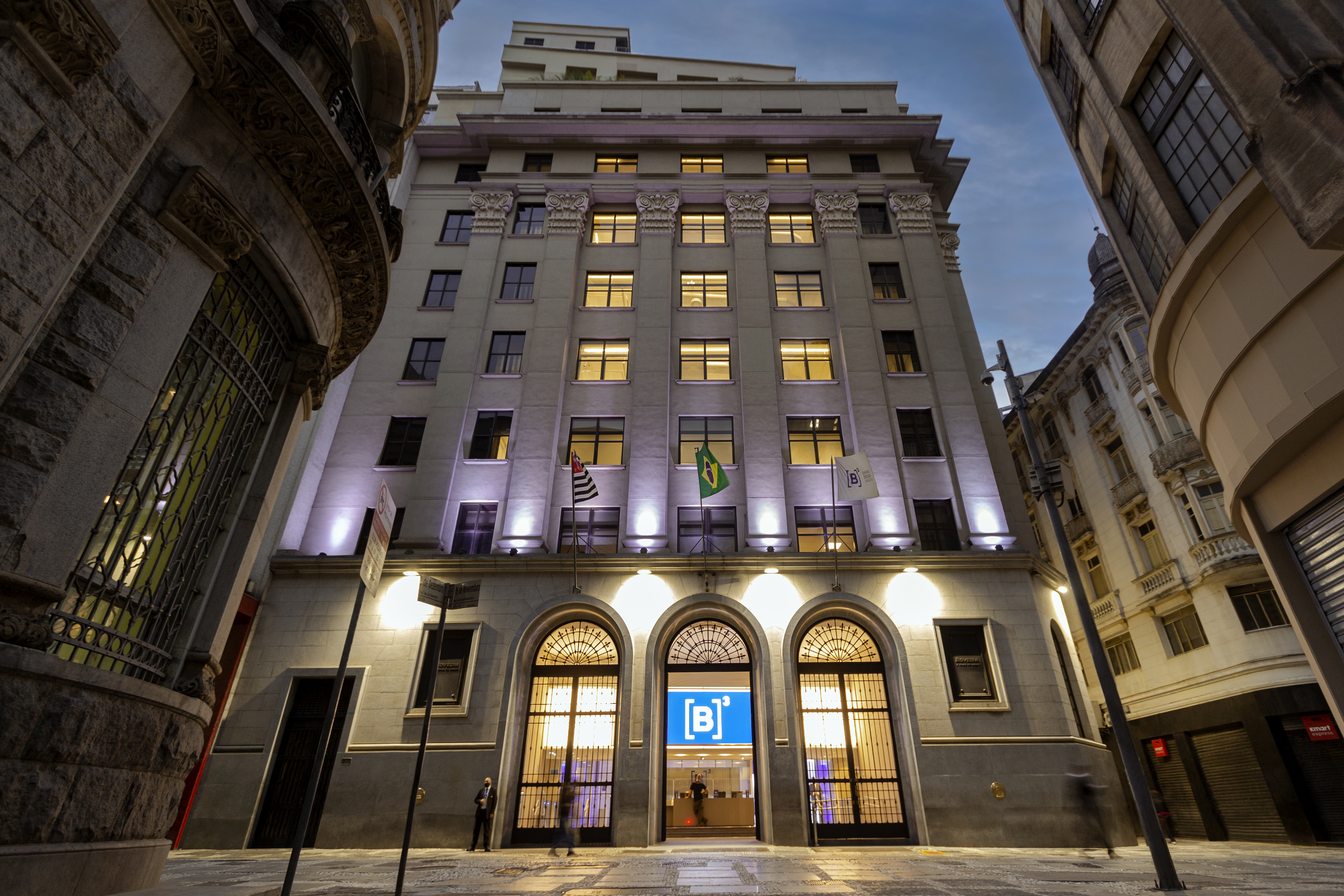
THE Ibovespa closed this Wednesday (22) with a significant increase of 2.44%, to 177,547.57 points, with an accumulated loss of 1.04% in the partial week. During the trading session, the main indicator of Brazilian Stock Exchange (B3) It reached a high of 177,641.24 points; at its lowest point, the index fell to 173,328.05 points. Among the companies with the greatest weight in the composition of… B3a Vale (VALE3) and the actions of Petrobras (PETR3; PETR4) They closed with significant gains, rising 4.25%, 2.39%, and 2.11%, respectively. The major banks ended the day in positive territory: the Banco do Brasil (BBAS3) It closed with an advance of 0.81%; the Santander (SANB11) It rose 0.68%; the BTG Pactual (BPAC11) recorded an increase of 3.27%; the Itaú (ITUB4) increased in value by 1.03%; and the Bradesco (BBDC4) It closed with gains of 2.32%. Wall StreetThe main stock market indicators closed in negative territory. Dow Jones Industrial Average (DJIA) It closed with a downward bias (-0.01%), at 52,218.58 points; the S&P 500 It fell 0.14%, to 7,498.96 points; the Nasdaq The exchange rate advanced 0.57%, to 25,690.90 points. In this trading session, the exchange rate followed a similar movement to that seen yesterday (21), favored by the assessment of part of the market that the appreciation of oil continues to bring more benefits than losses to economies that export the commodity, such as Brazil. Despite the increase in geopolitical tensions, investors consider that the rise in oil tends to compensate for the advance in global risk premiums. In the early hours of Wednesday, local time, the United States carried out new attacks against Iranian targets for the 11th consecutive night. According to the US government, the bombings hit command centers, air defense systems, missile launchers and drones in Iran. The day before, the President of the United States, Donald Trump, stated that he could attack "very soon" the Pickaxe mountain, near the Natanz nuclear facility, where experts believe part of the underground infrastructure used by Iran for uranium enrichment is located. In the domestic market, investors reacted to the entry into force of the additional 25% tariff imposed by the US on part of Brazilian exports. The measure was adopted after an investigation conducted by the US government concluded that Brazil maintains practices considered restrictive to bilateral trade, citing, among other points, the Pix payment system and the regulation of digital platforms. In response, President Luiz Inácio Lula da Silva stated that the government will seek alternatives to mitigate the impacts of the new tariffs. During a ceremony launching a new phase of the Sovereign Brazil Program, the president defended the adoption of measures to preserve the competitiveness of Brazilian companies. At the same event, the federal government announced R$ 18.5 billion in new financing lines for companies affected by the US tariffs.
This text was translated by machine from Brazilian Portuguese.