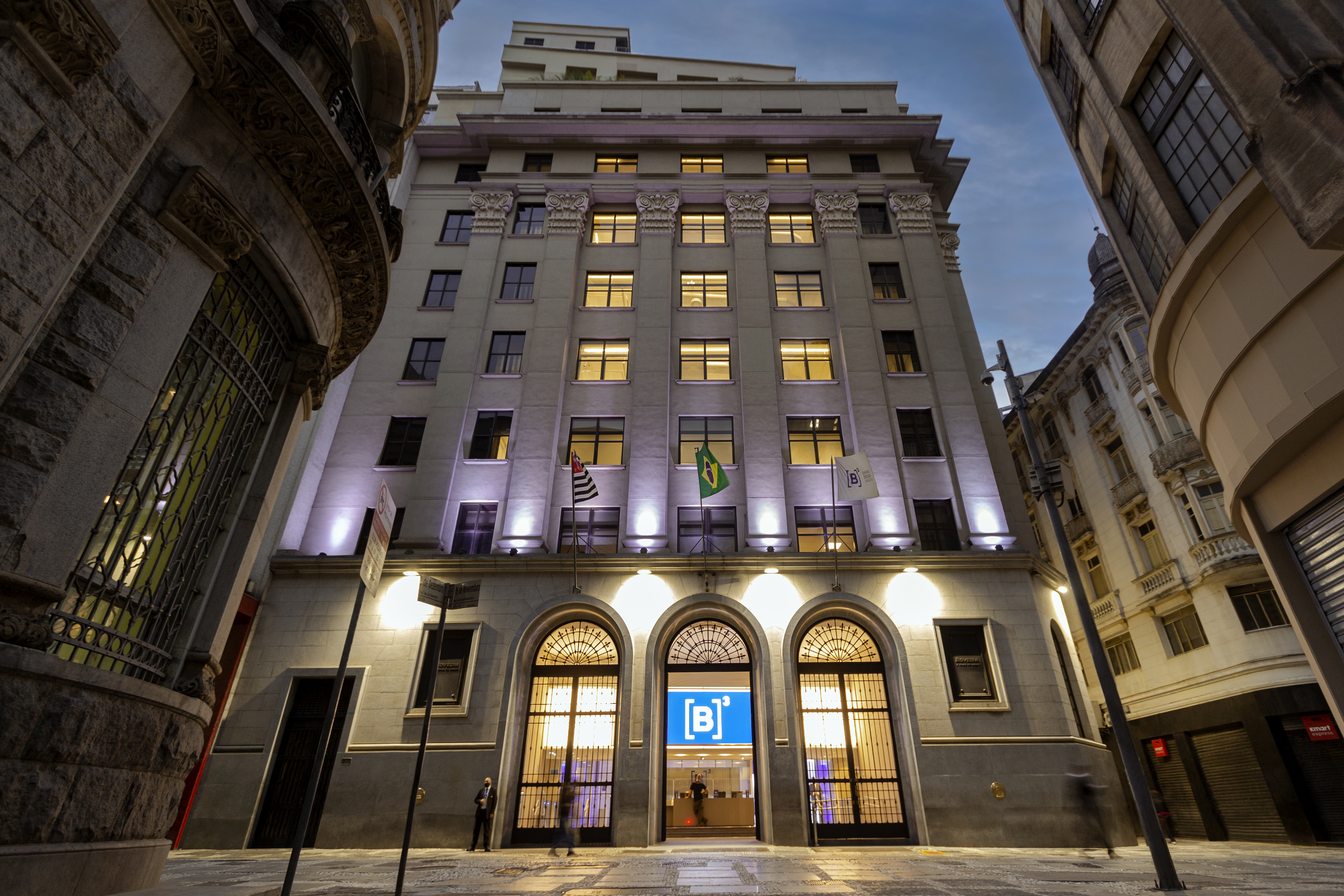
THE Ibovespa closed this Wednesday (15) with a slight decrease of 0.36%, at 176,010.90 points, with an accumulated loss of 1.04% in the partial week. During the trading session, the main indicator of Brazilian Stock Exchange (B3) It reached a high of 176,662.60 points; at its lowest point, the index fell to 175,288.17 points. Among the companies with the greatest weight in the composition of B3a Vale (VALE3) It appreciated by 0.68%, while the shares of Petrobras (PETR3; PETR4) They closed in opposite directions, up 0.11% and down 0.17%, respectively. The major banks ended the day in negative territory: the Banco do Brasil (BBAS3) It closed down 0.19%; the Santander (SANB11) It fell 1.24%; the BTG Pactual (BPAC11) It fell 1.57%; the Itaú (ITUB4) It fell 1.12%; and the Bradesco (BBDC4) It depreciated by 0.16%. In Wall StreetThe main stock market indicators closed in positive territory. Dow Jones Industrial Average (DJIA) It recorded a slight increase of 0.29%, to 52,658.64 points; the S&P 500 It rose 0.38%, to 7,572.40 points; the Nasdaq It advanced 0.62%, to 26,269.23 points. In the international scenario, the main highlight was the release of… Producer Price Index (PPI) from the United States. The indicator fell 0.3% in June, after a revised increase of 0.6% in May, while the market expected stability. The result reinforced the more benign reading of US inflation, following the data from Consumer Price Index (CPI) released the day before, reducing expectations of a new interest rate hike by Federal Reserve (Fed)According to the tool FedWatchof CME GroupApproximately 90% of investors are betting on the maintenance of the basic interest rate in the United States, currently between 3.50% and 3.75% per year, at the next meeting. Federal Open Market Committee (FOMC), scheduled for July 29th. Also on this Wednesday, the Fed released a new edition of Beige BookThe central bank indicated that the U.S. economy continues on a path of moderate expansion, supported by improvements in the labor market and a slowdown in inflationary pressures. Conversely, the central bank highlighted worsening conditions for the agricultural sector. Geopolitical tensions also remained on investors' radar. The United States and Iran exchanged attacks for the fifth consecutive day, raising concerns about global oil supplies. In response to the new clashes, Tehran again restricted navigation in the Strait of Hormuz, while U.S. President Donald Trump announced the resumption of the naval blockade against the country. In the domestic market, attention remained focused on the U.S. government's decision regarding the possible application of new tariffs on Brazilian products. The deadline for this decision expired on Wednesday. Office of the United States Trade Representative (USTR) Announce the outcome of the trade investigation involving Brazil. In anticipation of tariffs, the Brazilian government approved a Provisional Measure creating a R$ 15 billion financing line for companies affected by both the potential tariff hike and the impacts of the escalating conflict in the Middle East. The resources will be made available through the Sovereign Brazil Plan and can be accessed by exporting companies in the industrial, agricultural, mining, forestry, fishing, and aquaculture sectors. In the political arena, the Genial/Quaest poll released this Wednesday showed President Luiz Inácio Lula da Silva with 45% of the vote intention in a possible second round, while Senator Flávio Bolsonaro appears with 37%.
This text was translated by machine from Brazilian Portuguese.