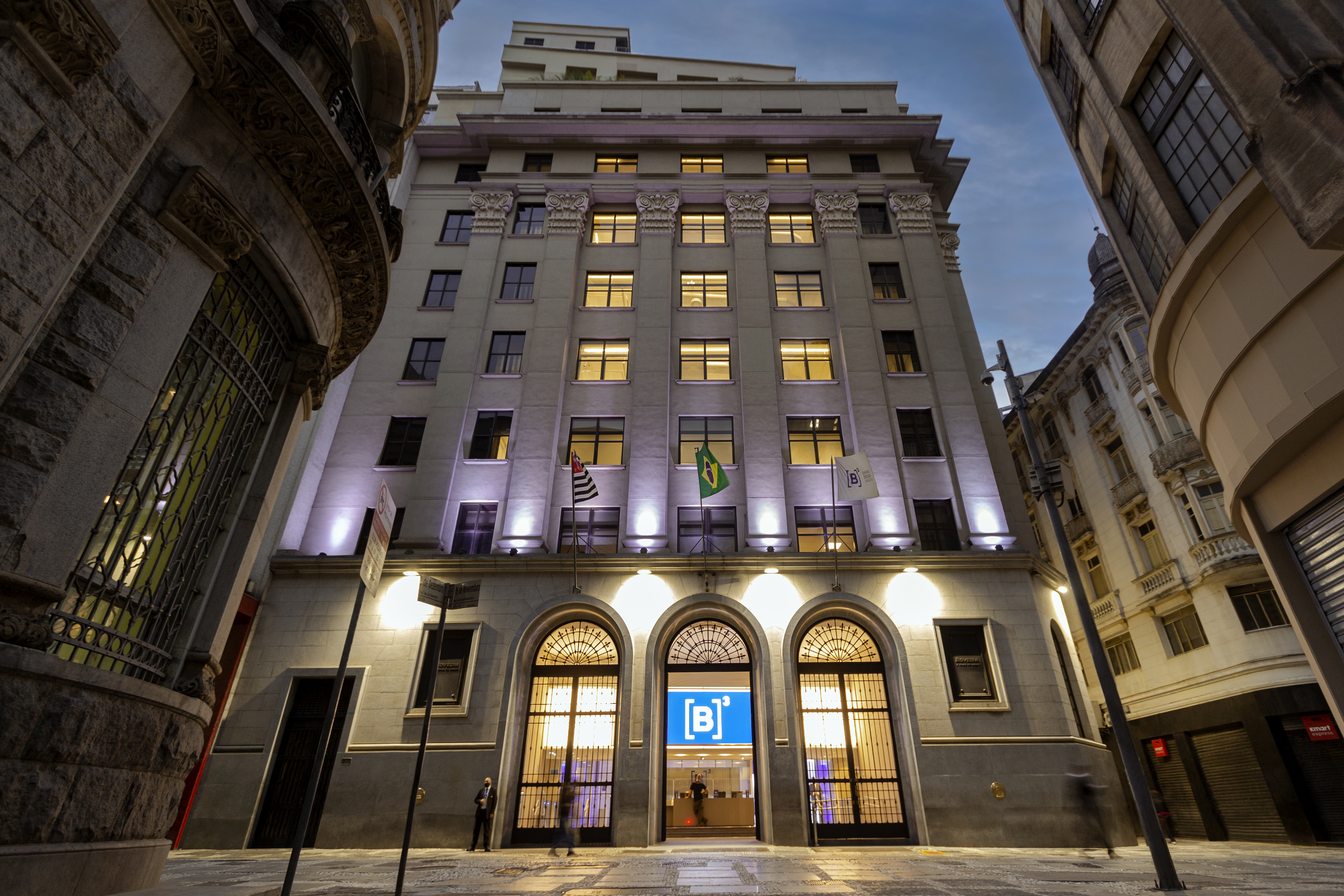
THE Ibovespa closed this Wednesday (29) with a sharp drop of 1.52%, to 173,885.34 points – the day's lowest score, with an accumulated loss of 0.09% in the week so far. During the trading session, the main indicator of Brazilian Stock Exchange (B3) It reached a high of 176,563.85 points. Among the companies with the greatest weight in the composition of B3a Vale (VALE3) registered a drop of 0.85%, while the shares of Petrobras (PETR3; PETR4) They closed with gains of 2.35% and 1.92%, respectively. The major banks ended the day with losses: the Banco do Brasil (BBAS3) It closed down 0.24%; the Santander (SANB11) It plummeted 7.37%; the BTG Pactual (BPAC11) recorded a decrease of 2.11%; the Itaú (ITUB4) It depreciated by 2.43%; and the Bradesco (BBDC4) It closed with a drop of 2.24%. B3The operational results of remained on the radar. Petrobras referring to the second quarter of 2026. The state-owned company recorded total oil and gas production of 3.336 million barrels of oil equivalent per day (boed), a record for the company, with an increase of 3.5% compared to the first quarter and approximately 14% in the annual comparison. Tomorrow (30), the Vale (VALE3) and the Ambev (ABEV3) They also publish their results. In Wall StreetThe main stock market indicators closed in negative territory. Dow Jones Industrial Average (DJIA) It closed with a sharp drop of 2.18%, at 51,594.86 points; S&P 500 It fell 1.51%, to 7,316.38 points; the Nasdaq The index fell 1.74%, to 24,442.94 points. The highlight of the day's trading was the decision of… Federal Open Market Committee (FOMC)of Federal Reserve (Fed)The Federal Reserve Committee maintained the benchmark interest rate in the United States in the range between 3.50% and 3.75% per year, as expected by the market. However, the decision was divided. The committee approved maintaining the rate by a vote of 9 to 3, with dissenters advocating for a 0.25 percentage point increase. In its statement, the Fed affirmed that the US economy remains resilient despite the uncertain environment. "Economic activity is expanding at a solid pace despite heightened uncertainty stemming in part from the conflict in the Middle East. Productivity growth and capital investment are strong. Job creation has kept pace with the evolution of the labor force, and the unemployment rate has shown little change. Inflation remains elevated relative to the Committee's 2% target, reflecting in part supply shocks that have driven price increases in certain sectors, including energy. The Committee will ensure price stability," the monetary authority emphasized. In an interview following the decision, Fed Chairman Kevin Warsh stated that the statement should not be interpreted as a signal about the next steps in monetary policy. "It simply conveys the facts. It avoids making predictions, a choice we consider especially prudent at this time of uncertainty," he said. Meanwhile, abroad, oil prices rose sharply again, with Brent crude trading above $90 a barrel, amid escalating tensions in the Middle East. The movement was driven by the resumption of attacks involving the US and Iranian-backed groups in Iraq, following actions against Saudi oil facilities. The release of data from [unclear – possibly a government agency] also contributed to the rise in oil prices. Energy Information Administration (EIA)which showed a drop of 7.2 million barrels in US commercial oil inventories last week, to 404.5 million barrels, the lowest level since 2018. Domestically, investors reacted to the labor market figures. According to the New General Registry of Employed and Unemployed Workers (Caged)Brazil created 145,161 formal jobs in June, resulting from 2,220,131 new hires and 2,074,970 terminations.
This text was translated by machine from Brazilian Portuguese.