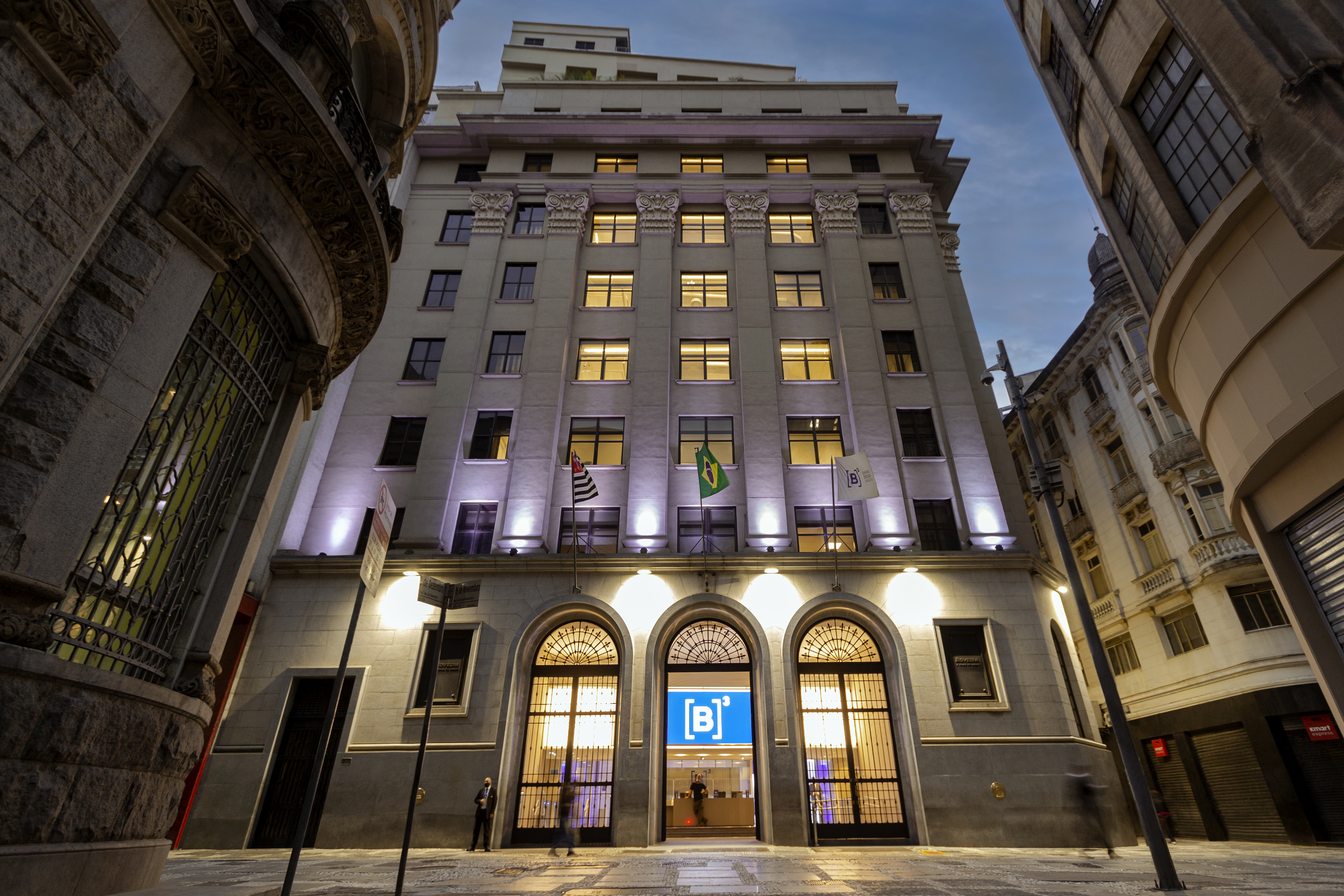
THE Ibovespa closed this Thursday (23) with a slight decrease of 0.46%, at 176,723.62 points, but with an accumulated gain of 1.73% in the partial week. During the trading session, the main indicator of Brazilian Stock Exchange (B3) It reached a high of 177,895.77 points; at its lowest point, the index fell to 176,293.25 points. Among the companies with the greatest weight in the composition of B3a Vale (VALE3) and the actions of Petrobras (PETR3; PETR4) They closed in positive territory, with gains of 0.77%, 1.67%, and 0.87%, respectively. The major banks ended the day in negative territory: the Santander (SANB11) fell 1.19%; the BTG Pactual (BPAC11) It fell 1.26%; the Itaú (ITUB4) It fell 0.79%; and the Bradesco (BBDC4) It depreciated by 1.32%; and the Banco do Brasil (BBAS3) recorded a drop of 0.76%. Wall StreetThe main stock market indicators closed with losses. Dow Jones Industrial Average (DJIA) It closed with a moderate decline of 0.97%, at 51,711.65 points; S&P 500 It fell 1.21%, to 7,408.30 points; the Nasdaq It depreciated by 2.15%, to 25,137.69 points. Still in United States corporate marketInvestors closely followed the companies' quarterly earnings reports for the second quarter of 2026. Today, the Tesla (TSLA) The company released its results – which came in below market projections – and its shares plummeted 14.5%. NasdaqIn this trading session, the movement reflected the increased risk aversion in international markets amid the escalating conflict in the Middle East. The surge in oil prices led investors to reassess the economic impacts of the geopolitical scenario, reducing their appetite for emerging market assets, such as the Brazilian real. Brent crude surpassed the US$100 per barrel mark, while WTI reached US$92 per barrel, amid worsening tensions between the United States and Iran. The scenario deteriorated even after reports that Oman was mediating negotiations involving Saudi Arabia, Yemeni representatives, and a special envoy from the United Nations (UN). Pressure on the market increased after the Houthis, from Yemen, announced a naval blockade of shipments from Saudi Arabia and carried out attacks against oil tankers in the Bab el-Mandeb Strait, an important corridor for international oil trade. At the same time, Iran's Revolutionary Guard stated that the Strait of Hormuz remains under Iranian control and that no oil tanker will be able to transit the region without coordination with Tehran while US military operations persist. Analysts estimate that the Straits of Hormuz and Bab el-Mandeb concentrate about 25% of the world's oil flow. In response, US President Donald Trump promised to impose "severe military punishment" on Iran and the Houthis. In the economic field, the market reacted to the data from… United States Department of Labor (DOL), which showed 187,000 initial jobless claims in the week ending July 18. The result was below market expectations of 211,000 claims, indicating that the US labor market remains resilient. Also remaining on the radar was US trade policy. Following the entry into force, on Wednesday (22), of the additional 25% tariff on part of Brazilian exports, investors are awaiting the announcement of a new round of tariffs, which could range between 10% and 12.5% for about 60 trading partners, including Brazil. According to White House Press Secretary Karoline Leavitt, the United States Trade Representative (USTR), Jamieson Greer, is expected to announce the next steps in the Trump administration's tariff policy later this Thursday.
This text was translated by machine from Brazilian Portuguese.