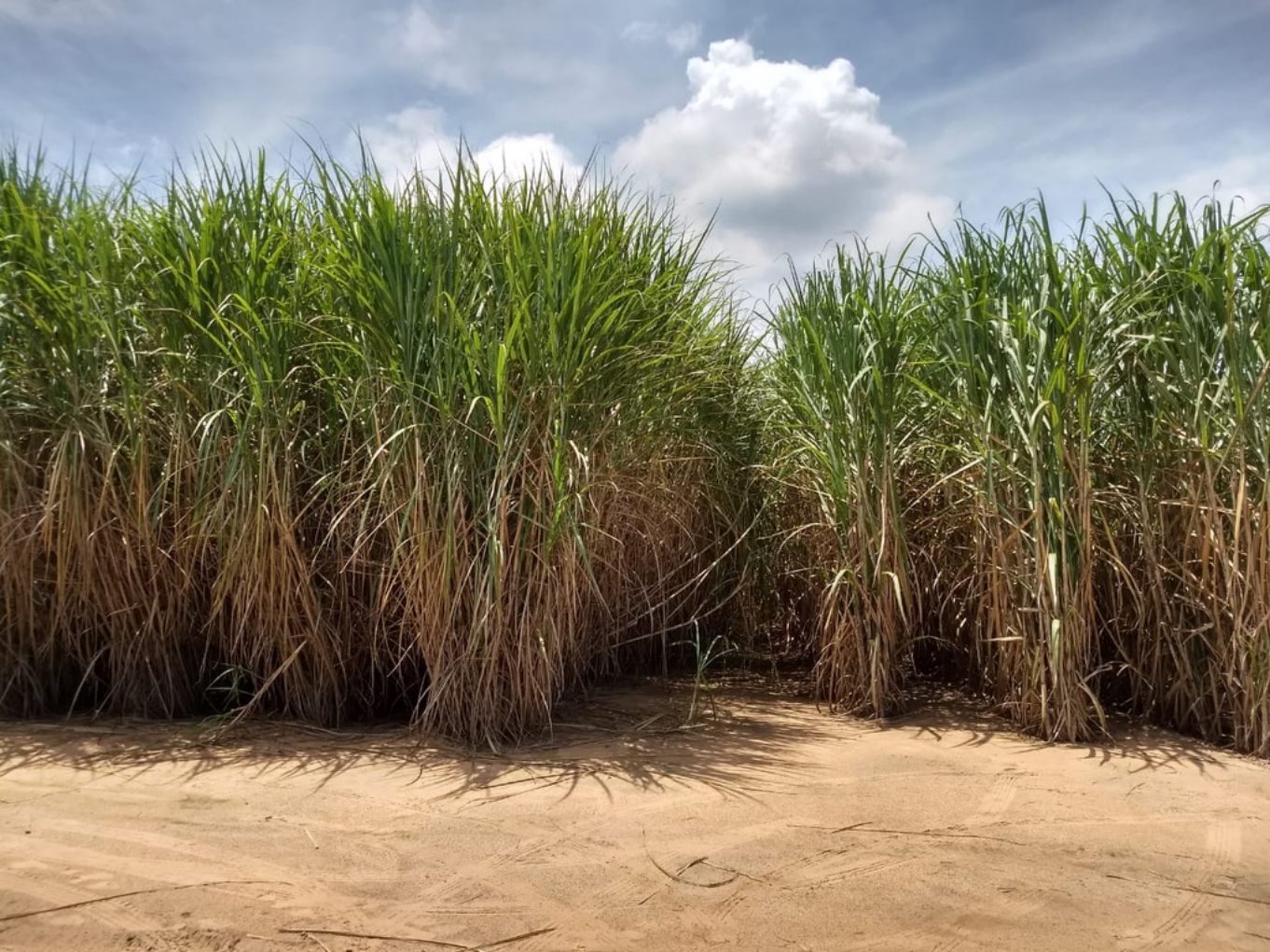
The Agronomic Institute (IAC) celebrates its 139th anniversary with another scientific achievement focused on innovation in the sugarcane energy sector. The IAC has obtained a patent for a biotechnological tool capable of increasing the production of plant biomass and modifying its composition, making it more suitable for industrial conversion processes into advanced biofuels. The technology — entitled “SHINE gene overexpression cassette for the production of plants with increased biomass and its alteration, its uses and methods” — is the result of approximately two decades of research conducted by the Biotechnology Laboratory of the Advanced Sugarcane Research and Development Division of the IAC, in Ribeirão Preto, in the interior of São Paulo state. Founded on June 27, 1887 by Emperor Pedro II, the IAC celebrates 139 years of existence this month. The commemorative ceremony will be held on the 30th, at 3 pm, in Campinas. The research results showed that it is possible to increase biomass production and, at the same time, make it more accessible to industrial conversion processes. “This combination is particularly interesting for the production of cellulosic ethanol, sustainable aviation fuels (SAF), biochemicals, and other bioeconomy products,” highlights IAC researcher and patent inventor, Silvana Aparecida Creste Dias de Souza. This patent strengthens IAC's institutional strategy of transforming scientific results into technologies applicable to productive sectors, contributing to the competitiveness of Brazilian agriculture and the development of a low-carbon economy based on renewable resources. According to the scientist, this invention focuses on understanding the genetic mechanisms involved in the formation of the cell wall of energy cane and sugarcane and on developing strategies capable of increasing the use of biomass for renewable energy production. “The technology uses the overexpression of the SHINE gene, a transcription factor that regulates processes related to plant growth and cell wall composition,” comments the IAC researcher, from APTA (Agribusiness Research Directorate), of the Secretariat of Agriculture and Supply of the State of São Paulo. Studies have shown that the expression of this gene simultaneously promotes increased biomass production, reduced lignin content, and greater efficiency in saccharification, the step responsible for converting biomass into fermentable sugars. “These characteristics are particularly relevant for the production of second-generation (2G) ethanol, obtained from the lignocellulosic fraction of sugarcane, such as bagasse and straw. Unlike conventional ethanol, produced from the sugars present in sugarcane juice, 2G ethanol depends on the breakdown of the plant cell wall to release the structural sugars present in cellulose and hemicellulose,” he explains.
Patented technology reduces lignin, increases biomass availability, and helps improve the efficiency of converting raw materials into biofuels.
Silvana Creste reports that one of the main challenges in this process is precisely the presence of lignin, a component that gives rigidity to the plant and hinders the access of enzymes to cellulose and hemicellulose during industrial processing. Hemicellulose is a component of the cell wall, along with cellulose and lignin. “Our goal was to develop a technology capable of simultaneously addressing two important bottlenecks in second-generation ethanol production: increasing biomass availability and improving its conversion into fermentable sugars. The results demonstrated that the SHINE gene has great potential for applications in energy crops,” says the researcher from the Agronomic Institute. In recent years, transgenic events developed with SHINE technology have been evaluated in the field in two sugarcane varieties developed by the Agronomic Institute: IACSP01-5503 and IACSP02-1064. Conducted over two agricultural cycles, the experiments demonstrated consistent gains in dry biomass production per hectare, accompanied by an increase in sugar production per hectare. “These data indicate that the technology not only favors the use of biomass for cellulosic ethanol, but can also contribute to increased sugar and energy production per unit of cultivated area,” she states. In addition to its potential for the biofuel industry, the technology could also be incorporated into new plant breeding and genetic engineering platforms in the future, combining with other agronomic characteristics of interest, such as pest resistance, herbicide tolerance, and adaptation to adverse environmental conditions. The tool emerged from functional genomics studies focused on identifying genes capable of altering structural plant characteristics without compromising its development. Although the technology was originally conceived to increase the efficiency of second-generation ethanol production, the results obtained in field evaluations showed a significant increase in agricultural productivity—an additional benefit of great relevance to the sugarcane energy sector. Besides the IAC researcher, the team of inventors also includes Alexandre Palma Boer Martins, Michael dos Santos Brito, Paula Macedo Nóbile, and Natália Gonçalves Takahashi. This work was supported by the São Paulo Research Foundation (FAPESP), the National Council for Scientific and Technological Development (CNPq), and the Coordination for the Improvement of Higher Education Personnel (CAPES).
This text was translated by machine from Brazilian Portuguese.