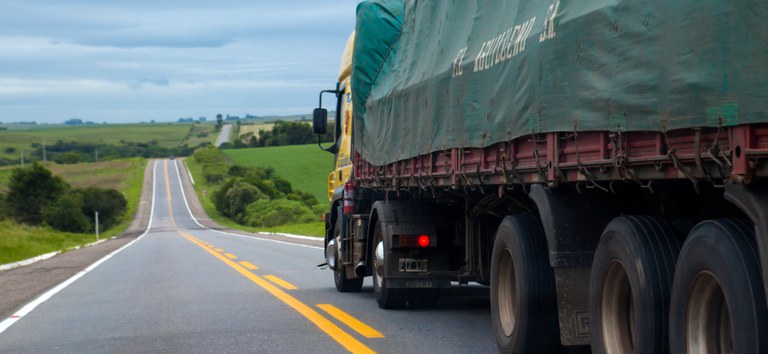
Soybean exports increased in February, contributing to higher freight prices. Besides the harvest, the rainy season is another factor influencing the rise in grain transportation service prices. This analysis is in the February edition of the Logistics Bulletin, published by the National Supply Company (Conab). Monitoring of logistics corridors highlights the Northern Arc and the port of Santos (SP) as the main export channels for soybeans and corn in early 2026. The Northern Arc handled 40.8% of corn production and 38.4% of soybean production. The Port of Santos exported 33.5% of the corn harvest and 36.8% of the soybean harvest. With the record harvest forecast released by Conab in its latest grain harvest survey, the coming months are expected to be marked by increased road freight costs. “In the international market, exchange rate fluctuations, geopolitical uncertainties, and the price of oil should continue to influence freight prices. In the domestic market, producers must contend with the progress of the first-crop harvest, which also maintains upward pressure on prices for grain removal,” analyzes Thomé Guth, Superintendent of Operational Logistics at Conab. According to the Bulletin, in the state of Mato Grosso, the main grain-producing state in the country, the high volume of soybeans kept logistics busy and freight rates trending upwards, with values up to 19% higher than the previous month. Despite the rains, recent infrastructure improvements ensured the flow, maintaining the prominence of the state of Mato Grosso in the supply of commodities. Mato Grosso do Sul also followed the trend of increasing freight rates, with routes exceeding 30% compared to January. In Goiás, excessive rainfall impacted planting and harvesting. Despite the difficulties encountered in advancing machinery during harvesting and logistical bottlenecks, the state experienced a rise in freight rates, with percentage growth exceeding 50% in some locations. The first half of February was symptomatic of the unstable weather, with reports of fleets held up due to the impossibility of loading and unloading. With the arrival of the new soybean harvest and the retention of corn, the demand for logistical infrastructure and storage increased. In the Federal District, road freight rates showed a maximum increase of 6% compared to the previous month, in line with expectations for the grain harvest outflow period. The Bulletin highlights the influence of the local cost of diesel, the readjustment of more than 3% in the minimum freight rate in January, and macroeconomic factors, in addition to the arrival of the harvest. The document also predicts that March should be characterized by the peak increase in freight rates, due to the peak of soybean and corn outflow. In Bahia, freight rates increased proportionally to the rise in demand for services in the Central-West region, which redirected service providers. Compared to January, the values did not exceed 10%. Corn showed a slight increase in the local market. With the intensification of the first harvest in the coming weeks, freight prices are expected to rise. Compared to the same period last year, the soybean harvest in southern Maranhão led to an average increase of 5% in freight rates on some routes. In neighboring Piauí, the start of soybean outflow also boosted logistics, with freight rates averaging 11% higher than in January. In Minas Gerais, while freight rates generally increased compared to the previous month, the cost of transporting coffee fell on routes to the south of the state. Exports continue to expand in Minas Gerais, particularly for higher value-added products and coffee. In Paraná, there was fluctuation in demand and prices according to the particularities of regional routes and the availability of return cargo. In São Paulo, freight rates remained stable and trended downward compared to the previous month, with expectations that the soybean harvest will improve prices. Fertilizers and manures – Imports increased compared to the same period last year. In February, Brazil imported 2.38 million tons of fertilizers, providing a safety margin for planting the next harvests. The research analyzed the country's main outflow routes, covering ten states. The Bulletin considers logistical aspects of the agricultural sector, the position of exports, analysis of cargo flow, and inventory movement at Conab (National Supply Company). The complete analyses are in the Logistics Bulletin – March/2026.
This text was translated by machine from Brazilian Portuguese.