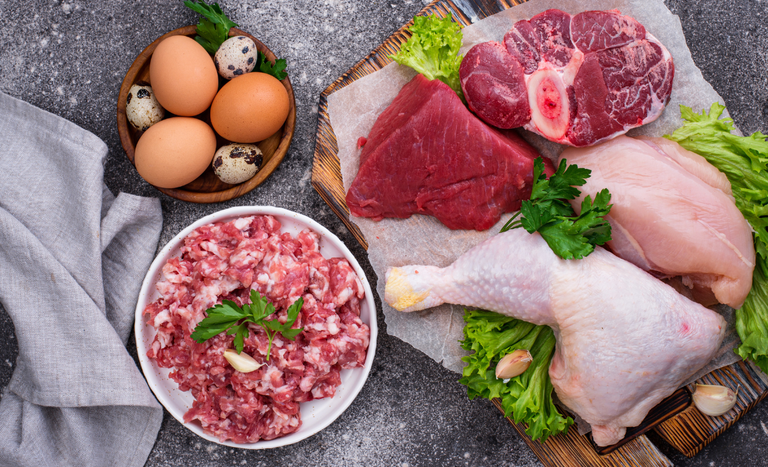
Global production of terrestrial animal-based foods has skyrocketed over the past six decades, particularly eggs, poultry, and pork. According to the Food and Agriculture Organization of the United Nations (FAO), livestock farming has become one of the fastest-growing agricultural sectors, transforming consumption patterns and raising new environmental and social challenges, according to a note from "UN News".
Consumption contrasts
The new FAO report indicates that the increase in per capita supply was mainly driven by three products: eggs, poultry, and pork. Between 1961 and 2022, the global supply of animal-derived foods increased rapidly. Poultry meat registered the most significant growth, while beef remained stable or declined in several regions. In 2022, global meat production reached 361 million tons, compared to 71 million in 1961. Milk production reached 930 million tons and egg production, 94 million. In Portuguese-speaking countries, the contrasts are striking. Brazil and Portugal are among the major global producers and consumers, while in Africa and Timor-Leste, access to meat, milk, and eggs is limited, marked by high prices and dependence on imports.
European market
Brazil stands out as one of the main exporters of beef and chicken, as well as being among the largest milk producers. This position reinforces its global relevance, but exposes environmental challenges such as deforestation and greenhouse gas emissions. Portugal, integrated into the highly regulated European market, has high per capita consumption and a strong presence of processed products. Angola, Mozambique, Guinea-Bissau, Cape Verde, São Tomé and Príncipe, and East Timor, on the other hand, face low supply and stagnant consumption. Much of the trade occurs in informal markets, without an adequate cold chain, which increases the risks to food security. In these regions, the high price makes animal-based foods inaccessible to many families, especially rural ones. Small-scale domestic production of chickens and goats is essential to supplement the diet and generate income.
Food waste
The report also highlights that about one-third of all food produced globally is lost or wasted. Of this, 14% is of terrestrial animal origin. Losses are associated with perishability, poor infrastructure, and temperature control, having a greater impact on low- and middle-income countries. Although international trade has grown, it represents only about 10% of global consumption of animal-derived foods. For the FAO, the livestock sector faces urgent challenges: deforestation, changes in land use, greenhouse gas emissions, and unsustainable use of water and land. Public health and animal welfare issues are also a concern, including the risks of zoonotic diseases resulting from the interaction between humans and farm animals.
This text was translated by machine from Brazilian Portuguese.