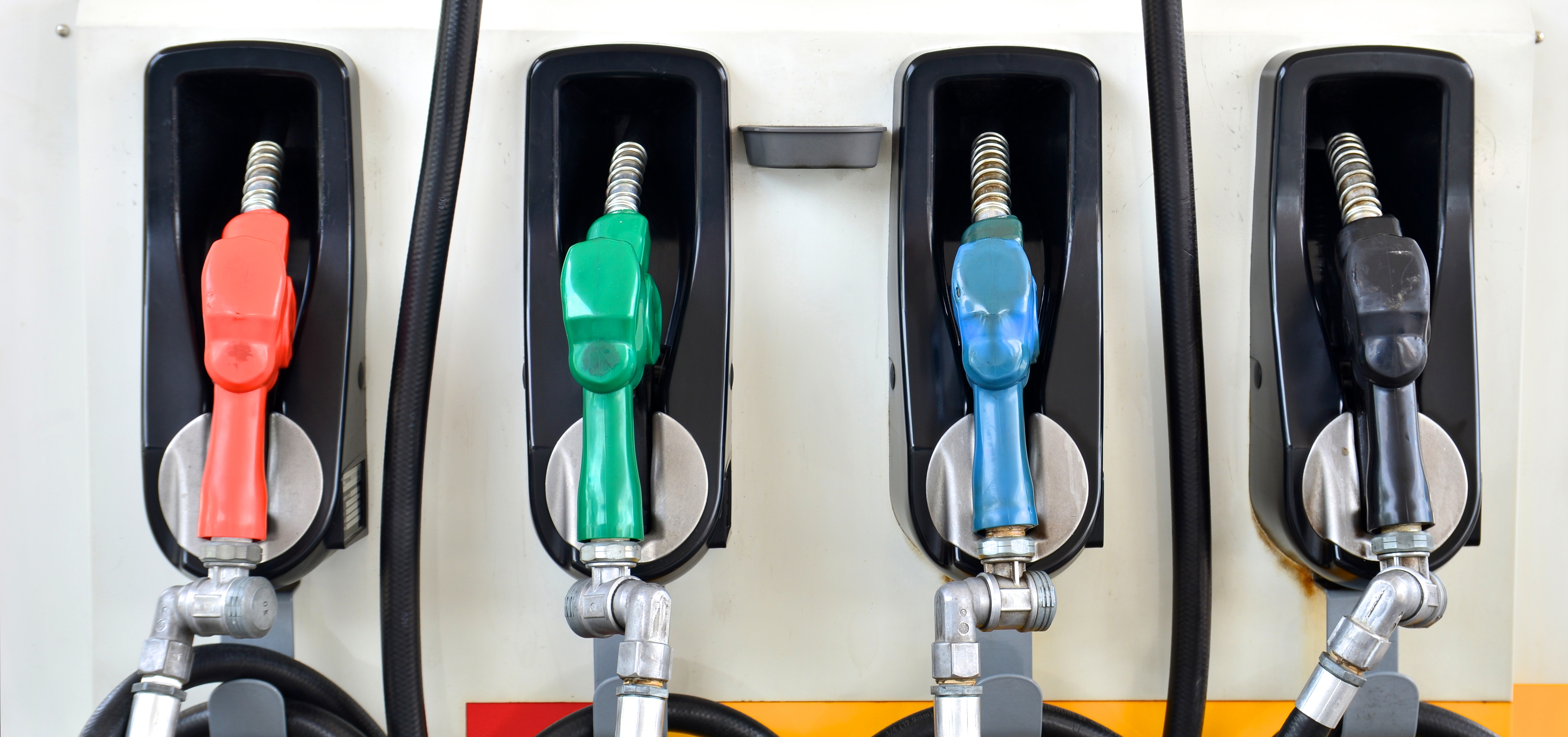
Fuel distributors will be required to report weekly on the evolution of their gross profit margins obtained from resale to gas stations. The measure aims to ensure that companies purchasing diesel and LPG with subsidies announced by the Brazilian government pass on the benefit throughout the supply chain. The actions were announced this Tuesday (April 14th) at a press conference attended by the Ministers of Mines and Energy, Alexandre Silveira, and Planning and Budget, Bruno Moretti, as well as the acting Minister of Finance, Rogério Ceron, and the National Consumer Secretary, Ricardo Morishita Wada. This obligation – which reinforces oversight mechanisms and guarantees the transparency of the process – includes the weekly submission of data related to sales made since February 22nd. The measure will remain in effect as long as the Special Regime for Internal Fuel Supply foreseen in Provisional Measure 1.349/2026 is in force. The rule will be part of the decree regulating Provisional Measure No. 1,349, published last week, and stipulates that the data must be sent to the National Agency of Petroleum, Natural Gas and Biofuels (ANP), which will make the information public on its website. Distributors that do not send the information will not be able to purchase the subsidized fuel. As already announced, the Brazilian government will pay an additional subsidy of R$ 0.80 per liter of fuel to Brazilian refineries that join the program. And, in conjunction with the states, another additional subsidy of R$ 1.20 per liter for diesel oil importers. Added to the subsidy already announced on March 12, of R$ 0.32 per liter, the value of the subsidies per liter of diesel oil reaches R$ 1.12 for the national producer and R$ 1.52 for the fuel importer. With the obligation of transparency, the Brazilian Government further reinforces what the Provisional Measure stipulates: those who import diesel subsidized with public funds must demand proof from the distributor that this benefit is being passed on to gas stations. This information will give oversight bodies and society more elements to prevent the international crisis from becoming an opportunity for abuses by economic agents. The same decree that regulates the diesel subsidy also includes rules relating to the subsidy for Liquefied Petroleum Gas. In total, the Brazilian Government will contribute R$ 330 million to this type of subsidy, which is equivalent to approximately R$ 11 for each 13 kg cooking gas cylinder. A second decree announced at a press conference this Tuesday regulates the formalization of states' adherence to the joint subsidy for imported diesel. The process stipulates that they must formalize their entry into the program by Wednesday, April 22nd. The Executive Secretary of the Ministry of Finance stated during the announcement that the government expects unanimous adherence from the states by this date. :: New Values for the People's Gas Program The Brazilian government also announced in the press conference that it is readjusting the reference values for the People's Gas program. With this, in certain states, retailers may receive up to R$ 10 more per cylinder sold. The expectation, with this readjustment, is that a greater number of cooking gas retailers will join the program, especially in municipalities that are still underserved. The measure will have an impact of R$ 300 million on the government. The People's Gas Program was created to expand access to cooking gas and reduce dependence on firewood, which impacts the health and quality of life of millions of Brazilian families. The initiative guarantees free refills of 13 kg gas cylinders for more than 15 million families registered in the Unified Registry (CadÚnico), benefiting approximately 50 million Brazilians. The current distribution model consolidates the "People's Gas" program as one of the largest public policies for clean cooking in the world. :: Fuel Prices The weekly price survey released by the National Agency of Petroleum, Natural Gas and Biofuels (ANP) last Friday (April 10th) shows that diesel prices remained stable and gasoline prices suffered a slight reduction, considering the national average price between the last two weeks, a trend observed in several states. This market response already reflects the effects of coordinated actions by the Brazilian government, which include continuous monitoring of the fuel market, stricter rules to curb price gouging, and strengthened oversight—with integrated action between the National Agency of Petroleum, Natural Gas and Biofuels (ANP), the National Consumer Secretariat (Senacon) of the Ministry of Justice and Public Security, the Federal Police, and state and municipal consumer protection agencies (Procons) throughout Brazil. The Ministry of Mines and Energy (MME) has intensified its weekly monitoring of fuel prices in all states, aiming to ensure greater transparency in price formation and identify distortions throughout the supply chain. Based on the results observed in recent weeks, the expectation is that, with the advancement of oversight actions and the implementation of the announced measures, this movement will contribute to accelerating the trend of lower fuel prices for the end consumer. “The enforcement actions, the new rules that have been created, and the announcement of subsidies that are being implemented are already managing to curb the increase in fuel prices in the country. But, in addition, we are creating other mechanisms to prevent a small group of companies from abusively increasing their profits and harming the entire population,” says the Minister of Mines and Energy, Alexandre Silveira. :: Guaranteed Supply in the Country Minister Alexandre Silveira also stated that the fuel supply in Brazil is guaranteed, reinforcing internal energy security amidst the international scenario. “I want to say that the Brazilian people can be completely reassured that there will be no fuel shortage, even with the seriousness of the situation. Prices are stable, and we will continue the firm and relentless fight against any type of attempted crime against the popular economy,” said the minister. Monitoring is carried out by the MME (Ministry of Mines and Energy), through the Supply Monitoring Room. For the month of April, the volume of contracted imports already exceeds the national demand for diesel in the period by about 25%. For May, contracted volumes also remain above projected demand. With the subsidy for diesel imports, the trend is for this balance to become even more favorable, guaranteeing energy security in the country. The Monitoring Room brings together daily representatives from the Ministry of Mines and Energy (MME), the National Agency of Petroleum, Natural Gas and Biofuels (ANP), the Energy Research Company (EPE), the Ministry of Justice and Public Security, and the Civil House, as well as agents from the sector. Updating the balance between supply and demand for diesel oil daily, the monitoring is done with a two-month time horizon, allowing for an early response to any market fluctuations. Since 2023, the MME has structured instruments for crisis management in the energy sector, such as Normative Ordinance No. 61/GM/MME, of March 13, which establishes the General Protocol for Security and Crisis Management (PGC) for infrastructure assets in energy, mining, oil, natural gas, and biofuels. The protocol establishes guidelines for coordinated action in scenarios that could compromise the integrity of services and supply, strengthening the government's response capacity and the country's energy security. :: Unprecedented-scale inspections From March 9th to Tuesday, April 14th, 8,225 gas stations across Brazil were inspected by the national task force formed to curb abusive fuel price increases following the start of the war in the Middle East. In addition, 378 fuel distributors were the subject of operations involving state and municipal consumer protection agencies (Procons) throughout Brazil, the National Agency of Petroleum, Natural Gas and Biofuels (ANP), the National Consumer Secretariat (Senacon), and the National Public Security Secretariat (Senasp), linked to the Ministry of Justice and Public Security, the Federal Police, and the Federal Highway Police. To date, the operations, based on the Consumer Protection Code, have resulted in more than 5,000 notifications which, after processing, could lead to fines of up to R$ 14 million for agents who have committed irregularities. “Freedom of pricing is not freedom to abuse. And economic agents cannot abusively increase their profits by taking advantage of a program funded with public resources,” stated the National Consumer Secretary, Ricardo Morishita. In parallel with the consumer protection actions of the Procons and Senacon, the ANP inspected 947 economic agents between March 16th and April 10th, including 744 gas stations and 117 distributors. During this period, it issued fines related to evidence of price gouging to 16 distributors – including the largest in Brazil – and 2 gas stations. In these cases, the fines applied by the agency can reach up to R$ 500 million.
This text was translated by machine from Brazilian Portuguese.