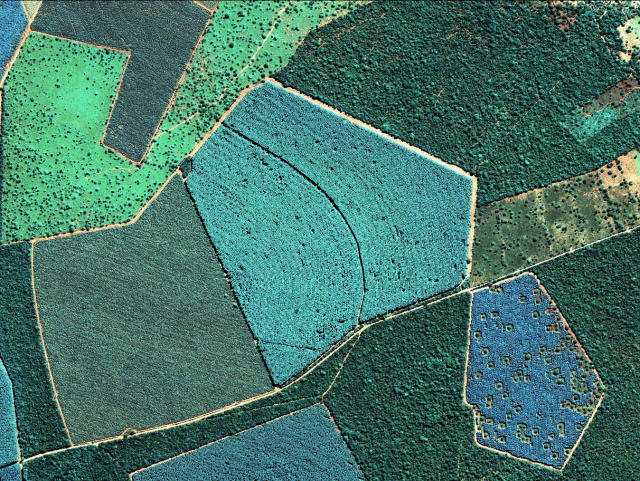
The Parliamentary Agricultural Front (FPA) must act in at least two ways to reverse the effects of two resolutions from the National Monetary Council (CMN). This regulation has caused insecurity and doubt among producers seeking rural credit, as it imposes restrictions on financing. Resolutions 5,268 of 2025 and 5,193 of 2024 came into effect on April 1st and, in practice, require financial institutions to consult the Project for Monitoring Deforestation in the Brazilian Amazon Forest by Satellite (Prodes) before releasing credit. However, producers have reported that the blockages occur even in legally recognized areas. “The issue of Prodes is a correct one, one where there are no questions about its efficiency. The problem is that it is generating enormous legal uncertainty for producers, because they are being subject to embargoes or having annotations added to their CAR [Rural Environmental Registry], without prior notice or the right to a full defense,” highlighted the president of the FPA, Deputy Pedro Lupion (Republicanos-PR), after the lunch meeting this Tuesday, the 7th. According to the leader of the caucus, one of the FPA's actions will be within the National Congress. Two bills are currently being processed there — 2,564/2025 and 205/2025. The first prevents the imposition of environmental embargoes solely through remote detection of vegetation suppression. The second identifies the environmental conditions that block access to rural credit, based on the provisions of the Forest Code. “We had a case presented to us today of a commercially produced persimmon orchard, where the trees have to be cut down and replanted, as happens with coffee and many other crops, and this results in a deforestation report. This prevents the producer from accessing credit,” Lupion exemplified. The other approach is to raise awareness within the federal government to adjust the regulations in a way that discourages illegal deforestation but doesn't penalize producers who are operating legally. “We have already asked the Ministry of Finance, the Ministry of Planning, and the Central Bank to listen to us so that we can present these challenges,” he added. Also participating in the FPA meeting was the president of DATAGRO, Plínio Nastari. He emphasized the role of Prodes and provided more examples of potential problems if the rules are not adjusted. “Prodes scans satellite images. The problem is that it generates reports on usual rural activities, such as pasture clearing, orchard suppression for another type of production, or suppression of areas occupied by eucalyptus for coffee planting. All of this generates reports. In fact, the intention should be to control illegal deforestation,” he told parliamentarians. According to DATAGRO data, 5.4 million positive reports were registered in Prodes on rural properties up to October 2025. An expert warned that some of these alerts are false positives, that is, Prodes detected vegetation suppression but there is no proof that this removal is legal or that it is part of a cultivation activity. :: Emergency solution The caucus will also work to have one of the six draft legislative decrees that overturn the resolutions approved on an emergency basis. “What we need to do right now is overturn this resolution, because otherwise the credit situation for producers will become very difficult,” highlighted the 2nd vice-president of the FPA in the Senate, Senator Jaime Bagattoli (PL-RO), who is the author of proposal 205/2025. Also addressing the topic, the coordinator of the FPA's Rural Indebtedness Commission, Deputy Lúcio Mosquini (PL-RO), explained the intention of bill 2,564/2025. “What we want here is legal certainty like that provided by traffic fines. With a fine, you are notified; however, in the case of Prodes, this resolution [5193] led to the disqualification of the operation,” he said. :: Bill on indebtedness expected to gain traction in the Senate According to the vice-president of the FPA in the Senate, Senator Tereza Cristina (PP-MS), Bill 5,122 of 2023 is “ripe” to be voted on in this Legislative House. The text authorizes the use of the Social Fund as a source to enable an emergency credit line to help producers affected by adverse weather conditions and public calamities to settle debts related to impacted harvests. “I think the time has come [to vote]. I will have a conversation with Senator Renan Calheiros, president of the CAE [Committee on Economic Affairs], and I believe that now the discussion in the Senate will mature and move forward,” commented the senator. The bill has been awaiting the appointment of a rapporteur in the committee since February of this year. Deputy Rodolfo Nogueira (PL-MS), coordinator of the Rural Insurance Committee of the FPA, also commented on the project. “The project there doesn't have a rapporteur yet and is stalled in the Senate today because the federal government contributed to this and intervened to hold up this project,” criticized the parliamentarian, recalling the cases of judicial recovery in Mato Grosso do Sul due to droughts experienced in recent seasons. The coordinator of the FPA's Labor Commission, Deputy Afonso Hamm (PP-RS), emphasized that there is a task force in action to address the issue. Producers in Rio Grande do Sul have been mobilizing around the agenda and seeking to sensitize senators about the proposal. “For us, it's a lifeline. We are having an average harvest, but we depend on this debt extension, on the approval of bill 5.122, which was built by the entire Brazilian agricultural sector,” he pointed out. :: Rural Insurance: rapporteur should finalize text this week. Parliamentarians have also been advocating for the approval of Bill 2.951 of 2024, in addition to aid for producers indebted due to failed harvests. This bill updates Rural Insurance by enabling a catastrophe fund. The text is under urgent consideration and should be scheduled for a vote in the Chamber of Deputies soon. According to the rapporteur, Deputy Pedro Lupion, the report could be finalized this Tuesday. “I hope we can get it to the plenary for a vote next week, or at the latest the following week. We are seeking the president [of the Chamber], Deputy Hugo Motta, to give us a space in the plenary for some priority agendas,” he highlighted. The topic is one of the FPA's priorities for 2026. Despite being a relevant public policy, the scenario in recent years is one of stagnant resources for the Rural Insurance Premium Subsidy Program (PSR). According to the Rural Insurance Atlas, a platform of the Ministry of Agriculture and Livestock (Mapa), the largest amount allocated and executed for the subsidy was recorded in 2021, with R$ 1.15 billion. Since then, the amounts have fallen and in 2025 reached the lowest level since 2019, with R$ 565.3 million. :: Parliamentary Group to Request Authorization for B100 Fuel The luncheon meeting of the parliamentary group also served as an opportunity for parliamentarians to assess the recent measures announced by the federal government to reduce the impacts of the conflict in the Middle East on fuels. The vice-president of the FPA in the Chamber of Deputies, Representative Arnaldo Jardim (Cidadania-SP), reiterated a suggestion presented by the group to increase the blending of biofuels in fossil fuels — 17% biodiesel in diesel and 32% ethanol in gasoline. Jardim also said that parliamentarians will send a request to the National Agency of Petroleum, Natural Gas and Biofuels (ANP) to facilitate 100% biodiesel fuel supply. According to the representative, there are already companies authorized to operate internal fleets with B100, and the intention is to extend this possibility to others. “We will ask the ANP to evaluate and revoke this measure that establishes a limit on the possibility of freedom. If the entrepreneur wants to, if the producer, the transporter wants to use it, that this can be comfortably established,” he indicated. He further added: “So, are the carriers using B100 doing something illegal? No. They had to request a special permit, it went through the process and was granted. What we want is for this freedom to be granted generally.”
This text was translated by machine from Brazilian Portuguese.