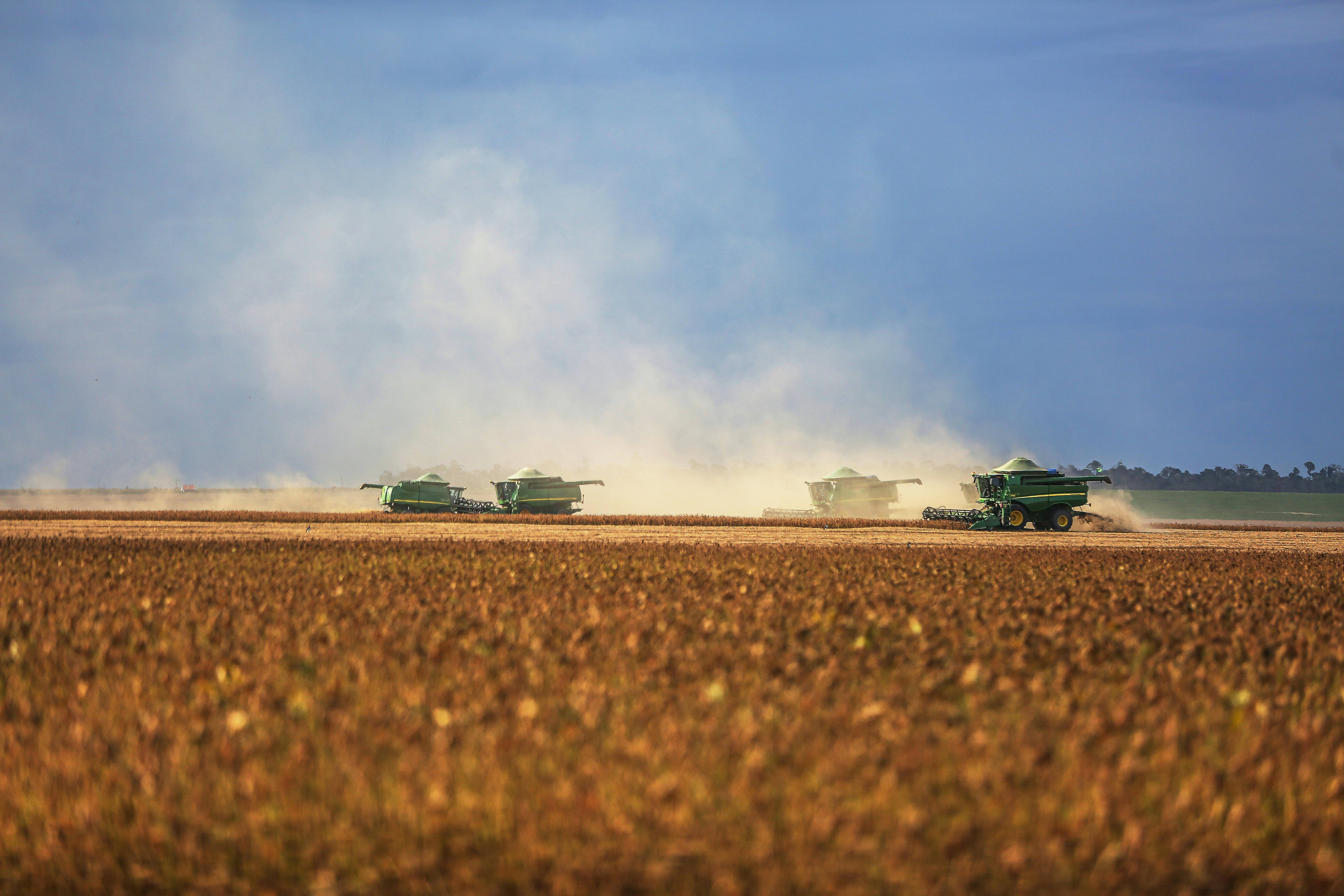
Brazilian agricultural exports are showing a strong trend in volume this year, but with the caveat of more stable prices and higher production and logistics costs, resulting in tighter margins for farmers. This is the forecast of Felipe Serigatti, coordinator of the Master's Program in Agribusiness at the Getúlio Vargas Foundation (FGV). According to the FGV specialist, given the global scenario marked by geopolitical uncertainties, the initial impact is clearly reflected in the price of oil and also in the blockage of important maritime corridors, such as the Strait of Hormuz. "All of this is reflected in higher freight costs for everyone. For fertilizers, the cost of this harvest is already included. The bill could arrive for the 2026/27 cycle." In this geopolitical agenda, Ambassador Rubens Barbosa, president of Abitrigo, points out that the start – albeit provisional – of the Mercosur-European Union Agreement on May 1st emerges as a vital alternative to the current commercial dependence of Brazilian agribusiness and our exports as a whole. "Today, we have about 10% of our trade with the United States and almost 30% with China," he states. However, Barbosa notes that, although the European market is colossal – with a Gross Domestic Product (GDP) of US$17 trillion – Brazil will face challenges in quotas and environmental barriers. "Requirements such as deforestation laws and the carbon adjustment mechanism (CBAM) can now be discussed and negotiated within the framework of the treaty, with its own mechanisms for dispute resolution." Former Minister of Agriculture, Roberto Rodrigues, notes that agribusiness is prepared due to its high productivity, but foresees a 15-year transition period. "Despite its enormous regional diversity, Brazil is competitive. Our central concern should be the small producer; if technology is not accessible, the agreement could generate social exclusion. The challenge is to guarantee scale and certification so that everyone can compete." Looking further ahead, Insper professor Alberto Pfeifer positions agribusiness as Brazil's instrument of deterrence. "Other countries have the atomic bomb, we have the strength of our agribusiness, which offers food, fiber, and energy to the world, in addition to mastering tropical agricultural technology," he emphasizes, adding that: "agribusiness is power for Brazil, it's our trump card. This is geopolitics. It's about selling at high prices and to friends."
This text was translated by machine from Brazilian Portuguese.