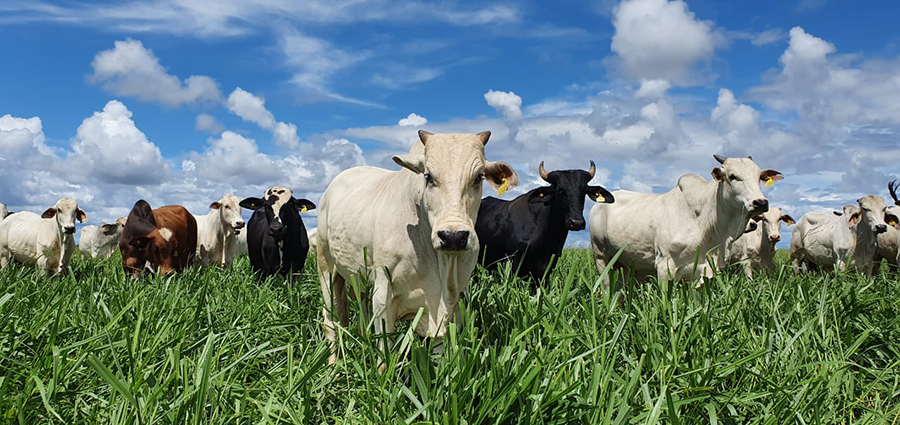
The Mato Grosso Federation of Agriculture and Livestock (Famato) warns of the risk of a shortage of dicalcium phosphate in the national market, an essential input for the manufacture of mineral supplements used in cattle feed. According to a survey conducted by the organization with animal nutrition companies, mineral supplement manufacturers, and rural producers, there is a risk of a shortage of this mineral salt for cattle in the coming days. The situation is particularly worrying for Mato Grosso, which has the largest cattle herd in the country and could suffer direct impacts on meat and milk production. The absence of the product on the market is attributed to a combination of factors. These include insufficient national production to meet the demand of Brazilian agribusiness, high dependence on imports, external supply restrictions, the impact of international conflicts on production and logistics chains, and the decision of some supplier countries to prioritize their domestic markets to guarantee strategic inputs for food production. In addition to the possible shortage of the product, Famato points to a significant increase in the prices of fattening concentrates and mineral supplements, with expectations of further adjustments. The scenario puts even more pressure on livestock farmers, who are already facing high costs, reduced margins, and falling prices paid by the meatpacking industry. The concern also extends to agriculture in Mato Grosso. Famato (the Mato Grosso Federation of Agriculture and Livestock) assesses that the scarcity and high prices of phosphate inputs highlight a broader vulnerability for the productive sector, since mineral raw materials are fundamental for both animal feed supplementation and agricultural production. In a state that is a leader in the production of grains, fibers, and meat, any instability in the supply of these inputs can compromise productivity, increase costs, affect farm planning, and reduce the competitiveness of Mato Grosso's agribusiness. According to Famato's president, Vilmondes Tomain, the problem demands immediate attention. “We are facing an important warning for livestock farming and agriculture. Mineral salt is essential for the productive, reproductive, and sanitary performance of the herd, just as phosphate inputs are strategic for agricultural production. When these products become expensive or, worse, begin to run out, the impact directly affects the rural producer, who is already facing increased costs and reduced profit margins, and can even reach supermarket shelves,” he emphasizes. Mineral deficiency can compromise weight gain, fertility, immunity, milk production, and reproductive rates. In practice, the lack of adequate supplementation reduces farm efficiency, increases sanitary risks, and can affect the entire production chain. The vice-president of Famato and coordinator of the entity's Beef Cattle Commission, Amarildo Merotti, states that the situation is even more worrying given other challenges faced by the sector. "Mato Grosso has the largest cattle herd in Brazil. Any instability in the supply of mineral salt affects thousands of producers. Cattle ranchers are being pressured by high input costs, the risk of product shortages, concerns about clostridial vaccines, and falling prices paid by the industry. This combination is very worrying," he states. Famato also links the alert to the recent shortage of clostridial vaccines, a topic already monitored by the organization. For the federation, the combination of sanitary difficulties and a possible lack of inputs for mineral supplementation increases the productive and economic risk on rural properties. Among the measures advocated by Famato are the temporary reduction or exemption of import tariffs on dicalcium phosphate and sulfur, tax reduction on white salt and urea intended for animal nutrition, streamlining customs bureaucracy, expediting the release of products at borders, and closer ties with supplier countries, such as Bolivia. The organization also believes that the effective implementation of the National Fertilizer Plan 2022-2050 is fundamental to reducing Brazil's external dependence on strategic inputs. The plan includes actions to expand national production, stimulate mineral research, attract investments, improve the business environment, and strengthen logistical infrastructure. “Brazil cannot depend almost exclusively on the external market to guarantee essential inputs for food production. The National Fertilizer Plan needs to advance more effectively. Guaranteeing accessible fertilizers and mineral inputs is a matter of sovereignty, food security, and competitiveness for rural producers,” concludes Vilmondes.
This text was translated by machine from Brazilian Portuguese.