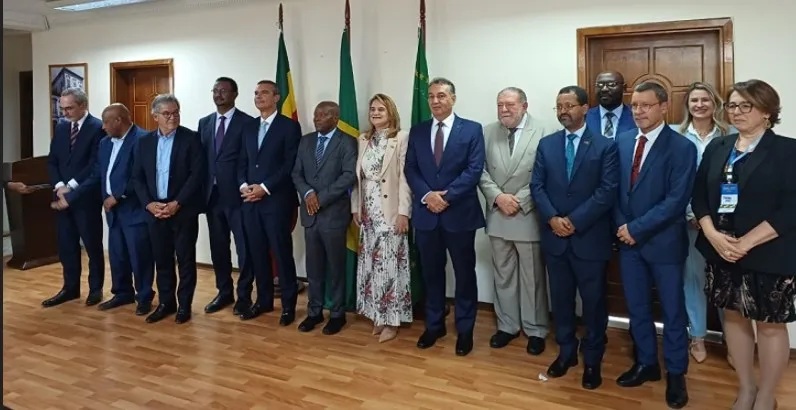
Researchers from Embrapa (Campo Grande-MS) are participating in an international technical mission to Ethiopia from March 30th to April 5th, with the goal of structuring a work plan for the state-owned company's first International Technological Reference Unit (URTI). This initiative is part of an agreement signed with the Ethiopian group Kerchanshe, seeking to validate and adapt Brazilian technologies to the productive conditions of East Africa. This action represents a strategic advance in South-South cooperation, expanding Embrapa's institutional presence on the African continent and promoting sustainable solutions for livestock systems in tropical and semi-arid environments. The program includes technical meetings, field visits, and the "Brazilian Technology Reference Farm – 1st Working Meeting," to be held on April 2nd in Addis Ababa, bringing together representatives from governments, research institutions, and the productive sector of both countries. The URTI will involve the participation of local and international institutions, such as the Ethiopian Institute of Agricultural Research (EIAR) and Bishoftu University, in addition to the support of the Brazilian Ministry of Agriculture and the agricultural attaché in Ethiopia. This is Embrapa's first technical mission since the opening of the Technical Cooperation Office in February of this year. :: Technology Transfer and Local Adaptation As the main focus of the mission is to consolidate the work plan at Oro Meat Farm, owned by the partner group, technologies aimed at the sustainable intensification of meat production will be tested there. Priority themes include genetic improvement of the herd, reproductive biotechnologies, animal nutrition, animal welfare, and integrated production systems, including crop-livestock-forestry integration (ILPF) and soil water retention strategies. The proposal must consider the characteristics of local production systems, predominantly based on smallholdings, integration between crops and livestock, and strong dependence on rainfall. In the Ethiopian Rift Valley region, agricultural systems are multifunctional, with cattle used not only for meat production but also for traction, income generation, and organic fertilization. The delegation is composed of researchers Mariana de Aragão Pereira (rural economics), Valdemir Antonio Laura (diagnosis of Integrated Crop-Livestock-Forestry systems and micro-dams), Roberto Giolo de Almeida (protocols and low-carbon livestock farming), Eriklis Nogueira (biotechnology and reproduction), and Davi Bungenstab (low-carbon livestock farming), all from Embrapa Beef Cattle. José Ednilson Miranda, Embrapa's representative in this cooperation with African countries, explains that the workshop on the 2nd will involve approximately 40 national (Ethiopian) and international institutions, including the African Union, the World Bank, AfDB, CGIAR, several universities, and local business groups, for the development of the executive project. “The idea is to bring them on board as partners in this initiative, each with their expertise and collaboration. In the diplomatic and commercial fields, the partnership also aims to open doors for Brazilian private sector companies to export genetic inputs, machinery, and services,” says the researcher. The final result of this journey will also serve as a technological showcase for Embrapa, in preparation for the company's participation in COP-32, which will be held here in Ethiopia next year.
This text was translated by machine from Brazilian Portuguese.