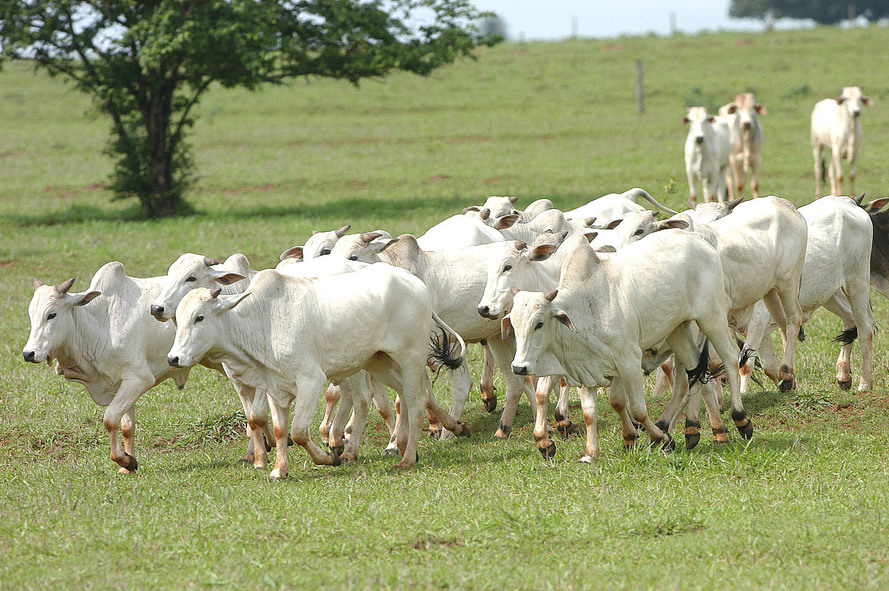
The occurrence of El Niño in 2026 has been confirmed by the United States National Oceanic and Atmospheric Administration (NOAA). For Brazil, the phenomenon is expected to cause uneven climate shock: it tends to increase the risk of drought in the northern part of the North and Northeast regions and favor higher rainfall volumes in the South. In parts of the Central-West and Southeast, the effects tend to appear more as irregular rainfall, more frequent dry periods, and higher temperatures. According to researchers from the Livestock Team at Cepea (Center for Advanced Studies in Applied Economics), at Esalq/USP, the most appropriate interpretation is to treat El Niño 2026 as a factor increasing climate and production volatility, with quite distinct regional impacts. Researchers at Cepea point out that the main points of attention for the national livestock industry are: Increased attention to the availability of pasture and water – In pasture-based systems, any delay in rainfall recovery, prolonged dry spells, or above-average temperatures can reduce forage growth, decrease the carrying capacity of areas, and put pressure on animal weight gain or milk production. Production and quality of conserved forages – The climate risk to grains cannot be analyzed solely as a risk of crop failure. It is also necessary to observe the effects on relative prices, freight, stocks, grain quality, futures market, and feed purchasing decisions. This point is particularly important for poultry and swine, but also affects cattle feedlots, intensive dairy systems, and strategic supplementation of sheep and goats. Environment, health, and logistics, impacting more severely properties that use taurine breeds – High temperatures reduce thermal comfort, worsen feed conversion, reduce voluntary intake, and can affect fertility, growth, and milk production. Excessive rainfall, on the other hand, increases mud, hoof problems, mastitis, respiratory diseases, transportation difficulties, logistical disruptions, and loss of input quality. Animal feed costs – Corn, soybean meal, silage, sorghum, hay, and other conserved forages are central to the analysis because they connect climate to the margins of practically all livestock chains. Regarding the impacts on each livestock chain, according to researchers at Cepea, for beef cattle, the effects of El Niño tend to concentrate on four points: pasture quality, water availability, heat stress, and increased supplementation costs. For dairy production, the impact tends to appear in combination on forage production, concentrate costs, and animal thermal comfort. Regarding sheep and goats in the Northeast, the main risk is the reduction in water and forage availability, requiring greater use of feed reserves and supplementation. In the South, excessive rainfall can exacerbate sanitary problems, hinder management, and compromise forage quality. For the swine and poultry industries, the greatest impacts tend to occur through increased feed costs, energy consumption, and heat stress. High temperatures can reduce productive performance, affect fertility, and further strain producers' profit margins.
This text was translated by machine from Brazilian Portuguese.