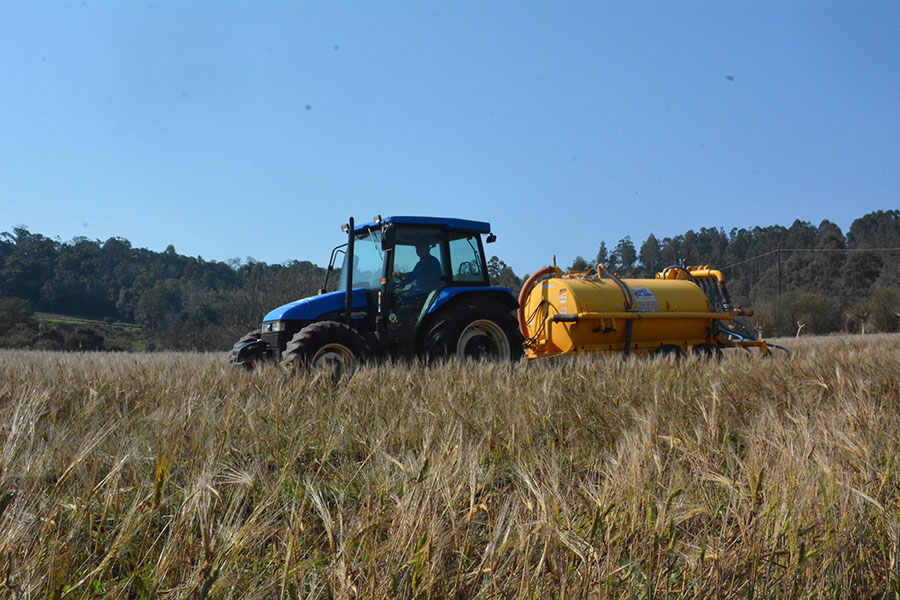
GeoFert is a technological solution developed by agricultural science to enhance traceability in the process of transforming swine manure into biofertilizers. It is a digital management system that uses georeferencing to organize the collection, transport, and application of this waste. Conceived within the scope of the Environmental Management Model for Areas with Intensive Animal Production in Southern Brazil (SMART) project, the technology is currently being validated by private partners to be safely and sustainably transferred to the swine industry. Intensive swine production, especially in regions with high animal concentration such as western Santa Catarina, faces a persistent challenge: the proper management of manure. Approximately 95% of the waste is liquid and destined for soil fertilization. Although rich in nutrients and essential for maintaining fertility, improper use can generate significant environmental impacts due to the risks of water contamination and soil degradation. The sustainability of the activity depends on integrated management that considers production, the environment, and regulatory requirements. In Santa Catarina, the environmental licensing of pig farms utilizes the Swine Farming Environmental Management System (SGAS) developed by Embrapa Swine and Poultry (SC), which calculates animal excretion, estimates nutrient supply, sizes structures, and recommends fertilization. The system has contributed to standardizing and streamlining the licensing process in the state. However, the post-licensing stage, when the producer must prove the correct disposal of effluents as stipulated in the Operating License, remains one of the most critical points in the process. The challenge intensifies in farms that use third-party areas (cedors) or that depend on public fleets—usually from municipalities or machinery associations—to transport waste. In these cases, the need for control, transparency, and traceability is even greater. "In many municipalities, this stage still depends on manual records or fragmented controls, which hinders verification and compromises the transparency of the process," says Embrapa researcher Cláudio Miranda. Therefore, GeoFert was created to schedule, record, and verify each stage of biofertilizer application. It stores information such as the farm of origin of the effluents, receiving properties, dates and times of applications, and geographic coordinates of the fertilized locations. :: GeoFert uses data from the Rural Environmental Registry. According to Miranda, one of the differentiating factors of this system is the integration of tracking information from machines and agricultural establishments, based on data from the Rural Environmental Registry (CAR). “This will reinforce the legal compliance of agricultural service providers (municipalities, machinery associations, or private companies), as well as ensure greater agility, transparency, and cost-effectiveness in meeting the requests for agricultural services demanded by farmers,” he emphasizes. Unlike commercial fleet tracking solutions, GeoFert was specifically designed to meet the needs of the swine industry and the requirements for post-licensing environmental verification, complementing the functionalities of SGAS in the planning and execution of activities. :: Main benefits • Environmental compliance: meets legal requirements related to waste management. • Auditable evidence: generates robust information for environmental and regulatory agencies. • Transparency in the use of public resources: fundamental for operations carried out by public or contracted fleets. • Intelligent management: offers dashboards with maps, graphs, and tables for quick and informed decisions. :: Target audience The system can be used by rural producers, environmental agencies, consultancies and technical assistance companies, municipalities, machinery associations, and agricultural service providers. :: Validation in progress GeoFert is currently undergoing validation through technical cooperation agreements. In August 2025, the municipality of Presidente Castello Branco in Santa Catarina became the first to officially implement the tool, automating service requests and digitizing information previously recorded manually. The validation process is being carried out in partnership with Ekodata Tecnologia e Saneamento Ambiental, the company responsible for implementing the system, training users, and monitoring the tests, with the possibility of suggesting customizations and improvements. “The validation phase has been fundamental to improving the system. Each municipality that adopts GeoFert allows us to adjust workflows, adapt interfaces, and incorporate functionalities aligned with the real demands of operators and public managers,” adds Miranda. The expectation is that the adoption of GeoFert will represent a significant advance for the sustainability of family pig farming by strengthening traceability in the use of biofertilizers, promoting greater environmental responsibility, and increasing the efficiency of public policies supporting the activity.
This text was translated by machine from Brazilian Portuguese.