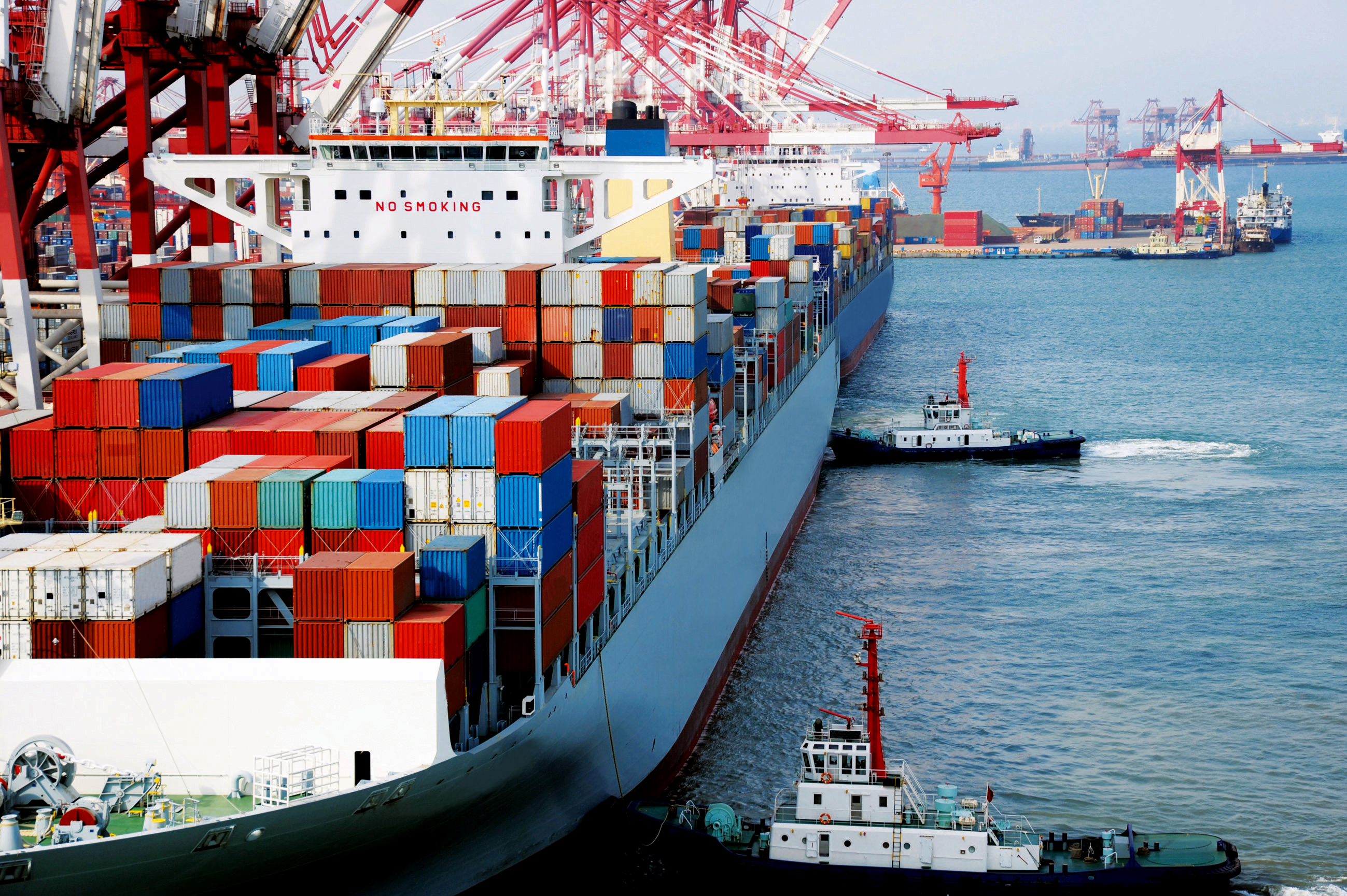
The UN Conference on Trade and Development, UNCTAD, reveals that global trade maintained a rapid pace in the first half of 2026, driven by demand for high technology and signaling a record annual value. Even so, the UN agency predicts severe price pressure due to geopolitical conflicts. Of the Portuguese-speaking countries, only Brazil stands out for its high import growth, contrasting with the stagnation in most of the world's major economies.
Larger volume of goods
Global trade is estimated to have reached US$2 trillion during the period under review. Much of this increase does not reflect a greater volume of goods, but rather the higher costs of freight, energy, and industrial inputs. In percentage terms, world trade growth in the first quarter of 2026 reached approximately 4% compared to the previous quarter, driven by a 4.8% expansion in trade in goods and a 1.6% increase in the services sector, according to [source missing]. "UN News"UNCTAD estimates indicate that this strength should continue in the second quarter, projecting an acceleration of 6.4% for goods and 2.1% for services. This financial advance masks significant physical bottlenecks. Disruptions to maritime traffic through the Strait of Hormuz and geopolitical uncertainties regarding energy supply have increased transportation, logistics, and production costs.
Increased supply chain costs
The result was an acceleration of global trade inflation to 3.6% in the first quarter, potentially reaching 5.1% in the second quarter. Over the last 12 months, the rise in these costs has averaged 3.4%, confirming that supply chain values remain high. For Brazil, this performance is noteworthy. While most major powers maintained import volumes virtually unchanged in the first quarter of 2026 compared to the previous period, the country grew its imports by 3%. Over the last four accumulated quarters, Brazil also saw an increase in the purchase of foreign goods. Trade in services revealed further discrepancies between economic blocs.
Brazil and the European Union
Regarding service imports, while economies like India, South Korea, and Russia reduced their external purchases, Brazil and the European Union registered significant increases in demand. As for service exports, South Korea saw the largest global gains with a 9% increase, accompanied by expansions in Russia and the European Union. In contrast, Brazil saw a decrease in its sales of services abroad. In regional and industrial sector terms, UNCTAD reveals that the pace of trade expansion remains heterogeneous. East Asia confirmed itself as a major driver of merchandise trade in early 2026 with strong Chinese and South Korean activity. In the Americas and Africa, the growth rate of imports exceeded the world average, although export performance remained relatively modest.
Strong expansion of the energy transition.
The global economy is undergoing a reorganization of priorities, with the energy transition and the race for artificial intelligence being the first sectors experiencing strong growth. Both continue to drive demand for semiconductors, Information and Communication Technology (ICT) equipment, electric machines, batteries, critical minerals, and electric vehicles. Conversely, traditional industrial segments have experienced a slowdown, with reductions recorded in the trade of chemicals, iron, steel, and certain branches of renewable energy. With global records projected for this year, the challenge in the coming quarters will be the ability of economies to absorb the rising costs of transportation and commodities without compromising the physical volume of international trade.
This text was translated by machine from Brazilian Portuguese.