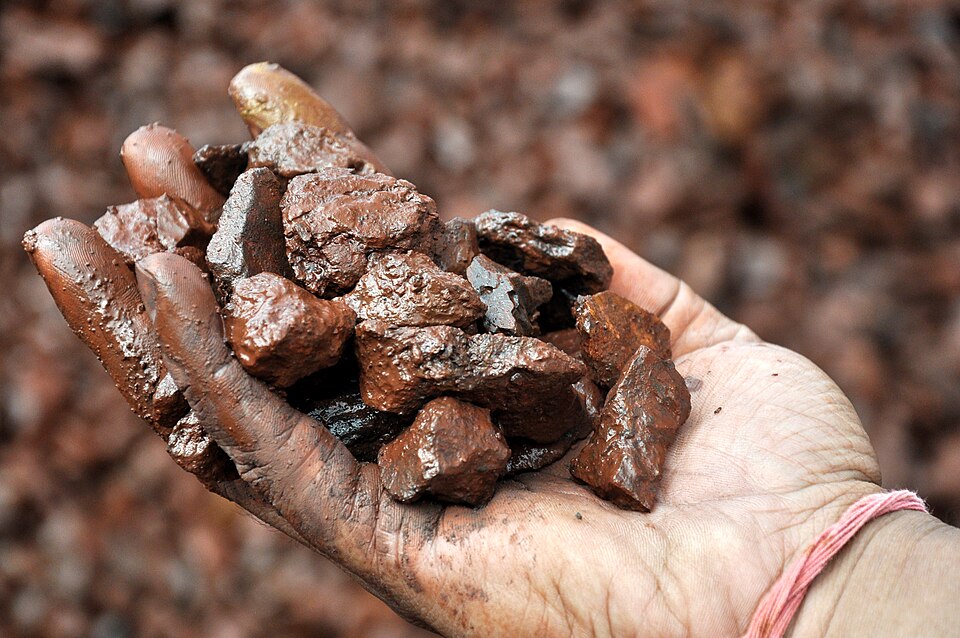
The expansion of investments in the critical minerals and rare earths chain could add R$ 192.1 billion to Brazil's Gross Domestic Product (GDP) and generate 750,000 new jobs by 2050, according to a groundbreaking study to be launched by Amcham Brazil during a meeting on the subject, held this Tuesday (4), in Belo Horizonte. The study compares two paths for the development of the critical minerals and rare earths chain in Brazil. In the first, investments are financed mainly by domestic capital and production remains predominantly export-oriented, with low value aggregation in the country. In this scenario, the accumulated impact on GDP reaches R$ 128.7 billion, with an estimated generation of 304,000 jobs. The second scenario considers greater participation of foreign investment, expansion of mineral processing in Brazil and increasing use of these inputs by national industry. In this hypothesis, investments grow by R$120.9 billion, with an accumulated impact on GDP of R$ 192.1 billion and an estimated generation of 750,000 jobs. The study uses projections already made in other global and internal Brazilian studies to estimate the demand for these minerals and rare earth elements, as well as a portfolio of planned investment projects. The minerals considered are cobalt, copper, graphite, lithium, nickel, and rare earth elements. "Brazil holds some of the largest reserves of critical minerals in the world and has all the conditions to become a global protagonist in this market. The greater the capacity to attract investment, the greater the transformation of this mineral wealth into value, technology, jobs, and industrial and economic development," says the president of Amcham Brazil, Abrão Neto. The comparison between the two scenarios demonstrates that attracting international capital and strengthening production chains could add R$ 63.4 billion to GDP, R$ 32.3 billion to household consumption, R$ 16.1 billion to investments, and 446,000 jobs, in addition to the effects already provided by the expansion of mining.
Benefits reach producing states and industrial centers.
The study shows that the greatest impacts on GDP occur in mining states, particularly Pará (16.0%), Bahia (10.3%), Goiás (10.0%), Piauí (4.0%), and Minas Gerais (3.8%). At the same time, the strengthening of domestic processing expands the benefits for states with a greater industrial presence. Compared to the first scenario, the largest additional gains are observed in Santa Catarina, Minas Gerais, São Paulo, and Paraná, demonstrating that value aggregation extends economic effects beyond producing regions. In the sectoral analysis, the manufacturing industry shows accumulated growth of 1.8% in the second scenario, almost three times higher than that observed in the first. Construction (4.5%) and the extractive industry (4.2%) also stand out. Among industrial segments, the greatest impacts are recorded in electrical machinery and equipment (16.7%), mineral extraction machinery (9.8%), automobiles (5.5%), and mechanical machinery and equipment (2.9%). “The increased attraction of investments and value aggregation in Brazil expands the economic benefits of the critical minerals chain beyond the producing states, also boosting industrial regions and strengthening the country's integration into global technology and energy transition chains,” says Abrão Neto.
Details about the study
The study was conducted by researchers from the Federal University of Minas Gerais (UFMG) and the Federal University of Juiz de Fora (UFJF), with support from the US Chamber of Commerce and companies in the sector. The study covers the supply chains of copper, graphite, lithium, nickel, and rare earth elements, minerals considered essential for the energy transition and for technologies such as batteries, electric vehicles, wind turbines, and electronic equipment.
Agenda to strengthen competitiveness
For Brazil to fully realize its potential, Amcham advocates for a public policy agenda focused on strengthening the critical minerals and rare earth supply chain. Among the priorities are the approval of the National Policy for Critical and Strategic Minerals, the strengthening of financing and risk mitigation instruments, the expansion of investment attraction, incentives for processing and industrialization in the country, and improvements to the regulatory environment to stimulate long-term investments and greater value creation.
This text was translated by machine from Brazilian Portuguese.