Tourists who come to the Caparaó region to visit Pico da Bandeira often find another attraction in the mountains of the Minas Gerais municipality of Espera Feliz: the specialty coffees produced by people like farmer Luiza Lacerda and her family, in the coffee-growing region known as Matas de Minas. The 29-year-old producer, daughter and granddaughter of coffee farmers, saw her property experience a surge in income and recognition after shifting from selling only raw coffee to investing in roasting, creating her own brand, and selling directly to consumers. “Tourists used to come to climb Pico da Bandeira and take the opportunity to have a coffee. Today we say they come to have a coffee and take the opportunity to climb Pico da Bandeira,” she jokes. The coffee farmer's experience exemplifies the results of the Coffee Production Chain Verticalization Program, developed by Emater-MG. This initiative supports family farmers in processing and marketing their own coffee, including steps such as roasting, grinding, and creating labels, adding value to the product. Luiza's family, which produces around 200 sacks of coffee per year and has won awards for its quality, invested in equipment and training. About 25% of their production is already sold as roasted coffee directly to consumers. According to calculations by Emater-MG, the direct sale of processed coffee by farmers can triple their income. “Today we get a much higher price than selling the raw beans. We sell a 60-kilo sack of green coffee for around R$ 3,000 to R$ 4,000. But, depending on the coffee, we can earn between R$ 6,000 and R$ 10,000 when it's already roasted,” says the producer.
Direct sales
Minas Gerais currently has 873 family-run coffee agro-industries, according to Emater-MG. Roasted coffee beans or ground coffee are sold directly on the farms, at fairs, coffee shops, and small businesses, as well as through online sales. One of the channels used by producers is ÉdoCampo, Emater-MG's digital platform focused on marketing products from family farming. According to the state technical coordinator of Emater-MG, Suzana Kanadani, vertical integration allows a larger share of the income to remain with the producers. “When the producer invests in roasting, the profit remains entirely concentrated on the farm. They don't dilute this profit with other actors in the chain. They add value to their product and, with their own brand, achieve greater profitability in the activity,” she emphasizes. Emater-MG's work includes guidance on product quality, labeling, packaging, and marketing strategies, helping family farmers position themselves in a market interested in the origin and identity of the coffees.
From the field to the cup.
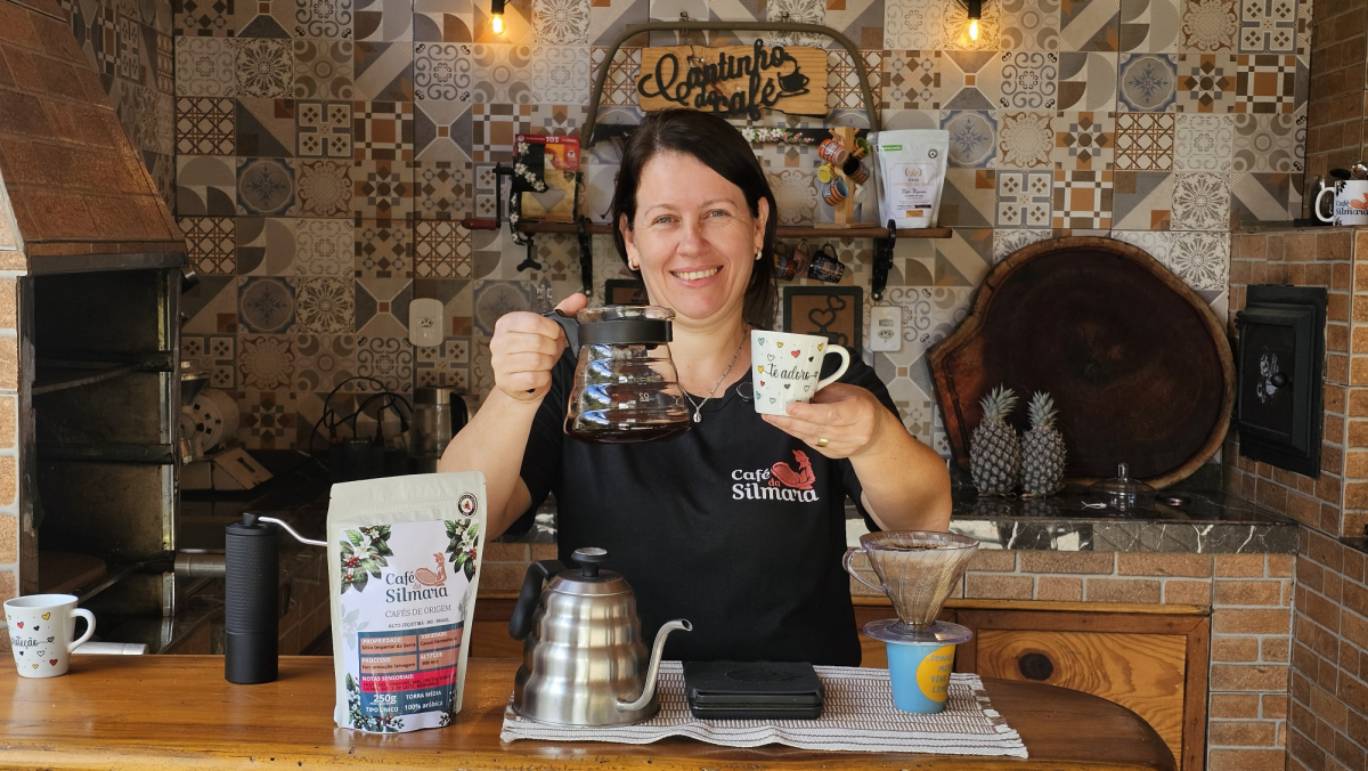
In Alto Jequitibá, also in the Matas de Minas region, producer Silmara Emerick followed the same path. She adapted a building on the property to install a small roasting facility, where the family also packages the coffee. Today, about 30% of the production of specialty coffees is sold directly to consumers. The property has also begun to receive tourists interested in learning about the cultivation and different methods of preparing the beverage. “Emater is fundamental to the work we do, with technical assistance. Even on our coffee packages, Emater guided us to include the necessary information on the labels,” says the producer. For Silmara, the main benefit is the possibility of keeping the income generated at all stages of the process on the property. “We can do the whole process, from the field to the cup. This benefits the whole family, because all the value of the sale stays in our home.”
This text was translated by machine from Brazilian Portuguese.