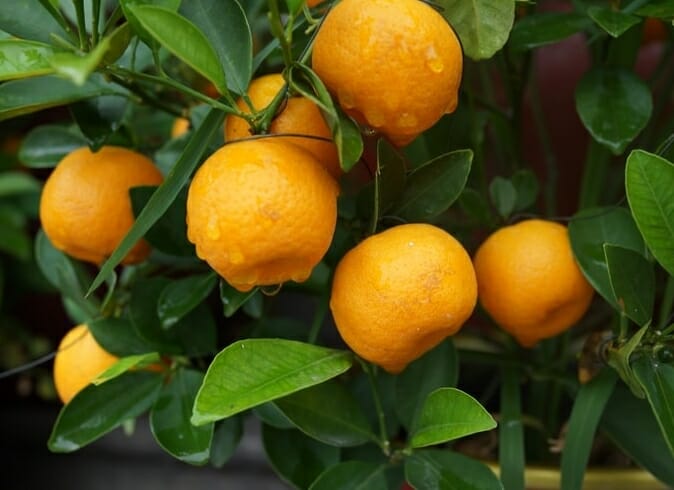
The Government of São Paulo, through the Secretariat of Agriculture and Supply (SAA), published on Thursday, May 28, Resolution SAA No. 32 of 2026, which establishes new measures to be adopted by producers for the prevention and control of HLB/Greening, a disease that threatens citrus farming worldwide. The Resolution considers Ordinance SDA/MPLSA No. 1,326 of July 4, 2025, from the Ministry of Agriculture and Supply (SAA), which strengthens state governance and defines competencies to be established by the Agricultural Defense, an agency of the SAA. “One of the innovations defined in Resolution 32 deals with the municipal division regarding the incidence of the disease. From now on, the municipalities of São Paulo will be divided between localities with low or high incidence of Greening. Municipalities with an incidence of up to 10% of contaminated orchards will be considered low, and above that, high incidence,” comments Alexandre Paloschi, agricultural engineer and director of the Department of Plant Health Defense. “The measure aims to encourage municipalities where citrus farming has an economic impact to intensify their control actions with producers, and above all, the eradication of diseased plants in their production areas,” adds the director. Furthermore, the publication, which revokes Resolution SAA No. 88/2021, introduces a new measure: bi-weekly monitoring (every 15 days) of the psyllid (Diaphorina citri), the insect vector of the disease in orchards of any age, to prevent the complete egg-to-adult cycle. “The fight against Greening in São Paulo is already showing important signs of slowing down the disease, a result of ongoing technical work involving monitoring, inspection, and guidance for producers. The new resolution updates the State's strategy to ensure greater efficiency in HLB control, balancing sanitary protection, sustainability for the producer, and the competitiveness of São Paulo's citrus industry,” highlights the Secretary of Agriculture and Supply of the State of São Paulo, Geraldo Melo Filho. Furthermore, the publication makes the eradication of diseased plants more flexible. According to the Resolution, producers who have diseased adult trees and whose production areas are located in municipalities with high incidence no longer need to carry out mandatory eradication. In these locations, elimination is only required for new plants, up to three (3) years old. In municipalities with low incidence, eradication remains mandatory for all ages. “The updated legislation attempts to adapt to the harsh reality of the disease's impact in the State of São Paulo and bring balance to the citrus sector in areas of high incidence, avoiding the eradication of mature orchards as long as they are under proper management,” explains Paloschi. Another update concerns interstate transport, as it becomes mandatory to process and brush the fruit before transit from São Paulo to other states, aiming to eliminate leaves or branches that could become potential vectors of the disease. The exception to this measure is solely for the Ponkan tangerine. It is important to remember that the measures apply to citrus plants (Citrus spp.), Fortunella spp., and Poncirus spp.
This text was translated by machine from Brazilian Portuguese.