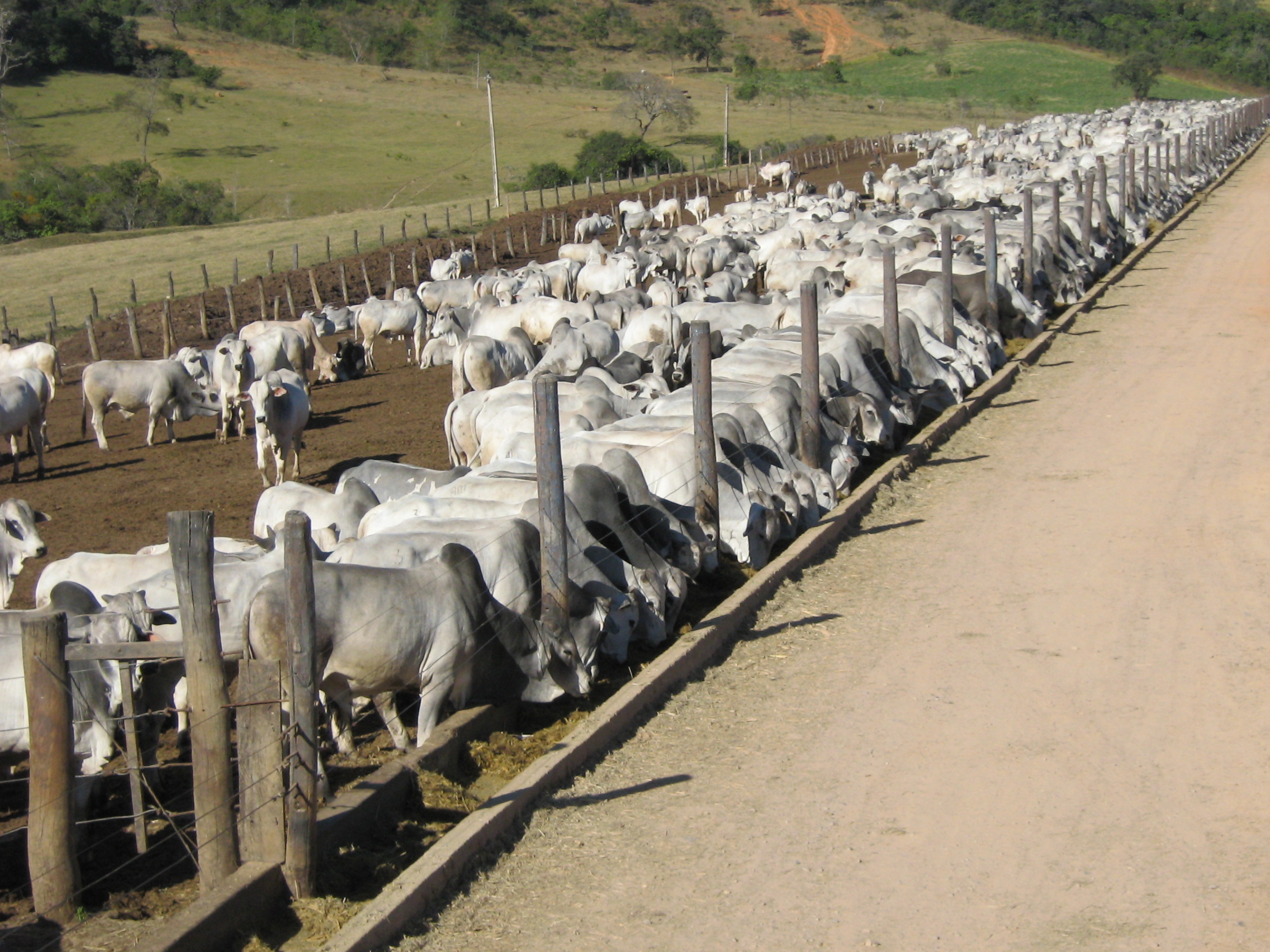
The June Feed Cost Index (ICAP) confirms that cost management and production efficiency have begun to sustain the profitability of Brazilian feedlots. Even with the drop in the price per arroba (a unit of weight), profits remained above R$ 1,000 per head. The indicator is calculated from real data collected by feedlot management technology (TGC), which manages 62% of the country's feedlot cattle (Beef Report Abiec/2025). The Central-West region closed the month with an ICAP of R$ 12.91/head/day (+0.62%) and the Southeast with R$ 11.79/head/day (-2.23%), the lowest level of the year. The profile of the slaughtered animals (99 days in feedlot and 7.68 arrobas produced), combined with lower feed costs, allowed the Central-West region to reduce the cost per arroba produced by 9.93% and regain its leadership in profitability. The difference between regions increased again, rising from R$ 0.77 to R$ 1.12 per head per day, consolidating the fourth consecutive month in which the Southeast operates with lower feed costs. Even with the physical price per arroba falling by 5.69% in the Central-West and 3.35% in the Southeast, profitability exceeded R$ 1,000 per head in both regions, reinforcing that managing production costs has become the main factor sustaining feedlot margins. Quarterly view of inputs by Region :: Central-West In the Central-West, the total cost of the finishing diet ended June 4.16% below the quarterly average (April to June). The main movement came from roughage (-37.13%), followed by energy feeds (-8.25%), reflecting the progress of the second crop harvest and the greater availability of feed in the region. Only protein feeds remained practically stable (+0.50%). • Energy sources: -8.25% • Protein sources: +0.50% • Roughage sources: -37.13% Among energy sources, dry corn grain was 8.0% below the quarterly average, reflecting the pressure from the second crop harvest. Among protein sources, DDG remained the main factor of pressure (+46.2%), while urea (-15.9%) and cottonseed (-3.1%) helped to contain costs. Among roughage sources, the largest contribution came from cottonseed hulls (-51.7%), followed by decreases in grass silage (-20.1%) and corn silage (-16.8%). :: Southeast In the Southeast, the cost of feed ended June 1.08% below the quarterly average, maintaining the trajectory of lower feed costs observed throughout the first half of the year. Protein sources showed the largest reduction (-2.83%), while energy sources remained close to the average (+1.44%). The bulky feed group showed a 15.80% increase, mainly influenced by the change in the mix used by feedlots. • Energy: +1.44% • Protein: -2.83% • Bulk feed: +15.80% Dry corn remained under pressure (+7.0% above the quarterly average), unlike in the Midwest, where the second crop has already reduced prices. In protein feeds, cottonseed showed a significant drop (-19.8%), while bulk feed prices mainly reflected the increased cost of silage, partially offset by the reduction in the price of sugarcane bagasse during the sugarcane harvest. Farm Gate vs. On-Farm Gate: Even with the drop in the physical price per arroba in June, profitability remained above R$ 1,000 per head in both regions. The difference lay in production efficiency: while the Midwest reduced the cost per arroba produced, the Southeast suffered a greater impact from the drop in the price per arroba and the profile of the animals slaughtered. • Central-West: Cost per arroba produced: R$ 186.36 (-9.93%) Price per arroba (physical steer): R$ 323.50 (-5.69%) Profit: R$ 1,053.25/head (+1.56%) • Southeast: Cost per arroba produced: R$ 199.29 (+2.13%) Price per arroba (physical steer): R$ 331.50 (-3.35%) Profit: R$ 1,007.41/head (-10.36%) Even with the devaluation of the arroba in both regions, the Central-West regained the leadership in profitability per arroba produced thanks to the lower cost per arroba and the shorter turnover of feedlot animals. In the export market (beef for China), the scenario was repeated: the estimated profit was R$ 1,118.53 per head in the Midwest, compared to R$ 1,072.18 in the Southeast. The main highlight of June is that the profitability of feedlots no longer depends exclusively on the appreciation of the arroba (a unit of weight). Even with the increase in the cost of replacement cattle and the drop in the price of finished cattle, productive efficiency began to sustain the activity's margin, reducing the weight of feed on the total cost of the arroba produced. In June 2024, one arroba of finished cattle was enough to pay for only 14.47 days of feed in the Midwest and 18.89 days in the Southeast. At that time, the cost of nutrition consumed 89.1% of the revenue from each arroba produced in the Midwest and 76.4% in the Southeast, leaving little room to absorb market fluctuations. In two years, the number of days of feed paid per arroba (a Brazilian unit of weight) jumped from 14.47 to 25.06 in the Central-West region (+73%) and from 18.89 to 28.12 in the Southeast region (+49%), consuming only 51.4% and 51.3% of the revenue from each arroba produced, respectively. This means that today almost half of the revenue from each arroba is left for other costs and profit margins, a result of the structural reduction in feed costs observed by ICAP (Brazilian Institute of Agricultural Production). This movement explains why the drop in the price per arroba observed in June did not compromise the profitability of the activity. More than just keeping up with input prices, feedlots are now demonstrating that efficiency in converting feed into arrobas produced has become the main competitive advantage of intensive Brazilian livestock farming.
This text was translated by machine from Brazilian Portuguese.